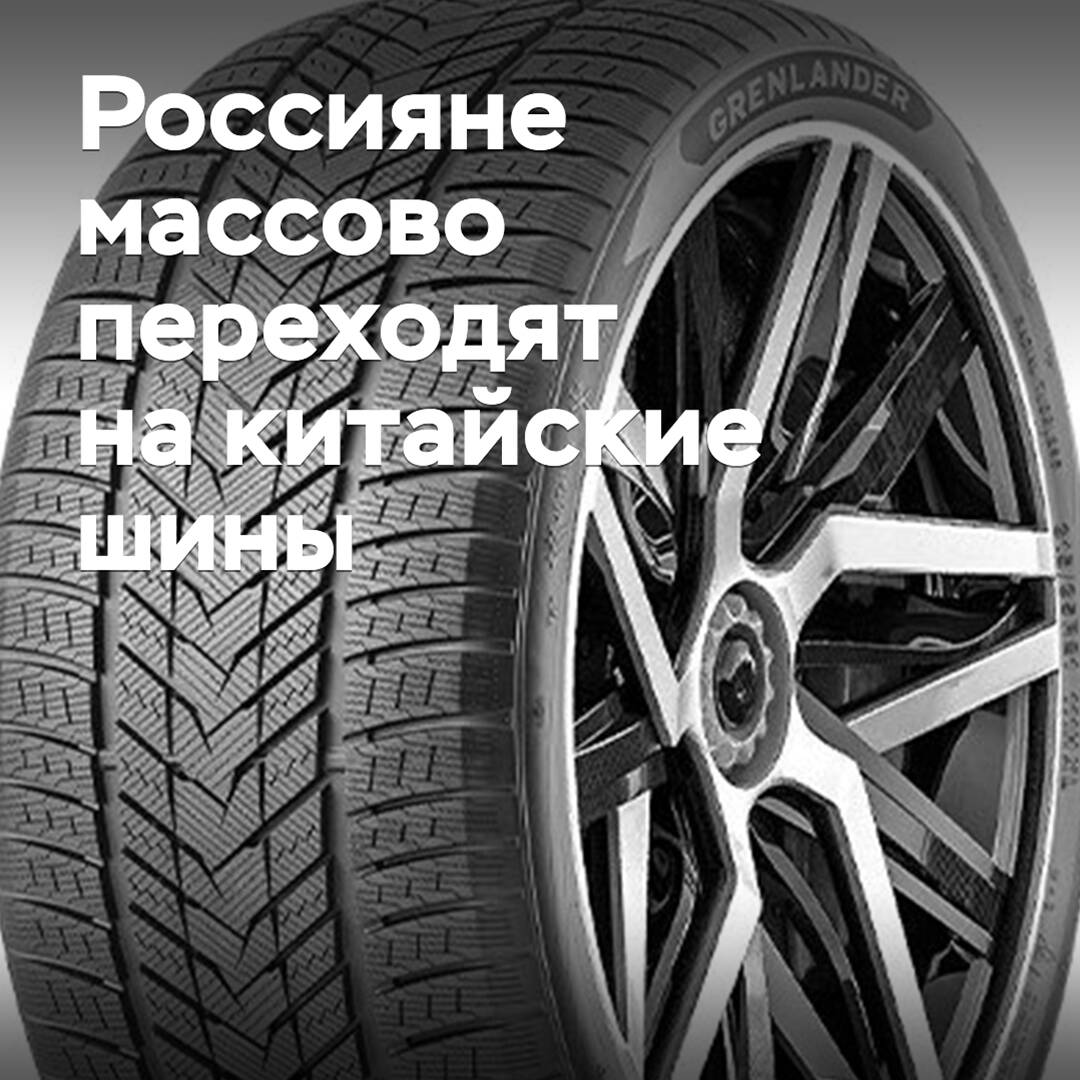
Russians are massively switching to Chinese tires
In recent years, a large-scale Chinese expansion has been taking place on the domestic tire market, and a recent survey conducted by the automotive marketplace FRESH showed that 54% of respondents (the total number of which is not specified) have already opted for tires from the PRC. Another 36% of those surveyed said they prefer tires from Russian manufacturers, including those working at the facilities of departed foreign companies, and 10% noted that they remain loyal to brands that have officially left the market. The results of the survey are reported by Izvestia.
Regarding what may be the reason for choosing an unfamiliar brand, 32% of drivers said that "significant savings" are a factor, with at least 25% of respondents citing this as a key consideration, and 53% of respondents stated that a decisive argument could be a bonus in the form of an extended warranty (repair or replacement of a damaged tire at the manufacturer's expense), free mounting, or a combination of these.
The survey also once again confirmed that in Russia, studded tires remain the most in-demand during the winter period. They were chosen by 68% of those surveyed, who said that "only they can protect against accidents on ice". Those who prefer friction tires say that they are noticeably quieter and improve handling on asphalt.
43% of motorists admitted that they fail to switch to winter tires in a timely manner, i.e., when the average daily temperature drops to 5-7 degrees, while the rest said that they "re-shoe" on time.
Respondents were also asked to name the average service life of summer and winter tires, and according to them, it is 5-6 and 7-8 years, respectively.
82% of those surveyed said that the production date of tires during operation is of no importance, and they will not replace them with a "normal" remaining tread and no balancing problems. However, specialists do not recommend using tires that are 8-10 years old, as the properties of the rubber compounds change, which critically worsens the operational characteristics.