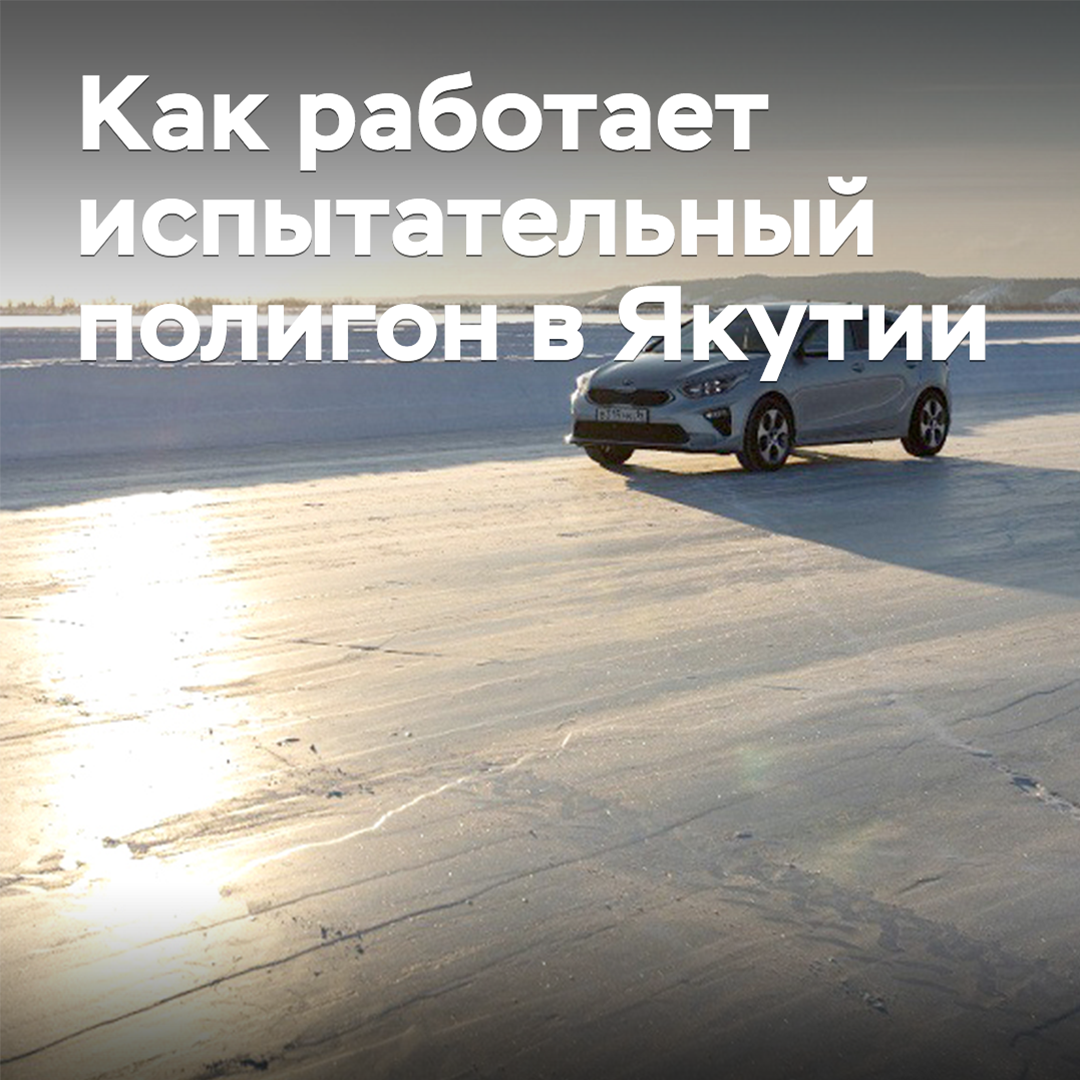
"They've broken a bunch of tires": how a test site in Yakutia works
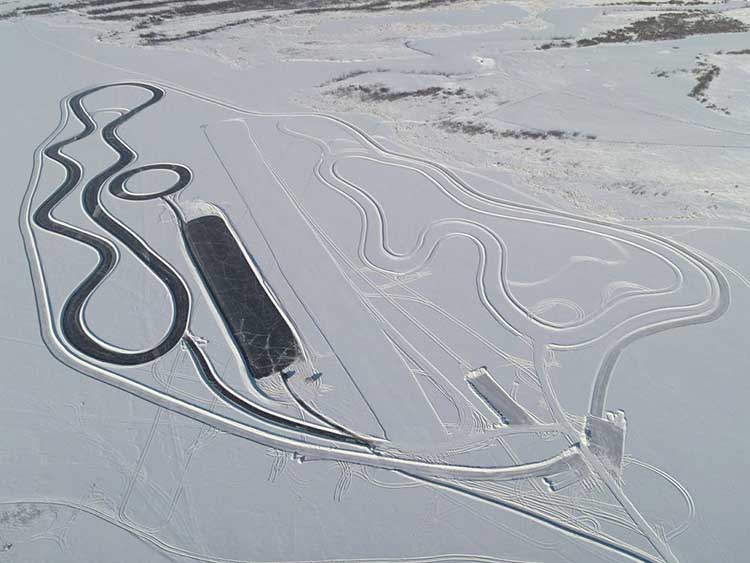
There are not many testing grounds for tires in extreme winter conditions in the world, and one of them is located in Russia, specifically in Yakutia. The first tests were conducted by the North-Eastern Federal University (NEFU) at its driving school, and at that time there were only a few small tracks, and then an agreement was signed with the Japanese Bridgestone and now the Yakut polygon has a much more developed infrastructure.
“After the first years of testing, the company's representatives liked the results of the data obtained, but they needed additional research, for which completely different tracks were needed. Longer and smoother with the corresponding quality of ice and snow cover”, — noted Dean of the Road Transport Faculty of NEFU Dmitry Filippov in an interview with the publication “Yakutsk Evening”.
“In the early years, winter tests were carried out on an un-equipped autodrome without heating. We warmed up in a wagon with stove heating, — he said. — We must give due to the courage of our Japanese partners, and first of all to Mr. Chiaki Oyama, a professional and enthusiast who invested his strength and energy in the Yakut project”.
In 2017, the university applied to the head of Yakutsk with a request to allocate land for the creation of a new testing center, and “the project was warmly supported by the then rector of the university, Evgenia Isaevna Mikhailova. At her initiative, we began negotiations with the city authorities. Then the mayor was Aisen Sergeevich [Nikolaev]. He immediately grasped the essence of the project, understood its prospects and strongly supported us, allocating land”.
Initially, the place where the polygon is now located was “just a bare and very uneven field”, and “a colossal work was done on backfilling and vertical planning of the tracks”. The object was assigned the status of a resident of the TOR “Yakutia”, buildings of a service and technical center were built, and on February 2, 2019, an official opening ceremony took place.
Regarding cooperation with the Japanese, Filippov notes that, “as they themselves said, it happened almost by chance. That is, they were looking for cold places on the Internet, and among other places, the search engine showed our city, our university”.
“When they turned to us, they still had the Wanaka polygon in New Zealand, high above sea level, — he said. — In New Zealand, there are quite cold mountainous regions — this country is located close to the South Pole. However, the influence of global warming is now spreading all over the world. This affected their polygon in New Zealand. And many companies were puzzled by the search for regions with stable cold winter periods”.
In Yakutia, tires can be tested at temperatures below -40 °C, and Filippov notes that most laboratory-road and certification tests of tires are carried out in November-December and in March, at an air temperature from -5 to -20 °C, but “we must admit that in recent years, our Japanese partners have been conducting completely unique, extreme tests, I would even add from myself “on the verge of madness””.
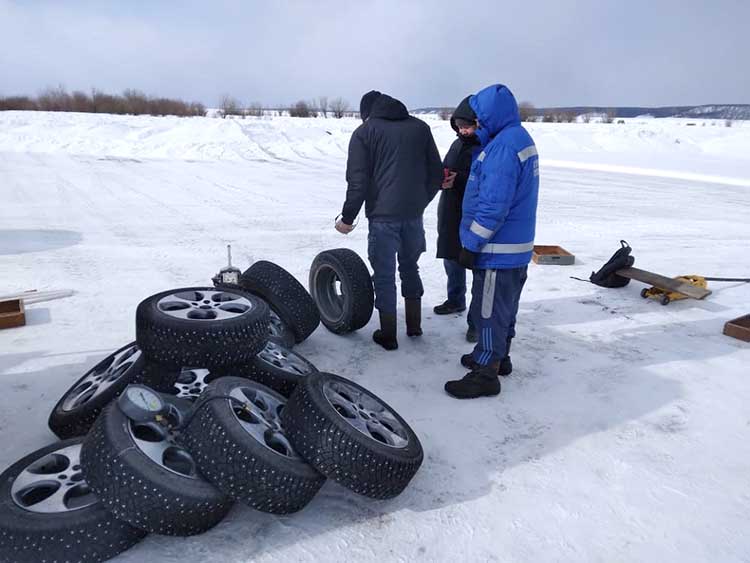
“They studied the destructive effects. Broke a lot of tires. Found out how the tire would behave at -50 °C, — he says. — For example, they froze the rubber all night, and then made a lateral impact with a sledgehammer. Or simulated a situation of driving over a curb at high speed on extremely frozen and hardened tires. For which we built artificial obstacles of given dimensions. It is clear that this experience can be applied in few places, but when there is an opportunity, why not explore? It turned out that the true “combat” qualities of tires are revealed precisely at very low temperatures. As chemists say, at temperatures close to the glass transition temperature of rubber”.
Filippov emphasizes that for testing, not extreme, but guaranteed long-lasting cold snaps are needed. “Most car tire manufacturers in the world conduct their tests in Finland, in the city of Ivalo, — he noted. — The Finns, the company Nokian, were among the first to start producing tires adapted to winter, and accordingly, they also started testing in the winter period. But this began more than a century ago, when in Europe, especially in Scandinavian countries, there were real winters. Now it's much warmer there than in the 20th century. You can track the data of recent years and see that plus temperatures in winter are not rare there. Therefore, they began to build covered galleries with artificial ice. So our republic, despite everything, can offer minus temperatures. Our region is a very attractive place for providing technical testing services. Add to this the thickness of ice on lakes, good snow and natural conditions that cannot be recreated by any cryochamber or gallery”.
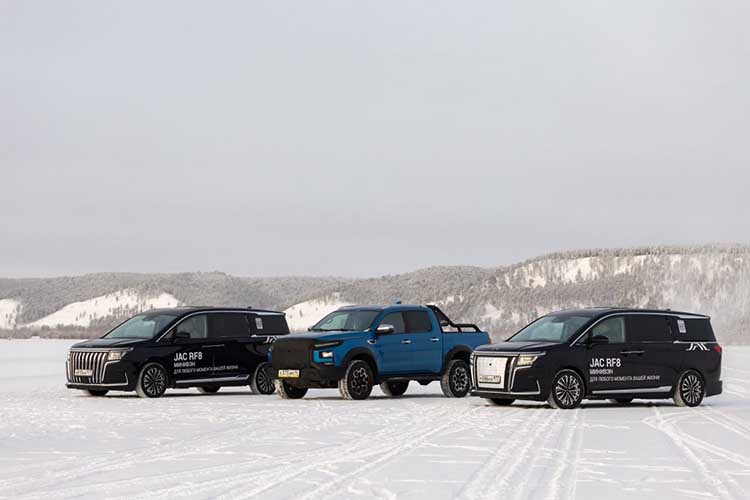
Filippov adds that testing in extreme cold has also become in demand, especially in recent times. “There are other customers who have a need for such tests. For example, our current partners are the company JAC Motors, — he said. — They came to Yakutia to test their cars for reliability and safety in extreme cold conditions. Their engineers are testing JAC T9 pickups and the new market novelty — JAC RF8 minivans. They are carrying out cold starts and running tests to understand how their cars behave at extremely low temperatures”.
Although China also has the opportunity to conduct tests in cold weather, for example, in the province of Heilongjiang, the advantage of the Yakut polygon is in the stability of the conditions. “No matter how cold it is, there is no stable -40 °C and below, — Filippov noted. — And testers cannot just sit and hope that maybe this year there will be a long enough cold period. So the duration and stability of the cold period are the main trump cards of our region compared to others”.
Regarding how prepared foreigners come to Yakutia, the dean of the faculty says that, “I have met many people who come to Yakutia with the wrong equipment”. “Testing is not a short-term business trip and working with data on a laptop in a warm office, — he explains. — This is daily routine work in the cold. When you need to remove and put wheels on the street or start and tow a car that has suddenly stalled. So the frosts take their toll, and the guests start dressing and eating calorie-rich food according to the Yakut climate. Our current Chinese guests, as soon as they settled in, immediately went to their compatriots at the Stolichny market [in Yakutsk] and bought warm boots, it seems, with a very good discount for themselves”.
Specialists from the head office of Bridgestone conducted tire tests in Yakutia until 2019, and then, since a plant of the company was opened in the Ulyanovsk region in 2017, the polygon worked with its representatives, and in 2021 the cooperation was terminated. The list of customers also included, for example, Nokian, and for several years, tires of the company Pirelli have been tested on the polygon, which did not leave Russia and continues to produce products at its plants in Voronezh and Kirov.
“Now the domestic holding Cordiant is actively testing its products, — Filippov says. — I note that tests are not only conducted by manufacturers, but also by large dealers. In February 2025, the largest dealer in Russia, Sever Auto, came to us to test tires. Or companies that are not direct tire manufacturers. We have experience in conducting research tests on behalf of SIBUR Nizhnekamskneftekhim PolyLab. This is a research division of one of the largest oil and gas chemical companies in Russia. They studied the driving and physico-mechanical properties of tires made using chemical components of their own production. When the world changes, working conditions change. In the context of sanctions, a need arose to find places for technical testing within the country, a need for import substitution. You just need to create these opportunities. Therefore, with a competent and balanced approach, there is work now and will be in the future”.
In the future, NEFU plans to increase the number of tracks to test tires for several customers at the same time, and in the long term, a covered ice polygon can be built, inside a mountain, to “reduce operating expenses due to the use of permafrost”.
“The concept is like in the “Kingdom of Permafrost”, but it looks like a skating rink, a circular ice track. It resembles, of course, science fiction. So the plans are big. They require attention and support from the authorities and, possibly, a strategic investor who is not indifferent to the development of our northern region and the Arctic”, — Filippov summed up.
Photo: “Yakutsk Evening” / NEFU Testing Ground