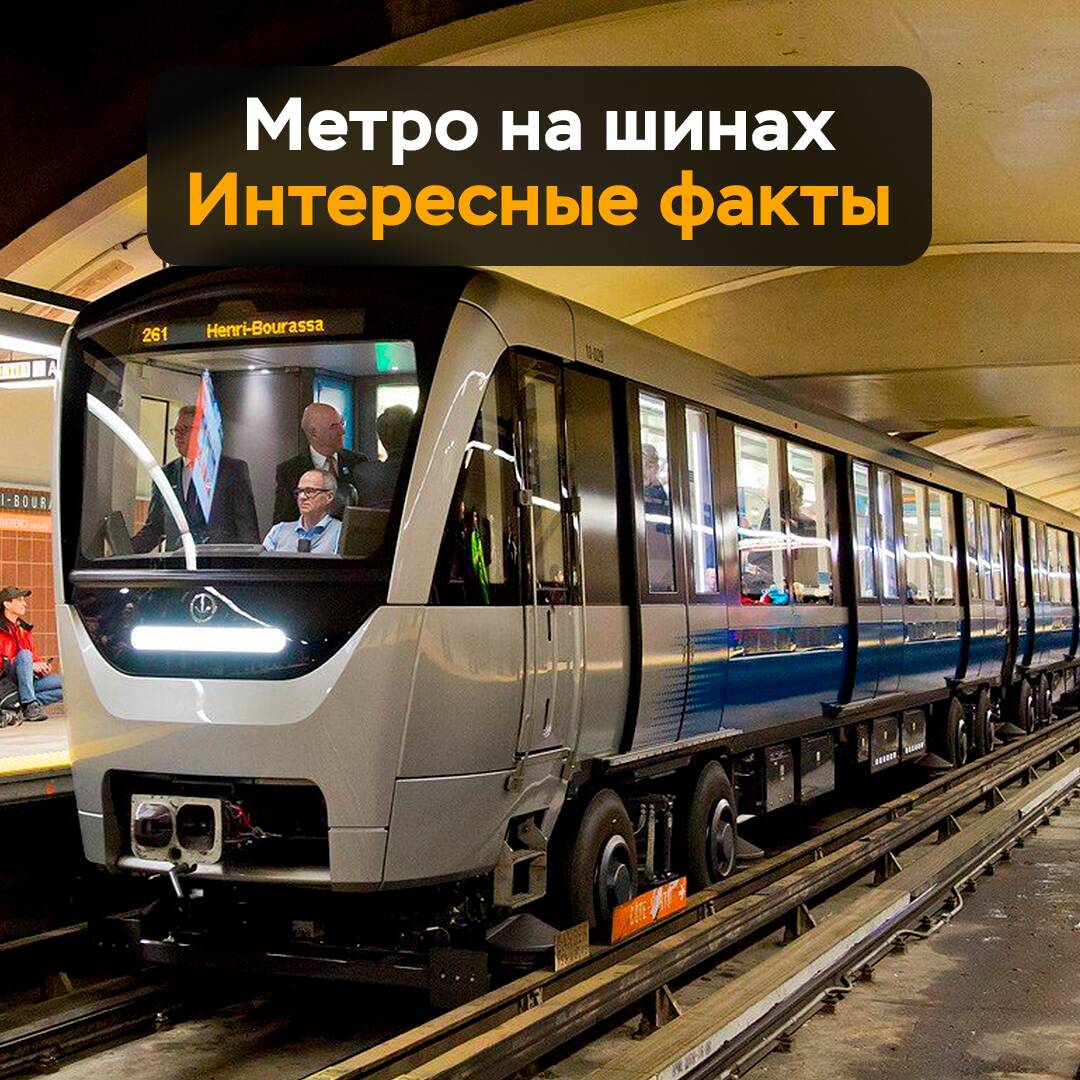
Metro on Wheels. Interesting Facts
In 1929, André Michelin was riding in a sleeping car and couldn't sleep due to the shaking and creaking, when it dawned on him: "We must install tires on train wagons!". After which the MICHELIN company created a special tire, equipped with a guiding ring, which could roll on a narrow surface under heavy load.
This innovation led to the appearance of a railway wagon on tires. On September 10, 1931, the first flight of the prototype took place between Paris and Deauville, demonstrating its comfort, ease and speed. Since this technology could adapt to any situation, it was adopted all over the world.
Today, in the metro of Montreal, Mexico, Santiago, Paris, Lyon, Marseille, the tire track is combined with traditional railway rails.
In the metro of Lille, Toulouse, Rennes and Turin, only rubber wheels are used, there is no ordinary rail track. Except in cases where guide rails are needed. For example, in Korea and Japan, only one guide rail is used to guide the movement of trains on tires.
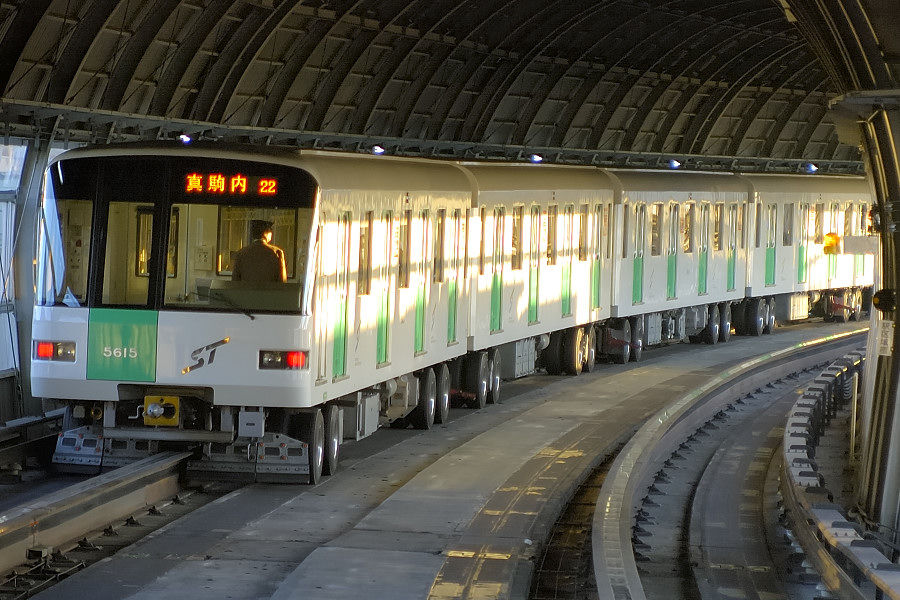
Advantages of pneumatic tires in the metro:
Improved comfort: pneumatic tires allow for a smooth ride without vibrations characteristic of traditional railway rails, which significantly increases passenger comfort.
Increased safety: thanks to the absence of rigid contact with the surface and reduced friction, pneumatic tires contribute to a reduction in equipment wear and the risk of emergency situations.
Route flexibility: pneumatic tires allow for more complex and curved routes, which provides flexibility in planning and developing transportation infrastructure.
Disadvantages of pneumatic tires in the metro:
Greater energy consumption due to increased friction force of pneumatic tires.
Rubber tires have a shorter lifespan than steel wheels, which requires more frequent replacements and increases the overall maintenance costs of the rolling stock.
Despite the high level of comfort and smoothness of the ride, rubber tires make a noticeable squeak when maneuvering, thus becoming equal to the noise of steel metro wheels.
Bad weather conditions, such as snow or rain, cancel out the advantages of the tire track. That's why the Montreal metro is built underground along its entire length.