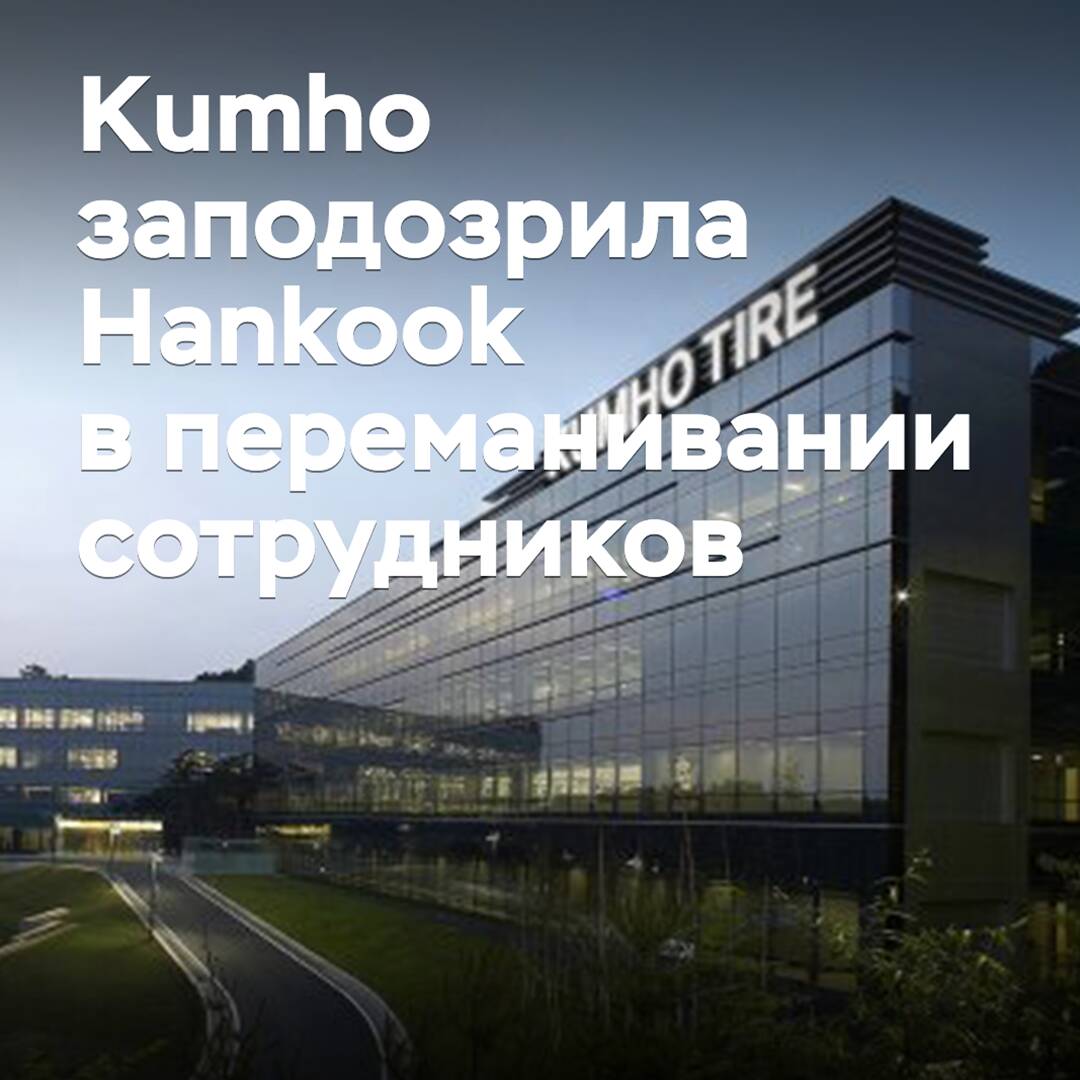
Kumho suspected Hankook of poaching employees
According to Korean media, Kumho suspects that after a major fire at the company's plant in Gwangju, which completely stopped production, Hankook took advantage of the situation and started poaching employees from its direct competitor. It is noted that Kumho sent an official letter to Hankook, stating that "in some cases, direct or indirect incentives were used" and demanding "to stop unfair hiring of employees".
Suspicions arose when it became known that nine specialists from Kumho's sales and research departments were moving to Hankook. Kumho expressed disappointment at the outflow of personnel and the resulting staff shortage, and it is reported that the company is investigating cases of unfair hiring and is considering the possibility of going to court.
Hankook, in turn, claims that all procedures were followed, and "the hiring process was fair and transparent". "The hiring of employees is carried out in full compliance with the established rules," Hankook emphasizes. "The priority is always to attract talented personnel, and the company provides opportunities for each applicant, guided by the principle of open hiring".
Local experts have expressed concern that the situation may lead to increased competition between the two leading Korean tire manufacturers. Although only a small number of Kumho employees have moved to Hankook so far, if the conflict escalates, it may lead to serious negative consequences, analysts believe. For example, the struggle for talented specialists may lead to data leaks, and an example of this is the court case against former Google engineers who moved to Uber and were held liable for illegally transferring information about autonomous vehicle technologies to their new employer.
According to experts, if something similar happens this time, it will undermine trust in the Korean tire industry, which may hinder its development in the long term.
"The uncertainties in the global economy are now stronger than ever, including the US tariff policy and the development of the Chinese industry," an industry representative cited by ebn.co.kr noted. "The domestic industry needs to survive, and now is not the time for internal competition. We must seek ways to mutual prosperity".