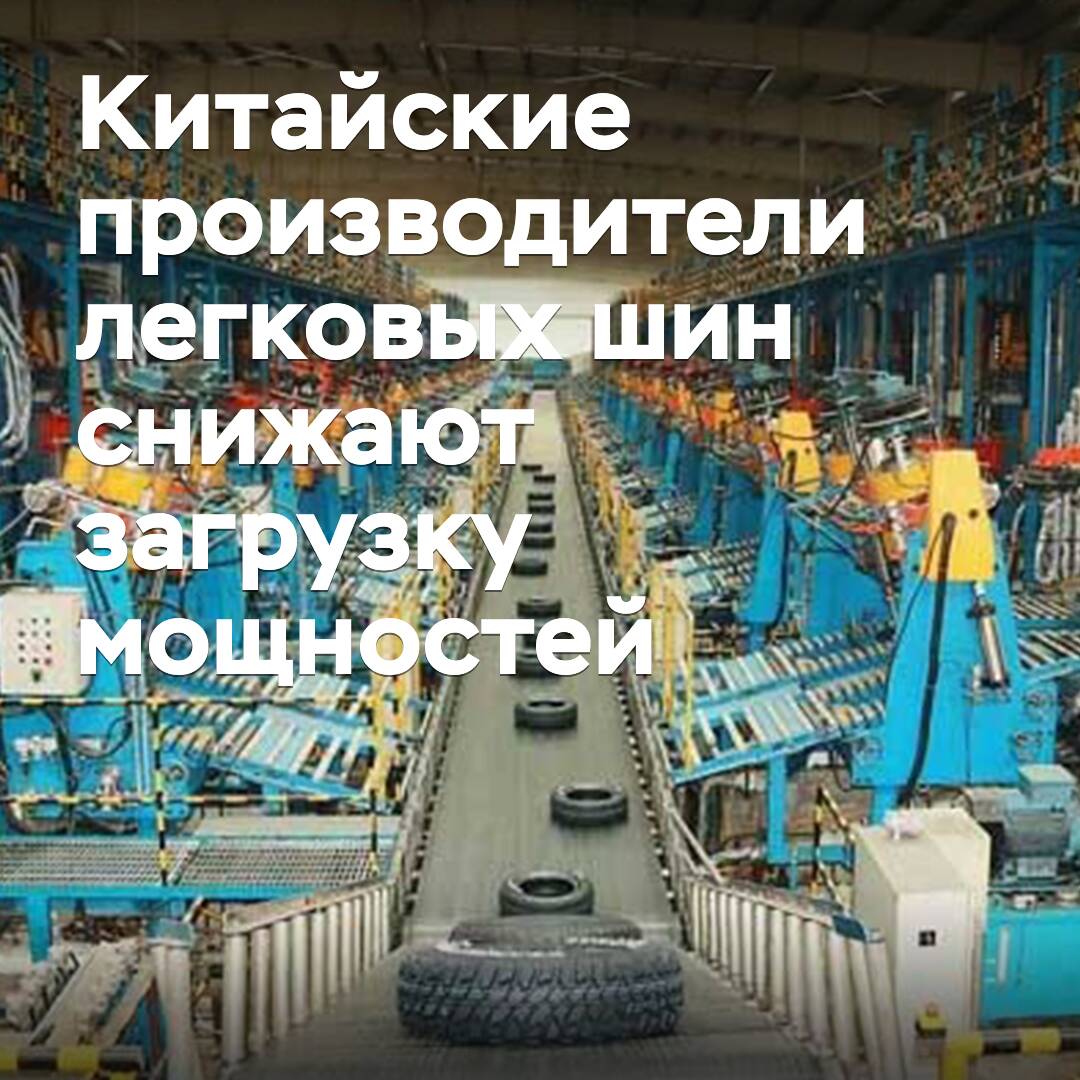
Chinese passenger tire manufacturers are reducing capacity utilization rates <br /> They are doing so in response to sluggish demand and high inventory levels <br /> The move aims to stabilize the market and prevent further price declines <br /> It also reflects the challenges faced by the industry due to the COVID-19 pandemic and changes in global market trends
During the celebration of the PRC's National Day, which lasted from October 1 to 8, out of 59 Chinese passenger tire manufacturers surveyed by Zhuochuang Information, 12 continued to operate normally, while 47 suspended production. The average number of days off was 4.84 days, which is 1.29 days more than last year, and analysts note that this to some extent reflects the current situation in the industry.
According to available statistics, from September 19 to 25, the operating rate of passenger tire factories in China was 72.64%, down 6.95 percentage points from the same period last year. The survey also showed that 58.62% of the responding companies plan to further reduce production in the future.
The decline in demand for passenger tires in China is partly due to the fact that the country has previously seen a surge in sales of new energy vehicles (NEV), and their buyers have not yet had time to replace the original tires, resulting in a temporary "slump" in demand. In addition, as new passenger tire production capacity continues to be put into operation in China, this leads to overproduction and factories starting to operate at a lower load.
According to F6 Automotive Technology, in 2025, the number of tire sales stores in China decreased by 7%, which is also related to the delayed demand from NEV owners.
The capacity utilization rate of truck tire manufacturers at the end of September was 66.39%, an increase of 6.27 percentage points. At the same time, the fierce competition in the domestic market is making the industry increasingly unprofitable, and Longzhong Information reports that as of September 25, the gross profit margin of 12R22.5 truck tires was -0.7 yuan per kilogram.
Photo: bitauto.com