Interesting facts about NASCAR racing
What's the appeal of NASCAR racing? The races seem to be just ordinary cars going around an oval track, with no treacherous winding roads or super-streamlined car bodies. Nevertheless, millions of fans follow these races with bated breath. What's so special about them?
First of all, it's interesting to note that the beginning of motor racing was brought about by Prohibition. Bootleggers realized that engaging in the illicit alcohol trade would eventually lead to encounters with the police, and that it was best to be prepared to outrun them. That's when illicit means were poured into developing cars that looked completely ordinary but had maximum engine tuning for achieving the fastest speeds. Later on, this evolved into a rivalry between drivers, which spectators were eager to watch. Oval tracks were characteristic of fairs. The track was short, easy to set up, and provided a good view for all spectators. By the end of the 1930s, this type of racing had grown into officially organized beach racing in Daytona Beach, Florida. The distinctive feature of these races, then and now, is the use of production cars. They can be called production cars with a big caveat, but compared to the racing cars of Formula 1 or the 24 Hours of Le Mans, that's exactly what they are.
As racing developed, the dirt surfaces of fairgrounds and beach tracks gave way to the asphalt surfaces of speedways, and car manufacturers began to take an active interest in racing as an opportunity to design new solutions and as excellent advertising. The distinctive feature of the new tracks was not only the new surface but also the angle of the track's incline. On some sections, the angle of incline exceeded 30 degrees, which allowed speeds to exceed 200 km/h as early as the 1950s.
Why do the cars move in such close contact?
There's a special term called "Drafting". It refers to a strategic racing technique where a car follows closely behind another, using the advantage of reduced air resistance or drag created by the leading car. This aerodynamic phenomenon allows the following car to experience reduced wind resistance, enabling it to achieve higher speeds or improve fuel efficiency compared to solo driving. Thus, body aerodynamics and the ability to manage it became a real tactic on the track. Such techniques as the close contact between the front wing and the rear wing of a competitor led to a sharp imbalance of the axle, forcing the leading car to slow down. Here, it was not just speed that mattered, but also how you managed aerodynamics.

What is "The Big One"?
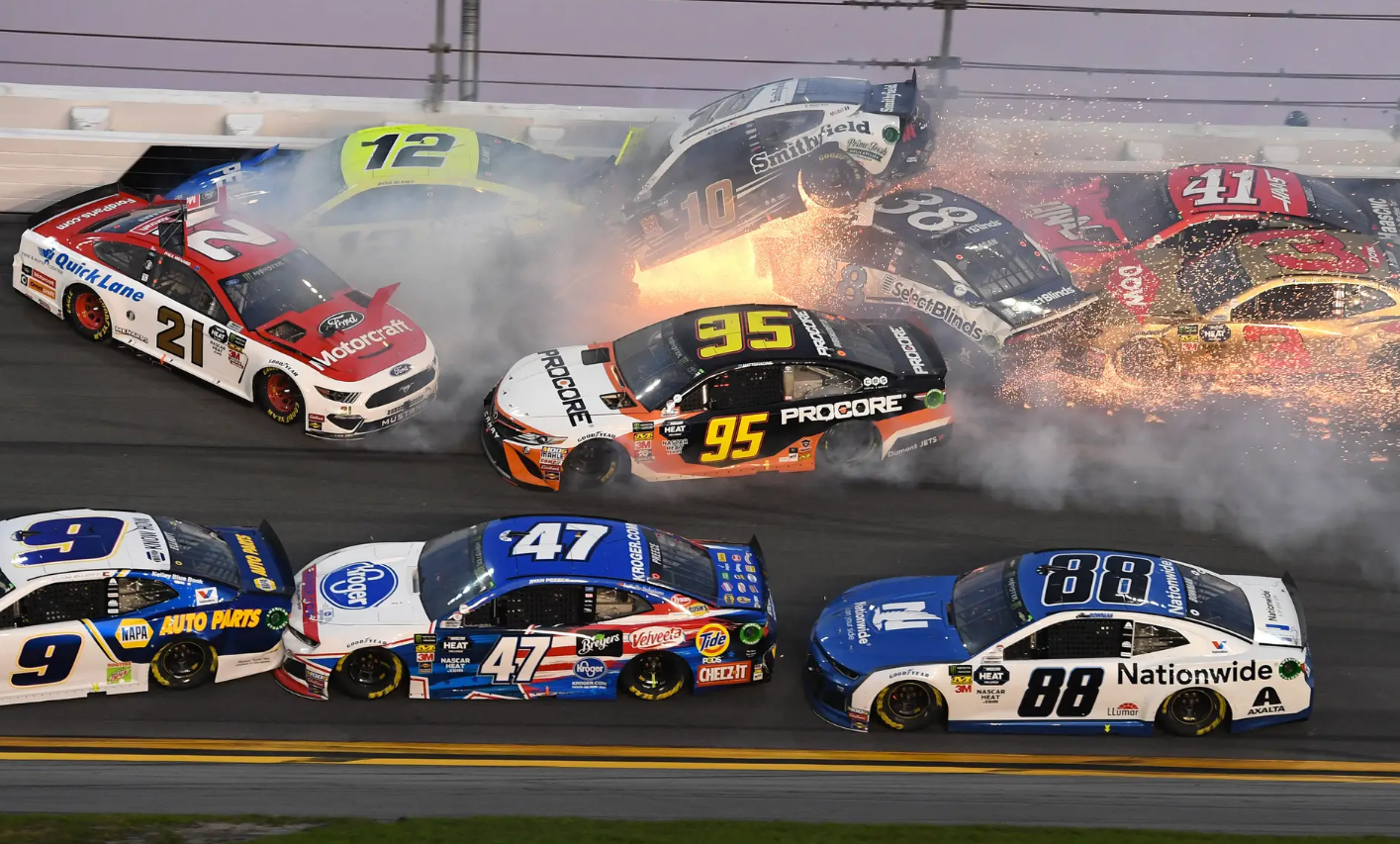
Now it's becoming clearer that a dense stream of cars on the track at high speeds is a confrontation between masters of their craft at speeds over 300 km/h, which inevitably leads to sharp situations where all the cars literally pile up on each other. This "big mess" is called "The Big One" in NASCAR racing. Now, drivers need to make decisions about how to act throughout the race: to be among the leaders and fight or to drive behind and save the car in case of "The Big One", thus guaranteeing themselves a win.
Tire Wars in NASCAR Racing
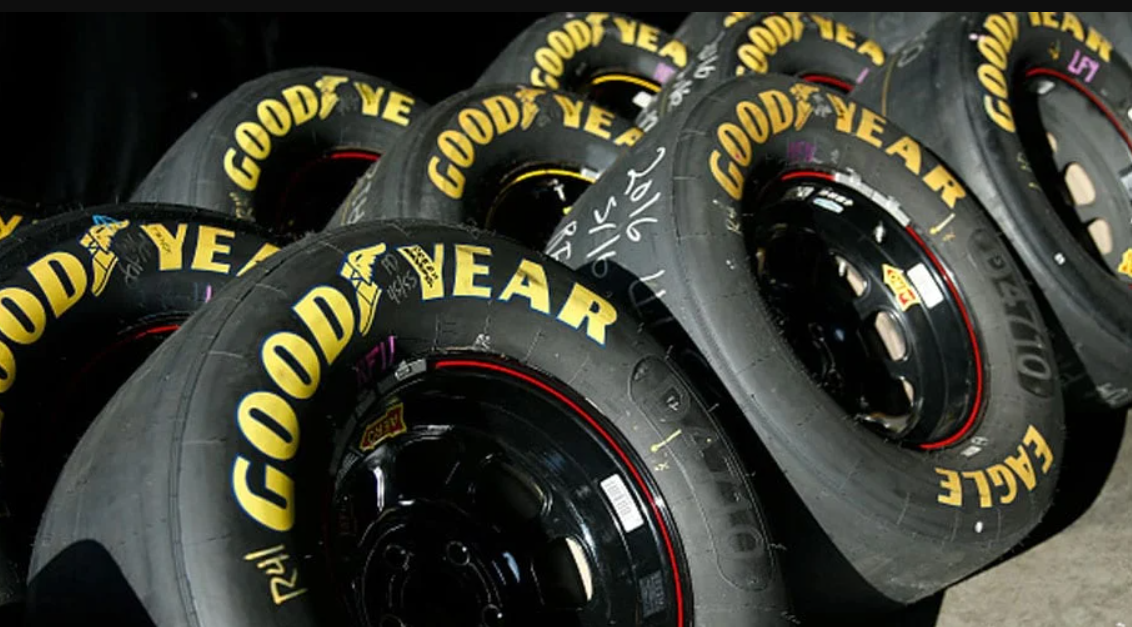
Goodyear and Firestone competed with each other for the right to be the sole tire supplier for NASCAR. The situation reached its peak at the new Talladega Superspeedway in 1969. On the 2.66-mile track with a 33-degree incline, tires were bursting after just a few laps. This led to the withdrawal of drivers from the recently formed Professional Drivers Association. While Firestone refused to participate in the weekend before the race, Goodyear remained. In the end, Goodyear presented more durable tires, and there were no serious incidents in the first stage. Probably, this was the most important turning point in the tire war. Although Firestone remained in the sport for several more years, Goodyear gradually became a more prominent player in NASCAR. By 1974, Firestone had ceased to exist, and Goodyear became the sole tire supplier for NASCAR. In 1997, Goodyear became the exclusive tire supplier. Since then, Goodyear has provided the sport with much-needed stability. Developing tires for NASCAR racing is not an easy task. The design for each race is determined by the geometry of the track, its length, and incline. The composition of the rubber mixture is chosen based on the characteristics of the surface of a specific track, and for oval racing tracks, it's necessary to manufacture different tires for the left and right sides of the car.