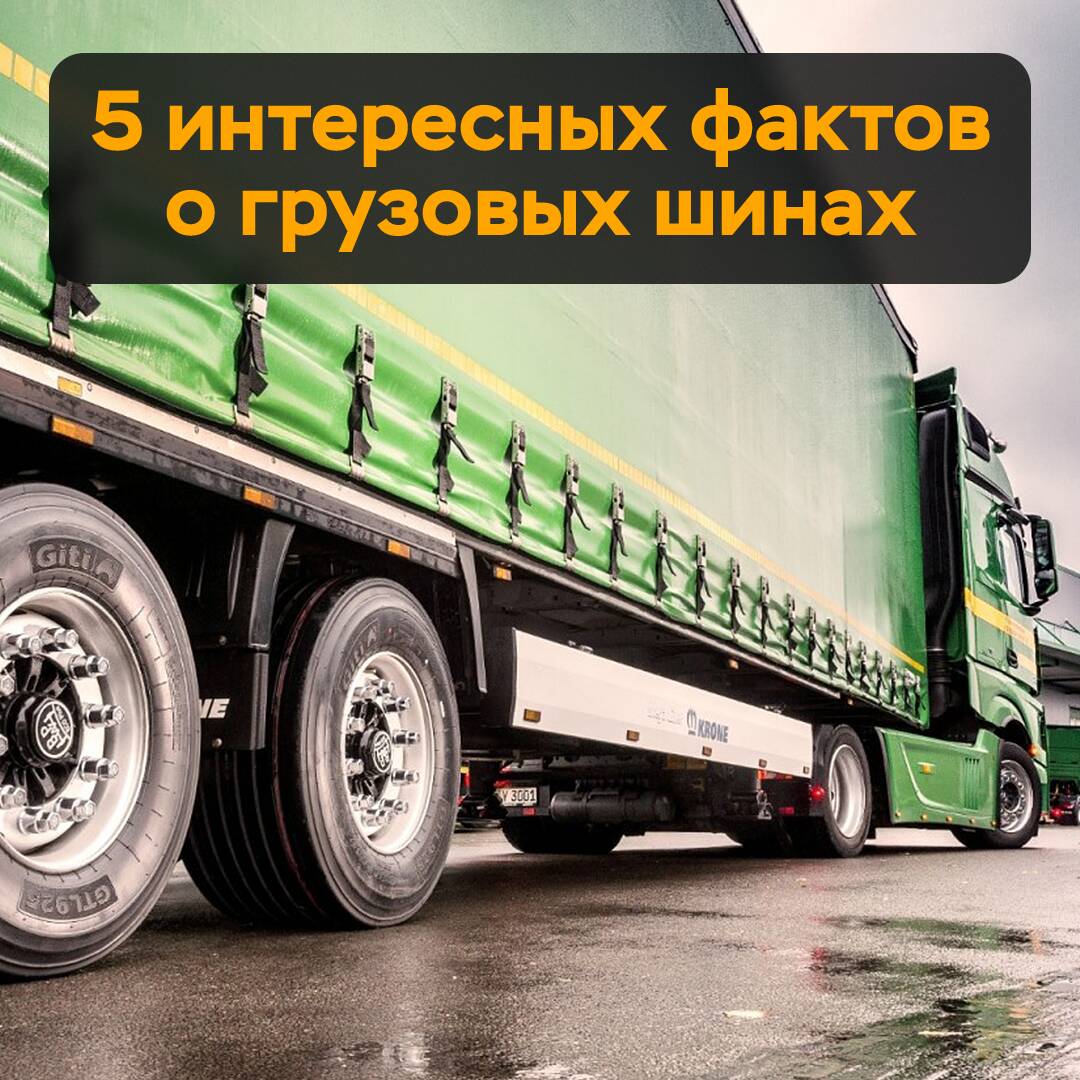
5 interesting facts about truck tires
When talking about various types of transport, it's impossible not to mention freight transport. Today, we'll tell you about interesting facts about truck tires.
Advanced Technologies
We've given examples of tires for quarry trucks and other mining equipment as the most profitable and, therefore, the most technologically advanced part of the tire industry. Indeed, strength and wear resistance in this segment are at the highest level. At the same time, tires for freight transport are also at the forefront of development, but with slightly different parameters. Carrying capacity no longer surprises anyone. The race for the number of carcass layers and other attempts to increase strength ended with the invention of CMK (all-metal carcass). The innovative breakthrough allowed us to close the question of necessary loads for a long time. The attention of developers is currently focused on fuel efficiency and technologies that can extend the resource, as the main criterion for commercial transportation is the cost of traveling 1 kilometer. Therefore, tires play a key role here.
Fuel Efficiency
Tires account for up to 20% of fuel consumption. The rubber compound is of key importance here. Engineers from companies are constantly working on its composition and trying to increase fuel efficiency, albeit slightly, from model to model.
In freight transportation, air resistance, of course, has a huge impact on fuel consumption. That's why automakers come up with all sorts of fairings and devices to reduce it. But there's an even more elegant solution. If you drive one after the other, all the trucks following the lead truck can save up to 20% of fuel. And if you reduce this distance to 20 cm, fuel consumption can be reduced by 60%. Of course, such distances cannot be called safe, because the driver simply won't have time to react. That's why they're trying to develop autopilots that are automatically synchronized with each other. In fact, several trucks form a convoy.
Convoys
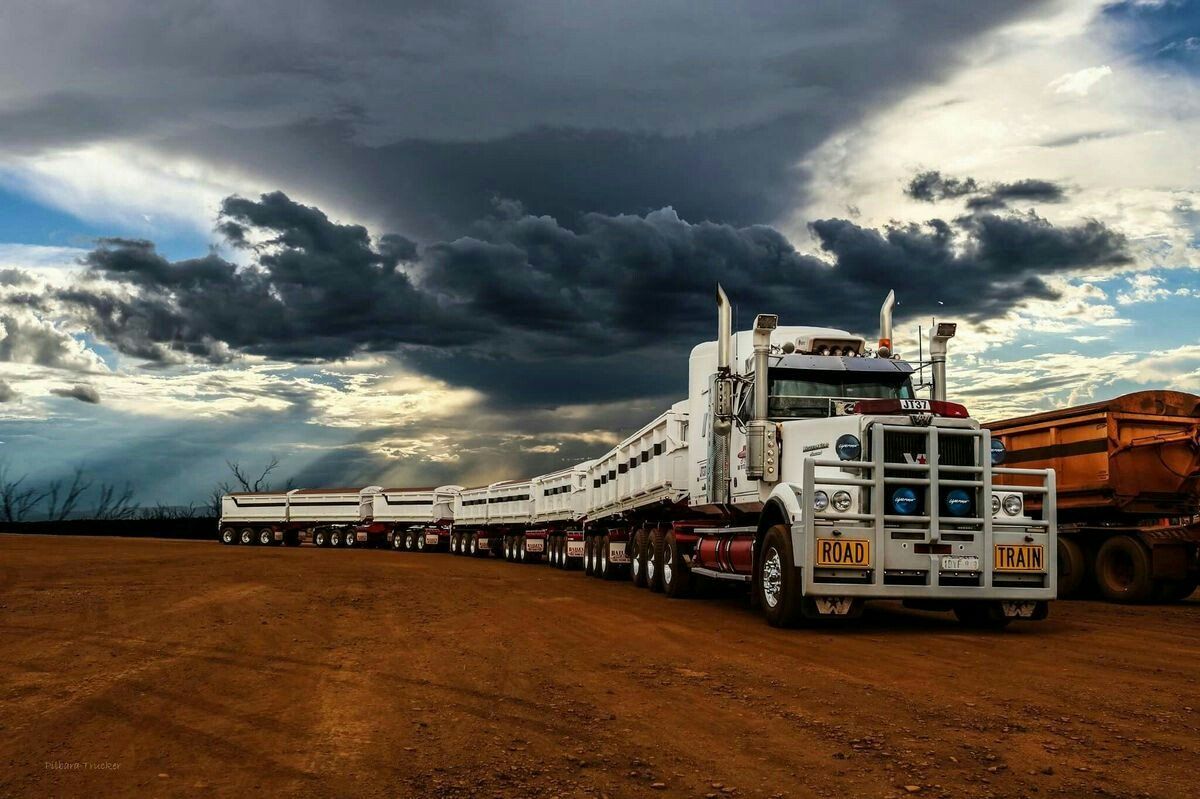
A very interesting phenomenon in the freight segment. Convoys are most common in Australia, due to the almost complete absence of railroads. The branches that exist are connected to the mining industry. Meanwhile, convoys with 4-6 trailers are driving all over Australia. It's the Australians who hold all the records for convoy length. And it's understandable who else would need it...
The last record was set in 2006. The Mack Titan tractor was able to move 112 trailers with a total weight of 1300 tons. The length of this giant was 1474 meters. Since this was more of a publicity stunt, it only traveled 140 meters. What's interesting is that convoys are the basis of Australia's entire economy. That's why the question of tire efficiency is a top priority for them. This is rather a national interest. A tractor with 5-6 wagons can have 70 or more tires mounted on it.
Applicability
There is a big difference between axles in freight transport. That's why there's a clear division between tires for the steering axle, driving axle, or trailer axle. If you mix up the tires, it will immediately affect not only handling and overall safety but also wear.
Second Life
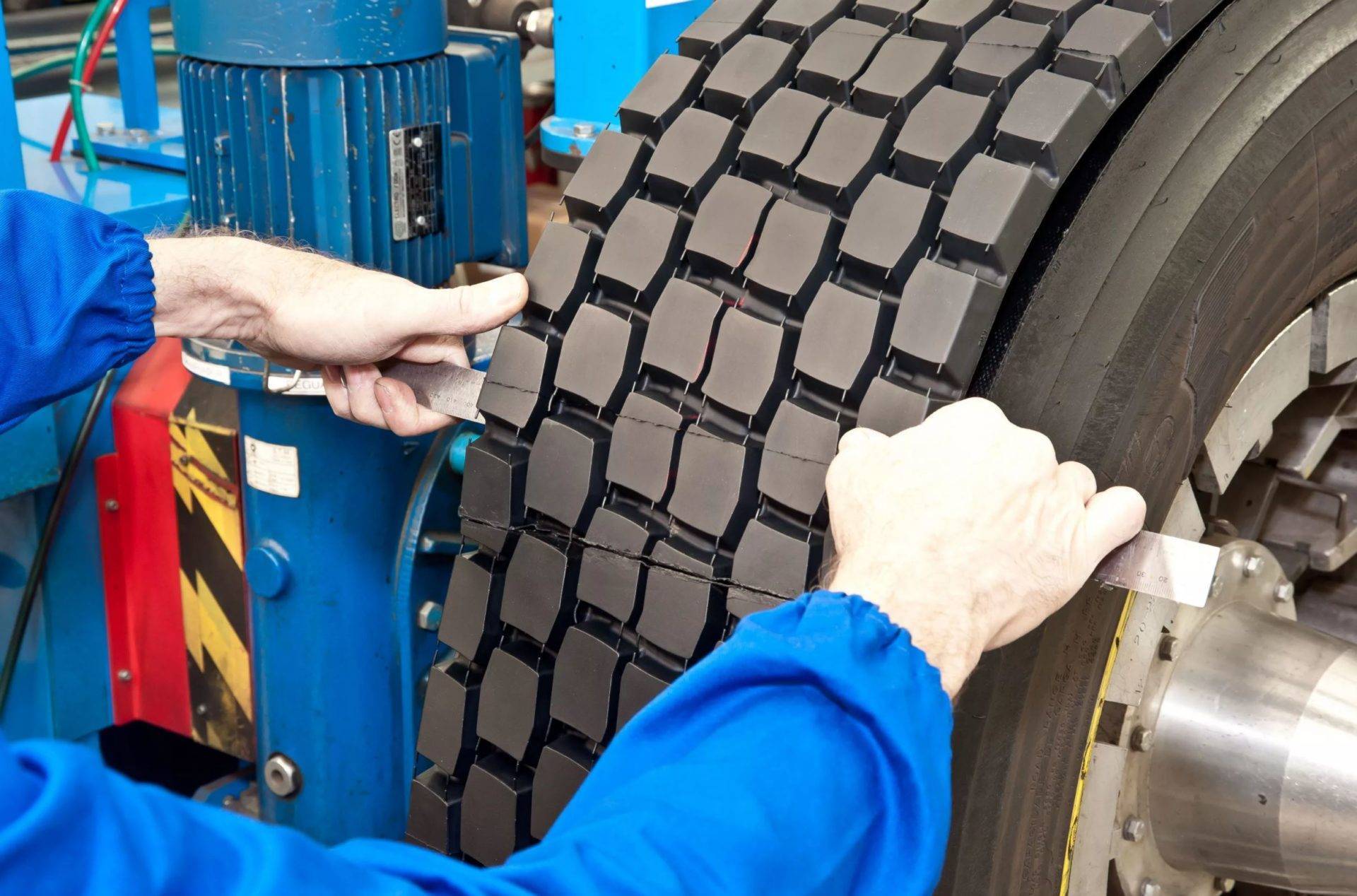
The all-metal carcass has a very large strength resource. That's why even when the tread is completely worn out, it can be restored by means of “cold retreading”. This is a process that the tire manufacturer itself carries out. Specialists select worn-out carcasses, inspect the CMK for suitability and the absence of fatal damage, and then a new tread band is glued onto the tires. Moreover, some tires provide for tread cutting, which also extends the service life. Thus, taking into account tread cutting and subsequent cold retreading, some tire carcasses can travel up to 1 million kilometers.