The Goodyear Eagle UltraGrip GW-3 winter tire is designed for powerful and high-speed passenger cars of various classes. This model has a very wide range of sizes, measured in dozens of names. At the same time, some sizes exist in the RunOnFlat version. In addition, the tire has excellent technical characteristics, as evidenced by the speed indices H, V, and W assigned to it.
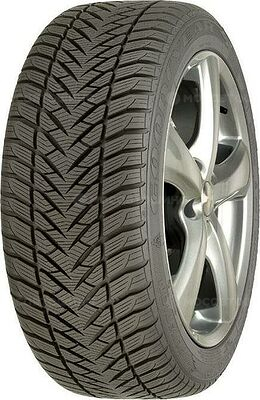
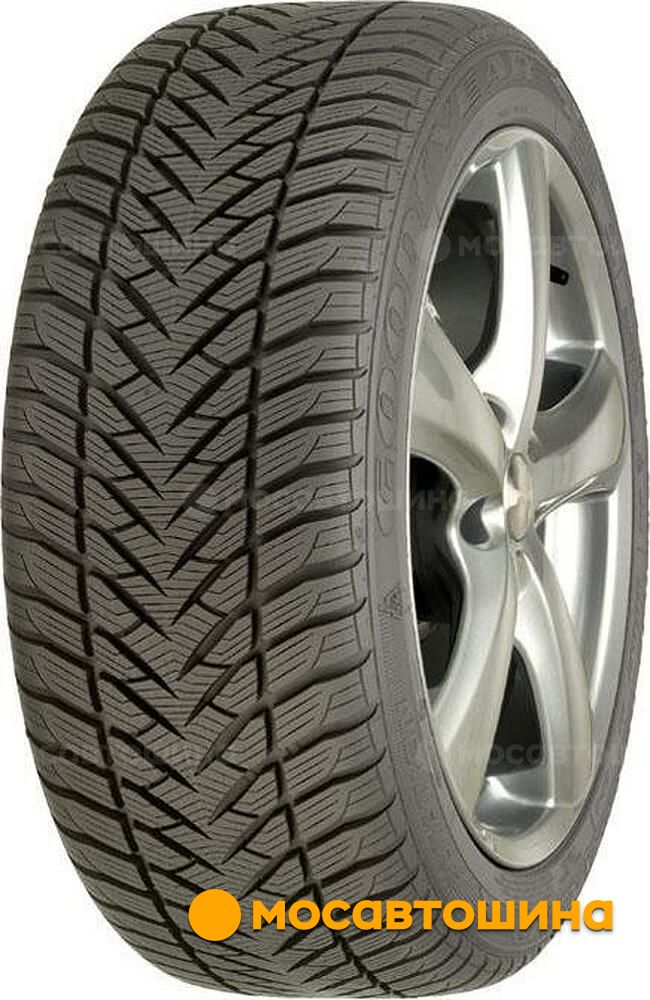
This tire was one of the first models to feature the V-TRED technology. Under this term, a new V-shaped design of the symmetrical directional tread pattern is meant. One of the significant advantages of this pattern is the high performance of the drainage system, due to the V-shaped arrangement of the tread ribs and blocks. Since the Goodyear Eagle UltraGrip GW-3 tire is designed for operation in winter, the drainage channels have increased sizes to effectively and quickly remove water from the contact patch, as well as to handle much heavier masses of meltwater.
Another feature of this model is the 3D-BIS tread lamination technology. The practical implementation of this technology is a three-dimensional system of mutual blocking of tread blocks. The technology owes its appearance to the need to provide excellent operational characteristics, both on snow and ice, and on asphalt. To this end, the tread is equipped with an increased number of S-shaped lamellas, the walls of which are equipped with special bubbles and recesses. These elements, in contact with each other, provide more reliable fixation of the walls to each other, which significantly increases the stiffness of the blocks, allowing not only to obtain additional edges of grip but also to improve handling characteristics on asphalt.
The main features of the Goodyear Eagle UltraGrip GW-3 winter tire
- A unique tread pattern, built using V-TRED technology, provides excellent grip and handling in any conditions;
- Excellent resistance to aquaplaning, as well as excellent self-cleaning properties of the tread, thanks to a high-performance drainage system;
- The 3D-BIS technology has allowed a significant increase in the number of S-shaped lamellas, as well as the stiffness of the tread blocks, which has led to an improvement in the main characteristics of the tire, both on snow and ice, and on asphalt.
 Enlarge
 Enlarge