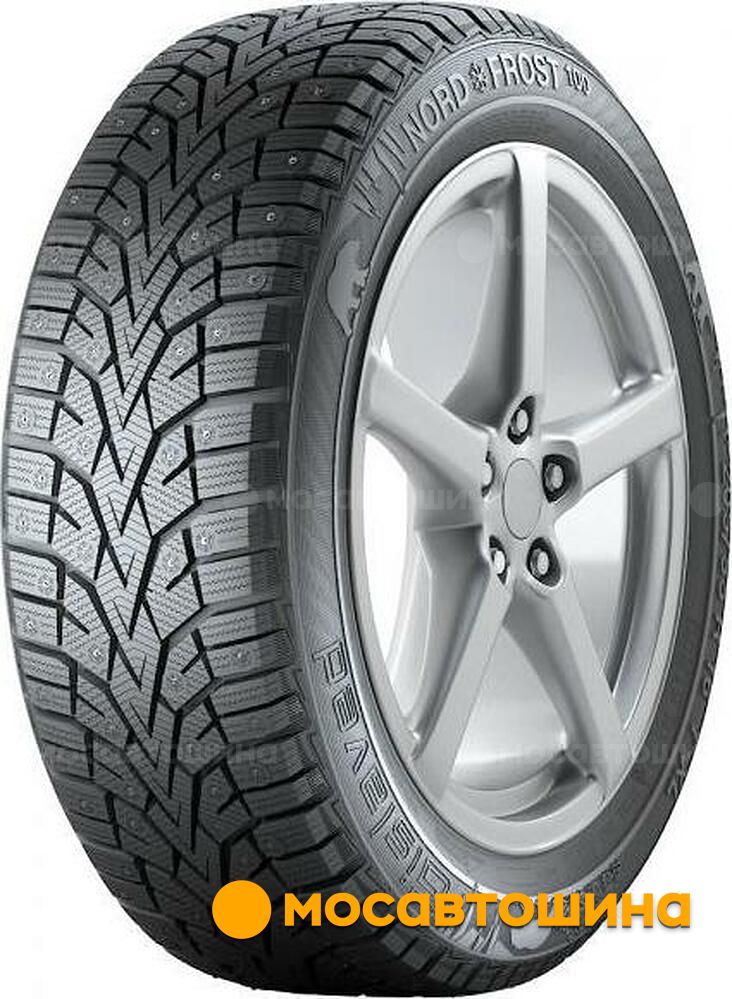
After significant tightening of requirements for the operation of winter studded tires, as well as the adoption of new labeling in European countries, almost all tire manufacturers have released a whole range of new models. The company Gislaved, now owned by the German concern Continental AG, was no exception, presenting a whole range of novelties. One of them was the Gislzved Nord Frost 100. This winter studded tire replaced the popular Nord Frost 5 model, which has been popular in our country for many years.
Tri-Star CD Stud
Despite the strict restrictions on the maximum number of studs, the Swedish tire makers were able to find a solution that allows them to bypass it. It became the new TriStar CD stud, created and released in Finland. Its height is quite impressive at 11 mm with a diameter of 8 mm. To ensure stability, the Finns equipped the stud with a carbide insert in the shape of a three-pointed star, which is reflected in its name. The combination of large size and this insert shape allows the stud to be firmly held in the tread throughout the life of the tire. At the same time, its weight was reduced due to the use of aluminum as the main material for making the stud. In turn, the weight reduction had a beneficial effect on the mass of unsprung masses and rolling resistance. As a result, the car will be easier to handle and consume less fuel.
Optimized Tread Block Shape
The Nord Frost 100 is distinguished by excellent traction properties on slippery surfaces, both longitudinally and transversely. This was achieved through a radical redesign of the V-shaped symmetrical directional tread pattern.
The tread blocks have become significantly larger. But despite the reduction in their number, the number of traction edges available to the contact patch has increased significantly. The Swedish tire makers gave the tread blocks a complex multi-angled shape containing many angles and faces. At the same time, they are arranged in different directions, which gave the traction properties reliability and stability, regardless of the characteristics of the road surface.
Straight Lamellae in the Central Part of the Tread
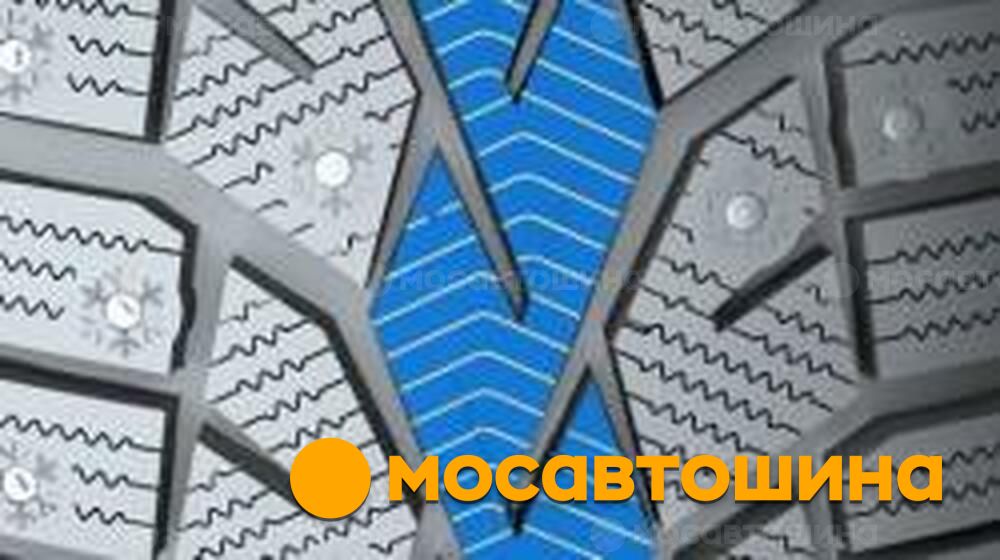
In the central part of the tread pattern, there is a longitudinal rib consisting of many multi-angled blocks. Due to the fact that they are connected by a rigid bridge, the tire has excellent directional stability and responsiveness to steering wheel turns. In addition, the multitude of angles and long edges provide the contact patch with additional edges, which makes the grip with the road even more reliable.
For approximately the same purposes, the Swedish tire makers equipped this tread element with a large number of straight lamellae. They perform several functions at once. First of all, it is the formation of additional traction edges. In addition, when driving on a wet road, straight lamellae work like windshield wipers, "sweeping" excess moisture into the drainage channels, thereby increasing the tire's resistance to aquaplaning.
S-Shaped Lamellae in the Shoulder Zones of the Tread
Another feature of the tread pattern of the Gislaved Nord Frost 100 is the huge number of wavy lamellae that cover each of the blocks in the shoulder zones. Like straight lamellae, these tread elements perform several functions at once. First of all, it is the formation of many additional traction edges, which has a very beneficial effect when driving not only on snow but also on ice.
In addition, the presence of these elements significantly improves handling on asphalt. When in contact with the road surface, the S-shaped walls of the lamellae are very tightly fixed to each other, which significantly increases the stiffness of the tread block. Due to this effective solution, the tire's reactions have become more accurate and predictable.
Multifunctional Drainage System
Unlike the previous model, the Nord Frost 100 has a more "advanced" drainage system, which is capable of performing a whole range of other functions. Due to the original scheme of arranging the tread blocks in the shoulder zones, cross-shaped channels have appeared, which perfectly retain snow mass. Due to this design feature, the new Swedish tire has become significantly better at holding onto snowy surfaces. At the same time, the shape of the channels contributes to the rapid removal of snow.
In addition, the Nord Frost 100 demonstrates excellent resistance to aquaplaning and slushplaning. This is largely due to the V-shaped tread pattern, the drainage channels of which are arranged at a significant angle relative to the direction of movement. When the wheel rotates, snow and water quickly leave the tread pattern under the influence of centrifugal forces, ensuring the cleanliness and dryness of the contact patch.
Main Features of the Gislaved Nord Frost 100 Tire
- excellent grip on any winter surface, even in the most unfavorable weather conditions, thanks to the optimized V-shaped tread pattern;
- increased passability in deep snow due to the large size of the tread blocks and the significant distance between them;
- high stability and reliability of handling when driving on ice, provided by an aluminum stud with a solid triangular insert;
- excellent resistance to aquaplaning and slushplaning, thanks to the multitude of differently directed drainage channels;
- special cross-shaped grooves in the shoulder zones, thanks to which the tread more reliably retains snow, ensuring excellent grip on snowy surfaces;
- high level of comfort provided by low resonance noise and vibration levels;
- a large number of straight and wavy lamellae allowed the contact patch to be saturated with traction edges to the maximum extent.
 РОССИЯ