
-
 Enlarge
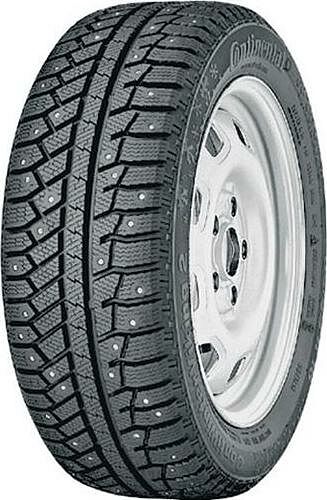
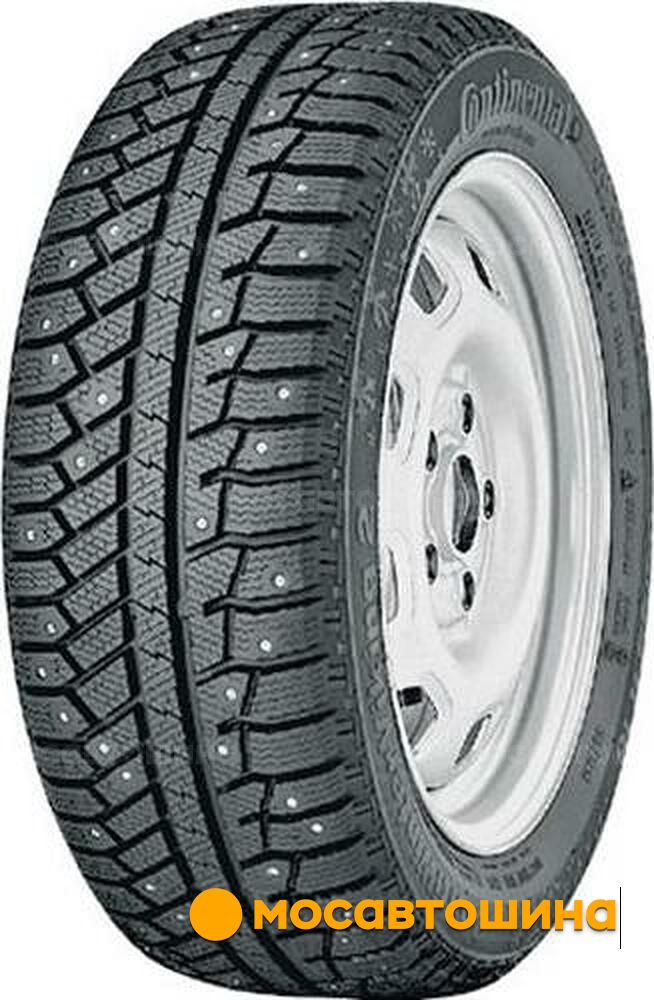
 Continental ContiWinterViking 2
Description Continental ContiWinterViking 2
When developing the Continental ContiWinterViking2 winter studded tire, German tire makers had to solve a difficult task of creating a model that would surpass the characteristics of the previous generation tire, which was a leader in this segment. To achieve this, they completely revised its design, using a whole range of new technologies and materials.
Polyhedral studs
One of the innovations was the studs with a carbide insert in the shape of a hexagon. The main advantage over steel elements of the usual circular shape is more reliable traction with icy surfaces, especially in the longitudinal direction. In addition to the shape, the scheme of the studs' arrangement on the tread was revised. The ultimate result of these designs was a significant increase in the efficiency of the tire during acceleration and braking.
Improved handling and stability in turns
The shoulder areas of the asymmetric tread pattern contain a large number of wide blocks of a shape close to rectangular. They are arranged almost at a right angle to the direction of movement. Such a design, on the one hand, provides the tire with increased stability and excellent handling during maneuvers, and on the other hand, provides better longitudinal traction properties. In addition, it is impossible not to mention the presence of special grooves on the lateral surface of the shoulder blocks. These tread elements improve snow passability.
Key features of Continental ContiWinterViking 2
- improved traction, braking characteristics, and acoustic comfort due to the polyhedral shape of the studs and the optimized scheme of their arrangement on the tread;
- rigid blocks in the shoulder areas improve handling and stability in turns, and additional grooves on their side walls improve snow passability;
- longitudinal drainage grooves in the center of the tread prevent aquaplaning and slush planing;
- a rigid central rib provides quick and precise reactions to steering wheel turns, reduces tread wear, and improves traction properties during braking.