
-
 Enlarge
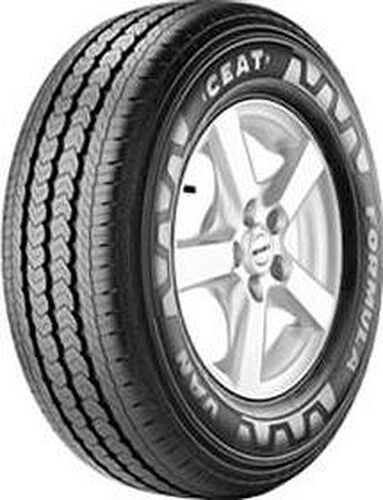
 Ceat Formula VAN
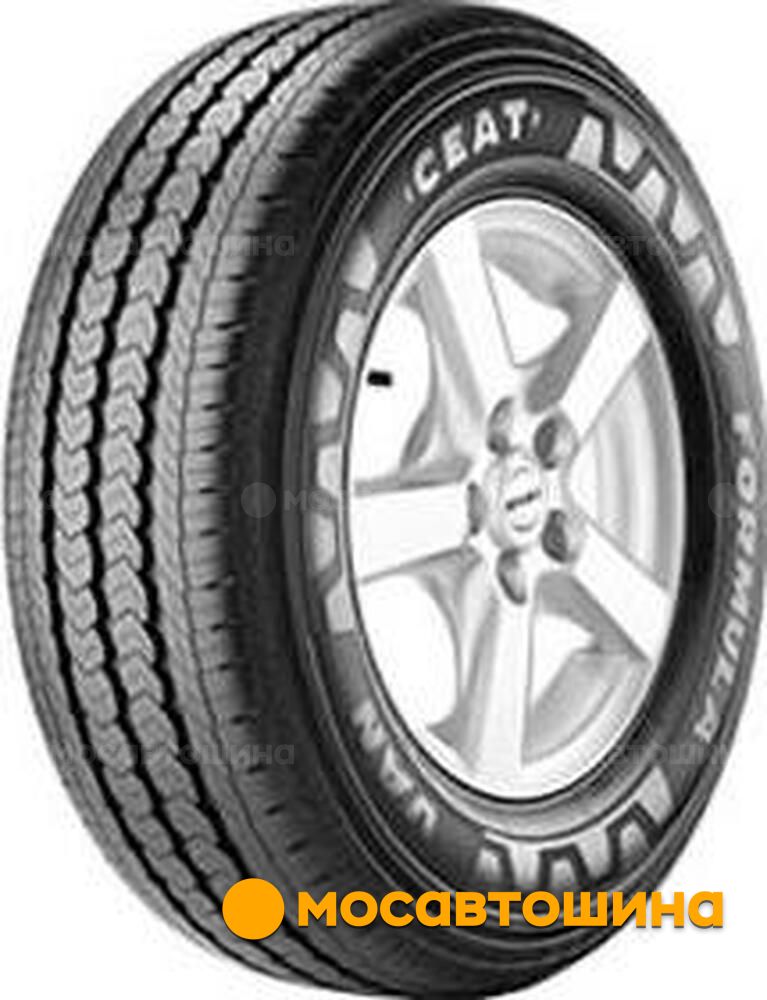
Description Ceat Formula VAN
Ceat Formula VAN – a summer tire for passenger cars where they consciously abandoned the pursuit of "extreme" characteristics in favor of a balanced set of properties important for real everyday driving. The model demonstrates stable traction, understandable handling, reduced rolling resistance, and increased wear resistance. This is a solution for the driver who values predictability and reliability.
Tread and its specifications
The central zone is represented by two segmented ribs. Increasing the stiffness of each element reduces their "parasitic" deformation during rolling — hence the optimization of air flow resistance. This is a classic solution for tires where stability on a straight line and low rolling resistance are important. The rib structure:
- acts as a guide, providing clear directional stability;
- minimizes longitudinal deformation in the contact patch;
- creates additional support area, evenly distributing pressure under the central part.
The shoulder areas have a closed structure and a more rigid compound. During maneuvers, it is the "shoulders" that take on the maximum lateral loads. Such a structure here gives:
- stable traction at any steering angles;
- increased accuracy and responsiveness of handling;
- resistance to premature wear.
Wet traction technology with lamellas
The lamellas with arrow-shaped edges in the center deserve special attention. Each element creates additional gripping edges. On a wet road, they effectively cut through the water film, increasing traction and braking properties, as well as providing confident acceleration without wheel spin.
Key features of Ceat Formula VAN:
- applicability to a wide range of passenger cars, including crossovers, SUVs, and compact minivans;
- massive shoulder areas and central ribs provide precise steering, directional stability at high speeds, and wear resistance;
- optimized air flow resistance due to tread geometry reduces fuel consumption in the combined cycle;
- numerous lamellas increase traction and braking properties, reducing the braking distance on wet surfaces.