
-
 Enlarge
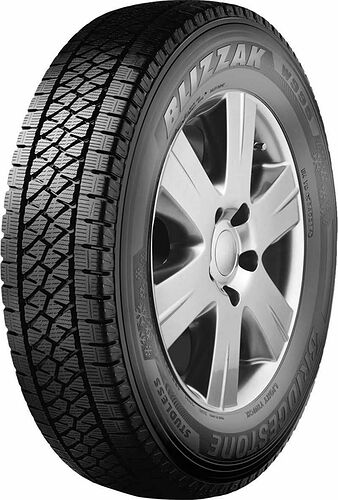
 Bridgestone Blizzak W995
Description Bridgestone Blizzak W995
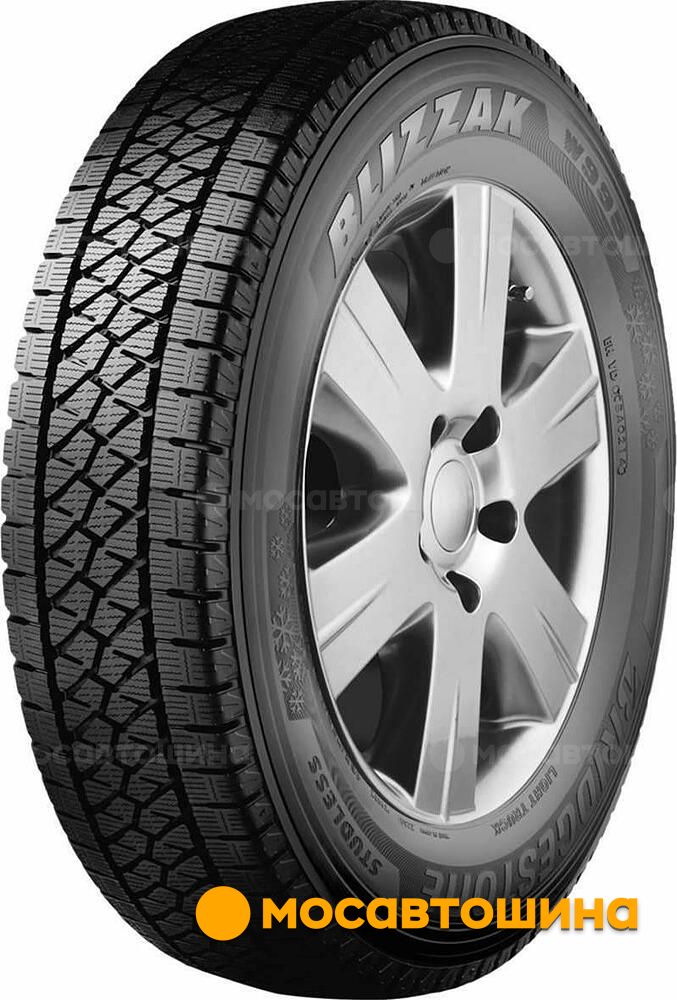
Relating to the line of winter passenger models, the non-studded Bridgestone Blizzak w995 tire is designed for small-tonnage commercial vehicles. Nevertheless, it has the same characteristic features that beneficially distinguish the tires of the Japanese brand from numerous competitors.
Multicell Rubber Compound
One of them is stable traction on slippery surfaces over a very wide temperature range. They are largely ensured due to the physicochemical properties of the tread rubber compound created using Multicell technology. It has two layers, the outer of which is made of a porous compound. The presence of numerous voids, on the one hand, increases the elasticity of the tread, ensuring its ability to effectively grip the smallest irregularities on the road surface, and on the other hand, absorbs moisture, thereby drying the contact patch.
Increased Number of Lameles
Another feature of the tread is the extremely dense arrangement of lameles. This made it possible to significantly increase the number of sharp edges, which significantly improve the efficiency of the tire on a slippery surface from water and ice. Since most of these miniature slots have a transverse direction, their presence is best reflected in longitudinal accelerations.
3D-Lameles in Shoulder Blocks
The Japanese company is one of the few in the industry that releases tires for commercial vehicles with 3D-lameles in the shoulder blocks. In this model, this solution provides a number of important advantages. One of them is a significant increase in coupling properties when braking on a slippery surface. At the same time, the three-dimensional structure of the lamele walls rigidly limits the mobility of the shoulder blocks when they are affected by multidirectional acceleration forces. As a result, the stability of the coupling properties increases, and the likelihood of uneven wear decreases.
Main Features of Bridgestone Blizzak w995
- a two-layer tread structure with a porous outer part improves coupling properties on ice, elasticity at negative temperatures;
- increased density of lamele arrangement provides reliable behavior on slippery roads;
- 3D-lameles in the shoulder blocks reduce the braking distance, improve handling, and prevent uneven wear.