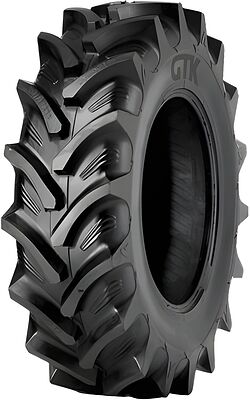
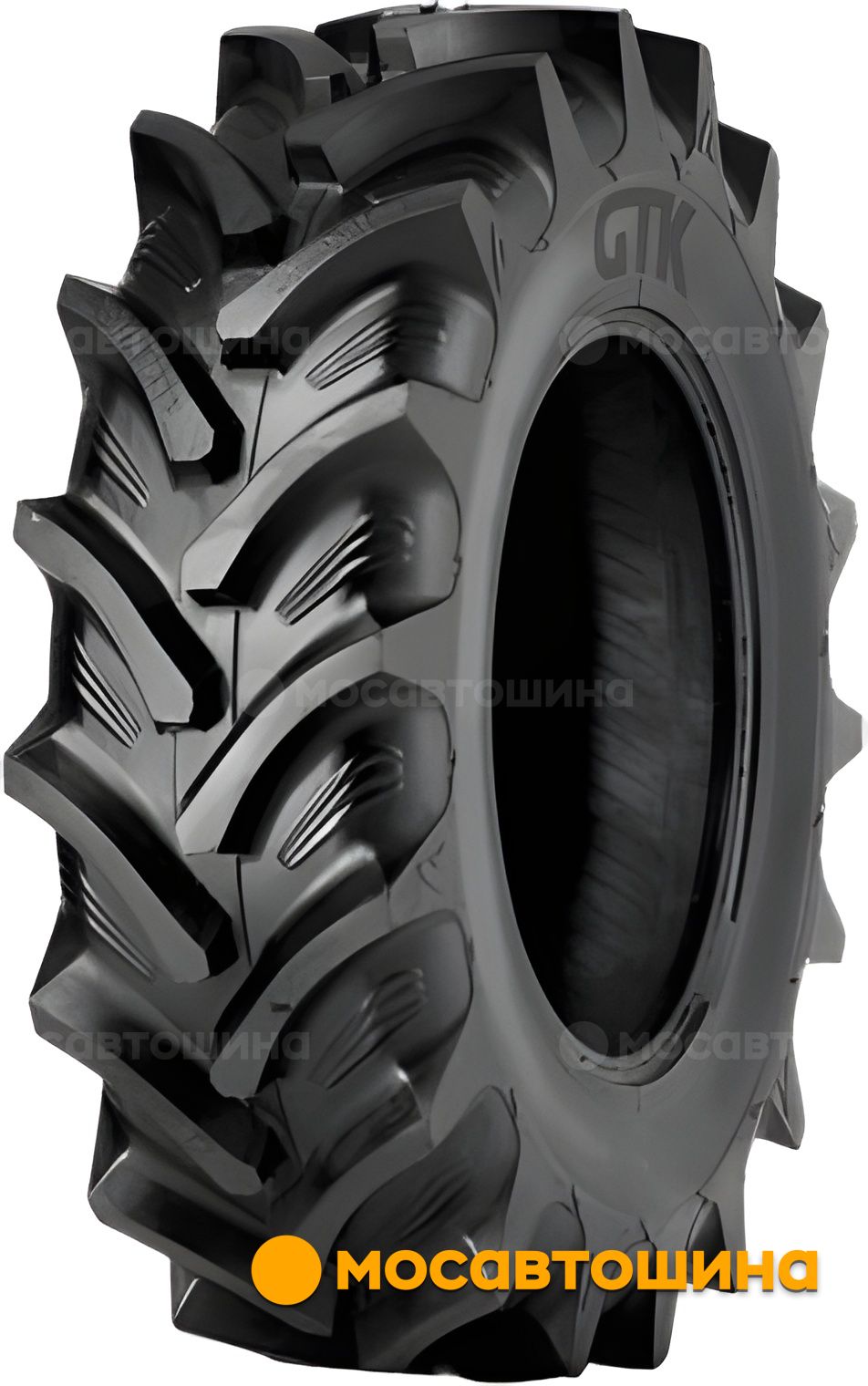
The agricultural tyre GTK RS200 is designed for tractors and field operations. Its radial construction combines with a deep directional tread pattern and flexible sidewalls. The model's main advantages are related to traction on soil, self-cleaning of the tread pattern, and the ability of the wide contact area to distribute load on the ground.
Traction during field work
Long, slanted lugs form a herringbone pattern. As the wheel rotates, their edges engage the soil sequentially, creating support for transmitting tractive force. Massive tread elements extend from the center to the shoulder areas and operate across a significant tyre width. This helps the tractor utilize grip on the soil when moving with mounted or trailed equipment.
Open tread pattern for self-cleaning
Wide gaps are left between the lugs, opening to the edges of the tread. As a section of the tyre exits the contact patch, these voids release accumulated soil. The angled arrangement of the ribs directs soil toward the shoulder zones, helping the tread maintain working depth on wet ground. Self-cleaning is essential for consistent traction: mud-filled gaps reduce the lugs' ability to grip the surface.
Radial carcass and flexible sidewalls
Flexible sidewalls allow the tyre to adapt to field irregularities and reduce shocks transmitted to the machine. The wide footprint helps distribute the load and minimizes soil compaction. Operating pressure is matched to the actual load and driving conditions: this precise matching enables taking full advantage of radial construction during field operations.
Key features of GTK RS200
- radial agricultural tractor tyre;
- deep chevron tread pattern with long traction lugs;
- wide open spaces for effective self-cleaning from soil;
- flexible sidewalls that cushion movement over uneven terrain;
- broad contact area for even load distribution on the soil.
 Enlarge

Approximate calculation.
Credit amount from 2 000 to 300 000 rubles.
Initial payment from 0% to 90%.
Loan term from 3 to 36 months.
The interest rate is calculated individually.
Read more