
-
 Enlarge
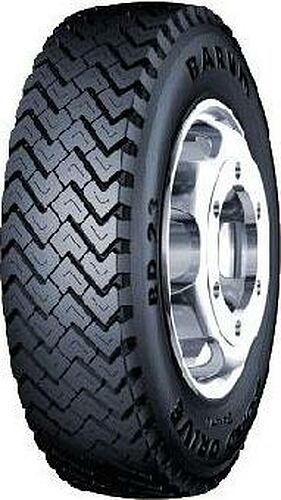
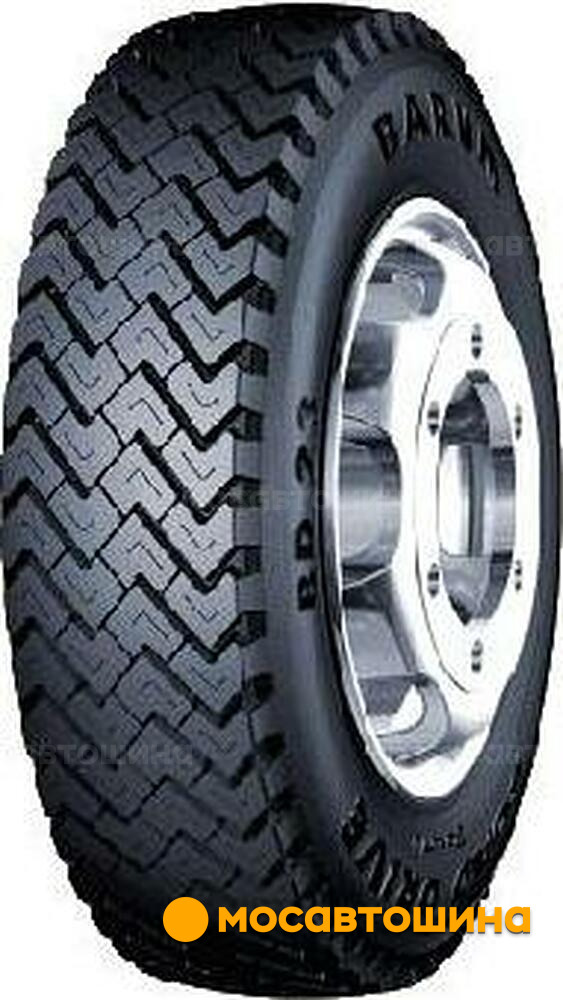
 Barum BD23
Description Barum BD23
The Barum BD23 tire is designed to equip small and medium-sized trucks. The Barum BD23 model belongs to the category of universal tires and can be mounted on both the steering and driving axles. The use of a vehicle with BD23 tires is allowed during the summer season.
The Barum BD23 tire is equipped with a uniquely designed tread, which features innovative displacement lamella stabilizers. This significantly increases the coefficient of traction force transmission, providing excellent dynamic characteristics, especially during acceleration or emergency braking. This design has a positive impact on driving safety, providing full control over handling and high maneuverability. The shortened braking distance and high resistance to the inertia of a loaded vehicle are an additional guarantee of driving safety.
The characteristic mutual arrangement of tread elements ("herringbone") provides directional stability and reliable traction with the road surface, regardless of climatic conditions and seasonality. A vehicle with Barum BD23 tires stands out for its high passability and easily overcomes snow-covered, water-filled, or muddy sections of the road. At the same time, the risk of aquaplaning and slushplaning is reduced to a minimum.
The reinforced sidewall zone of the tread provides high resistance to lateral loads, ensuring the stability of the vehicle when cornering.
A special rubber compound gives the tire high elasticity, which is maintained over a wide temperature range. Additionally, the rubber effectively absorbs shocks and vibrations from road irregularities. The rubber has a large margin of safety against rupture and is resistant to surface wear, which significantly extends the life of the product.
The maximum speed for the Barum BD23 model is limited to 170 km/h, and the load limit is 1.7 tons.
Key features of the Barum BD23 tire
- A uniquely designed tread provides high maneuverability and handling of the vehicle, regardless of weather conditions;
- High coefficient of traction force transmission;
- Shortened braking distance;
- High resistance to inertia;
- Minimal risk of aquaplaning and slushplaning;
- Increased service life.