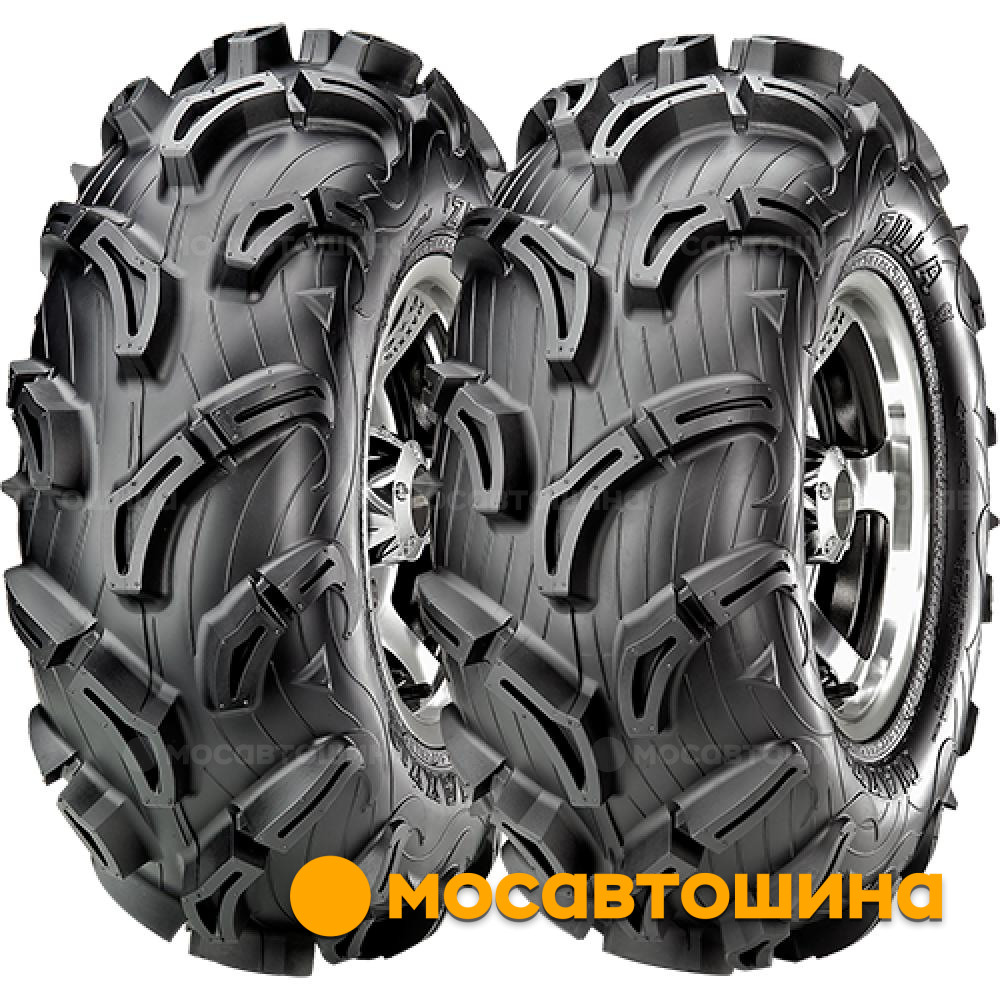
Like other representatives of the line of tires for Side-by-Side quad bikes, this model has a fairly narrow scope of application, namely the type of coverage for which it is intended. First of all, these are earthen grounds with a high moisture content, as well as any other unstable coatings, including snow. The specific conditions of use entail the presence of a number of design features in this model, which will be discussed below.
Low weight and significant strength of Maxxis Zilla
When developing this model, the engineers of the Asian company paid special attention to weight reduction. To do this, they preferred to abandon the steel cord in favor of a similar design made of synthetic materials. At the same time, no damage was done to the strength and reliability. This is largely due to the technology of seamless winding of the cord, which not only ensures the absence of any seams and joints between the threads, but also significantly increases the density of their arrangement, making the frame structure even more durable and resistant to aggressive mechanical stress.
Tread with aggressive design
Seeking to give the tire maximum versatility and performance on any type of coverage, the developers preferred to equip it with a V-shaped tread with a very aggressive design. It is formed by numerous blocks of a sickle-shaped form, in a checkerboard pattern converging in its central part. Such a arrangement significantly reduces rolling resistance, and the height of the tread elements and the significant length of their edges improve the longitudinal traction and coupling properties.
The Maxxis Zilla model has the highest performance on unstable types of coverage, largely due to not only the tread blocks, but also the significant distance between them. It is more than enough for the tread to effectively release the ground particles or snow masses that have been driven into it, thereby ensuring the constancy of the coupling properties, and therefore the effectiveness of the tread blocks.
Elastic rubber compound at low temperatures
This model is suitable for operation even at low temperatures. This is largely due to the compound, which in such conditions retains much of its initial elasticity. This was achieved by increasing the proportion of silica content. In addition, it is impossible not to note the presence of special polymers in the composition. They improve the strength of the mixture on rupture, ensuring the integrity of the tread.
Main features:
- significant carrying capacity, softness on the move and resistance to aggressive external influences, thanks to the "hybrid" design of the frame, in which both traditional and more modern synthetic materials are used;
- aggressive design of the tread pattern with sickle-shaped blocks reduces rolling resistance, providing excellent traction and coupling properties in the longitudinal direction;
- the possibility of operation at low temperatures, thanks to a compound with an increased content of silica and special polymeric compounds that provide the tread with significant resistance to rupture.
 Enlarge