Acoustic comfort and ride smoothness traction on asphalt off-road capabilities.
Traction properties on ice
Not the perfect option for icy roads, but for daily driving in cities where they somehow take care of the street conditions, there's no better option.
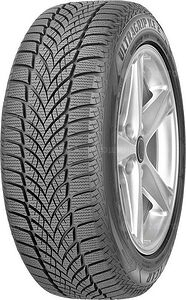
The tires presented last year, although with a minimal gap, were able to outdo the competitors in the "no studs" category. Yes, on ice, Goodyear loses to Nokian tires, but on packed snow, the lag is barely noticeable, and on a snowy field, a car with Goodyear tires accelerates even more confidently. And what helped Goodyear tires take first place was their excellent behavior on asphalt - both wet and dry. Moreover, these tires are the most comfortable: the least amount of noise and vibrations is transmitted to the cabin.
Traction on ice in the non-treaded tyre class Handling on ice and snow Comfort
traction properties on wet asphalt
Luxurious tires for winter coverings, but for large cities with their "asphalt" winters, it's better to choose something else.
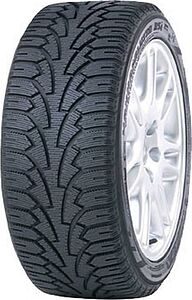
We were once again amazed by the ability of studded tires to provide such confident deceleration on ice! The conglomerate of lamellas, their correct orientation, optimal selection of tread rubber components... On ice, the tires are undoubtedly the best in their class! On snow, both rolled and loose, there is less enthusiasm: longitudinal coupling properties are at a medium level. But on a snowy track, the tires shone again in terms of handling: they are the best in both speed and handling comfort. One drawback: for high coupling properties on ice, you have to pay on asphalt: the soft tread is not ready for high longitudinal and transverse loads.
An excellent option for "city" winter: the best on dry asphalt, confidently cope with deep snow, for example, to overcome snow ridges that municipal services often "fence" parked cars along the roads.
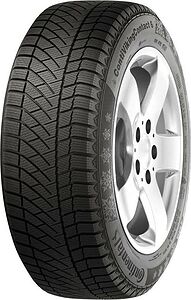
The asymmetric pattern is a reliable feature of Continental winter tires, both studded and studless. According to the designers' idea, the outer part of the tread is responsible for grip on asphalt, the middle part "specializes" in icy coatings, and the inner part on snow. The story is beautiful, but the results say that the tires - as a whole, not in parts - are more inclined towards asphalt, namely dry: the braking distance from 100 km/h is as much as ten meters shorter than that of Hankook tires. On ice and snow, there are no records. On handling tracks, the prevailing understeer of the front axle limits the speed when entering a turn and makes driving on a slippery road bland and uninteresting.
Ice grip properties in the non-studded tyre class ice and snow handling price
Braking performance on snow
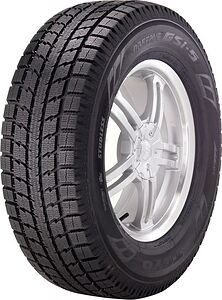
Worthy winter tires with well-balanced performance on slippery surfaces and asphalt. In terms of price-quality ratio, they are even claiming the title of the best studded tires.
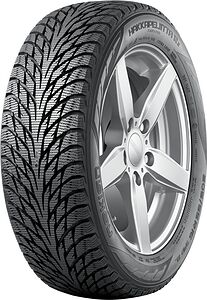
Another version of the rebirth of the released Nokian HKPL RSi model. The pattern is the same, but the materials are simpler, and the price is lower. On snow, the tires give up positions, and on a rolled surface, they have the longest braking distance. Although on the highway, you can drive quickly and with pleasure on such tires - especially the clear reactions to steering wheel turns are pleasing, which helps to accurately plan the trajectory when entering a turn. And only the rather sharp skidding did not allow us to put the highest score for handling convenience. On wet asphalt, the tires turned out to be significantly better than the HKPL R2 tires, and on dry pavement, they were equal. Including in terms of comfort.
inadequate reliability of control on ice and snow noise
On ice, the lag behind the leaders is small. The tires work well on snow. And on the track, these tires allowed us to show the third time, moreover, in the absolute standings, taking into account the results of studded tires! However, I had to work hard on the steering wheel. The car lacks stability: in the same turn, it can slip with the front axle, and on the next lap, it can go into a skid. On dry asphalt, the braking properties pleased (another third place in absolute!), but the sound accompaniment upset: the hum of the tread presses on the ears in the entire speed range.
Traction properties on wet and dry asphalt low ride smoothness
A decent budget option.
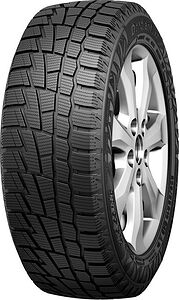
In designing the sidewalls, Cordiant follows the "Chinese" path: this is a light "tuning" of the patterns of proven European models. This is another variation of the ContiVikingContact 5: neat wavy lamellas, a rugged shoulder area. In icy disciplines, Cordiant tires are close to Chinese Maxxis tires - they have the same indicators in the table. On snow, domestic tires win in braking, but lose in speed on the track handling. And, what's more offensive, in passability. On asphalt, the coupling properties of the tires are also not high, and the smoothness of the ride leaves much to be desired.
Traction properties on ice and snow
steering ability on ice and snow
traction properties on asphalt
Test disappointment.
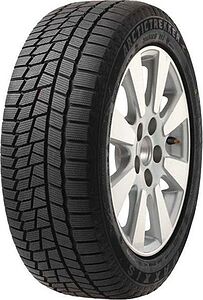
You read the advertising brochures and you're amazed: what's not here! It turns out that the tires contain both "moisture absorbent based on powder obtained from bamboo charcoal" and "microparticles of walnut shell". But either the bamboo hasn't grown yet, or the nuts are unripe... The tires just won't grip the ice, no matter how hard you try! They slip both lengthwise and crosswise. On a 600-meter track, the Nokian friction tires "lose" more than five seconds! On snow, the situation is better: in some types of tests, the "bamboo" tires manage to rise above last place, and on a dirt road, they even ended up in the middle of the ranking. But on the snow handling track, they fail again: the lag behind the Chinese Maxxis, which took the penultimate place, is more than two seconds! And on asphalt, the results are mediocre.