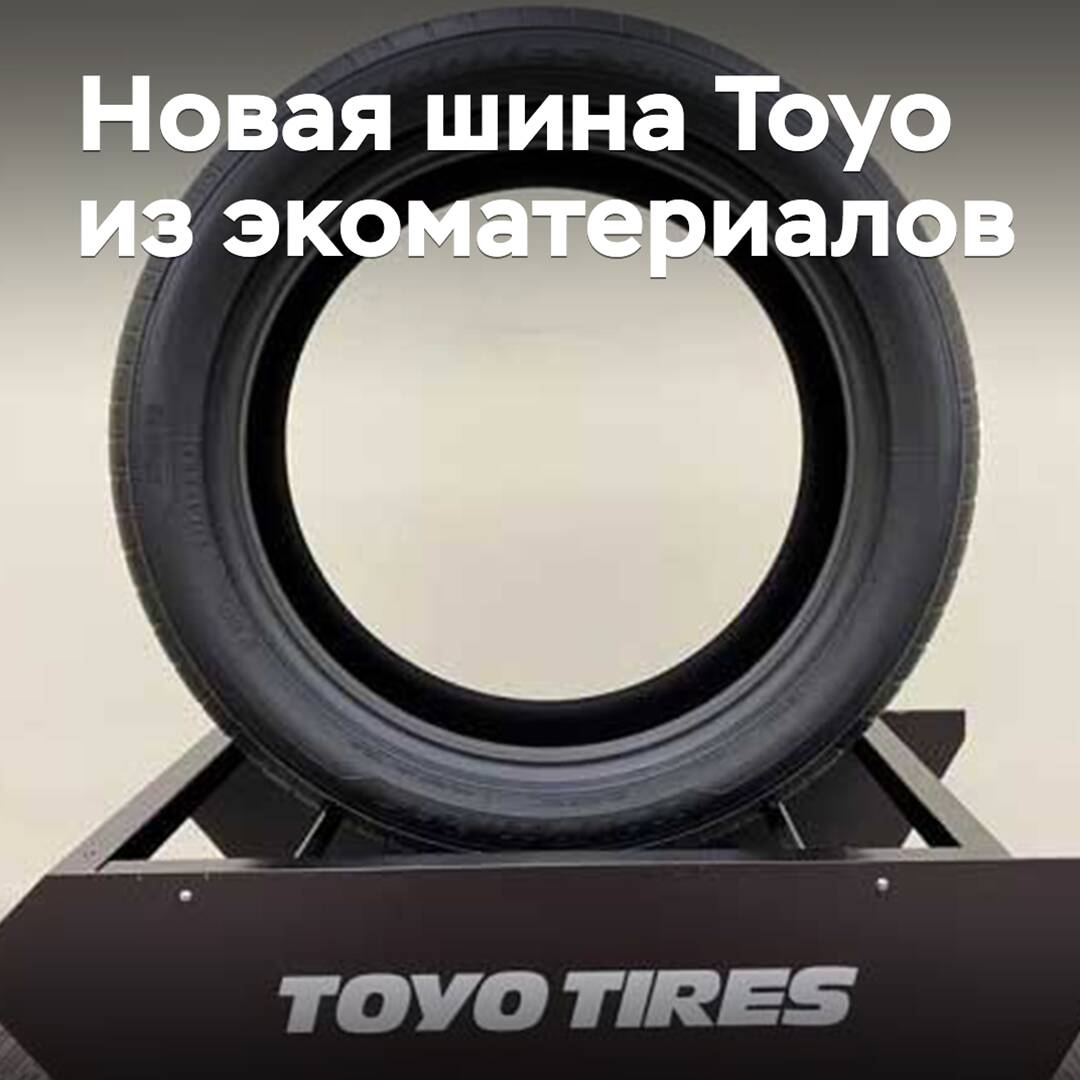
Toyo showcased a new tire made from eco-materials
Toyo Tire has introduced a conceptual tire made from 96.5% eco-friendly materials. Compared to the concept tire demonstrated by Toyo in January last year, the proportion of "green" raw materials has been increased by 6.5 percentage points, and the company notes that it continues to work on new technologies in this area with the aim of implementing them in the production of commercially available products.
Eco-friendly materials for tire production can be conditionally divided into two types: renewable, i.e. obtained from natural sources; and recycled - made using secondary raw materials. In the new tire, the proportion of renewable materials is 61.5%, and, for example, butadiene and butadiene-styrene rubber, as well as polyester fibers obtained from biomass, silicon dioxide from rice husk ash, and vegetable oil were used. The list of secondary materials (their proportion is 35%) included, in particular, butadiene rubber obtained from CO2 using a technology developed jointly with the University of Toyama (Japan), as well as recycled technical carbon, bead wire, and metal cord.
“Our company is striving to develop technologies that allow replacing materials necessary for maintaining high operational characteristics of tires, but at the same time difficult to replace with eco-friendly raw materials, and we are making every effort to reduce the impact on the environment,” Toyo states.
Toyo adds that thanks to its long-term experience in creating rubber compounds, the company has been able to develop technologies for the secondary use of important materials such as sulfur and zinc oxide, and the goal is to increase the proportion of "green" raw materials in serial tires to 40% by 2030 and to 100% by 2050.
Another feature of the concept tire was the reduced rolling resistance - the highest "AAA" rating for fuel efficiency was achieved according to the Japanese labeling system, and the company emphasizes that it "will continue to develop technological innovations and implement them in practical applications to rapidly develop products that contribute to the increase in mobility eco-friendliness, and be among the first to bring them to market".