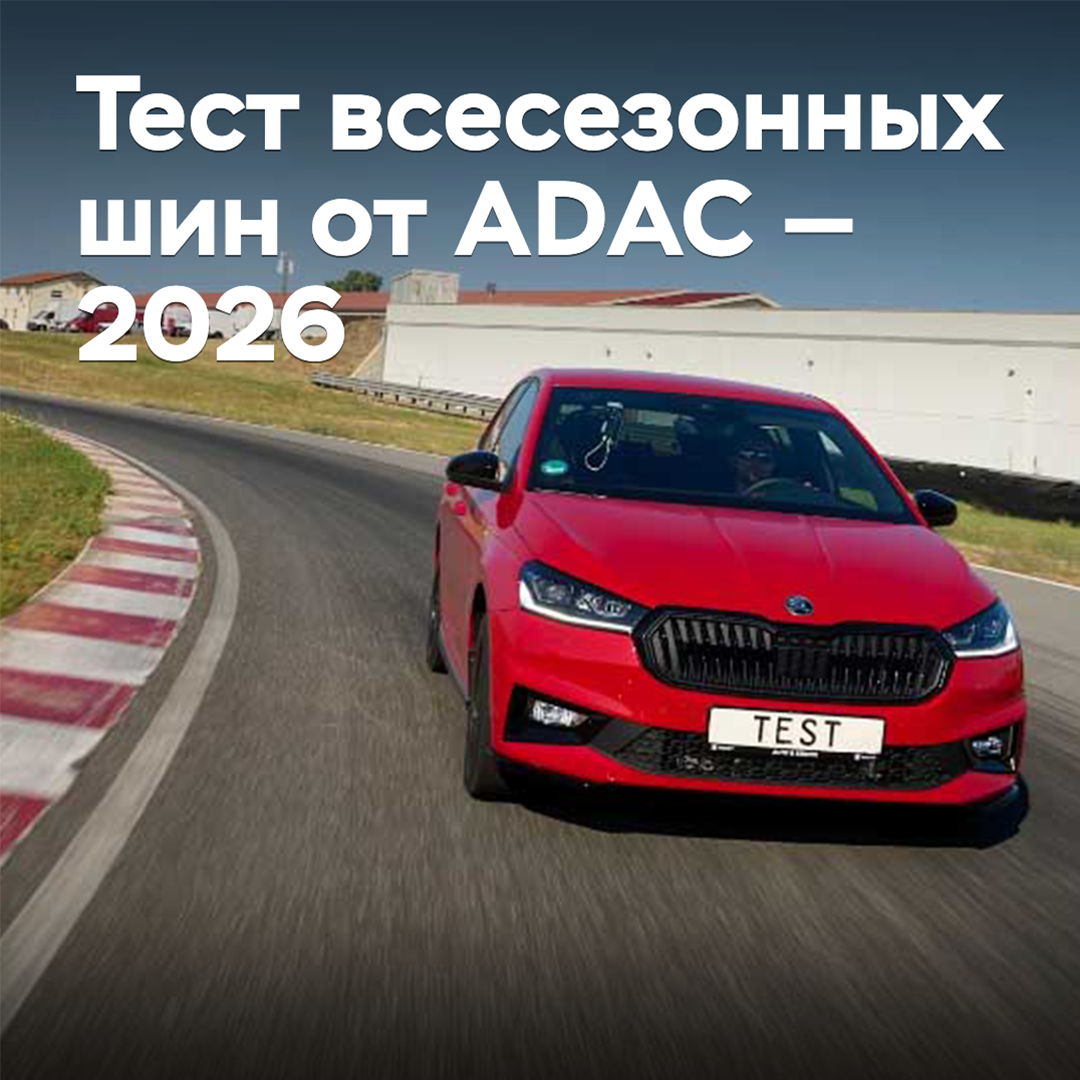
ADAC All-Season Tyre Test — 2026
The European market for all-season tires continues to grow, including in the segment of tires for small cars, which is why ADAC chose the 185/65 R15 size for its latest test, which is suitable, for example, for the Opel Corsa, Peugeot 208, Dacia Sandero, etc. At the same time, the testers noted that not all premium manufacturers offer their latest models in this size, and, for example, Bridgestone only releases the Weather Control A005 Evo model in this size, while its successor, the Turanza All Season 6, has been available in larger sizes for a long time. A similar situation is with Michelin, which produces not the new CrossClimate 3 for owners of small cars, but the previous generation tire - CrossClimate 2. As the test showed, the consequences of such an approach can be very different, and if the A005 Evo, as indicated in ADAC, "no longer meets modern technological standards", then the CrossClimate 2 "is still good".
In total, 16 tires from all price segments were included in the list of participants:
Bridgestone Weather Control A005 Evo
Continental AllSeasonContact 2
Goodyear Vector 4Seasons Gen-3
Milever All Season Versat MC545
Nokian Seasonproof 2
Pirelli Cinturato All Season SF 3
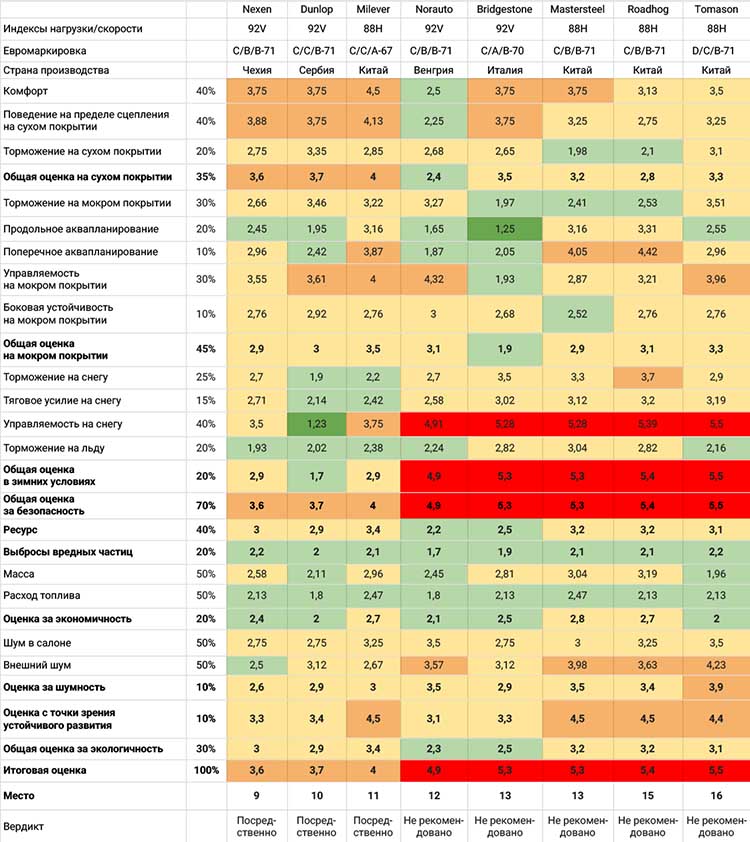
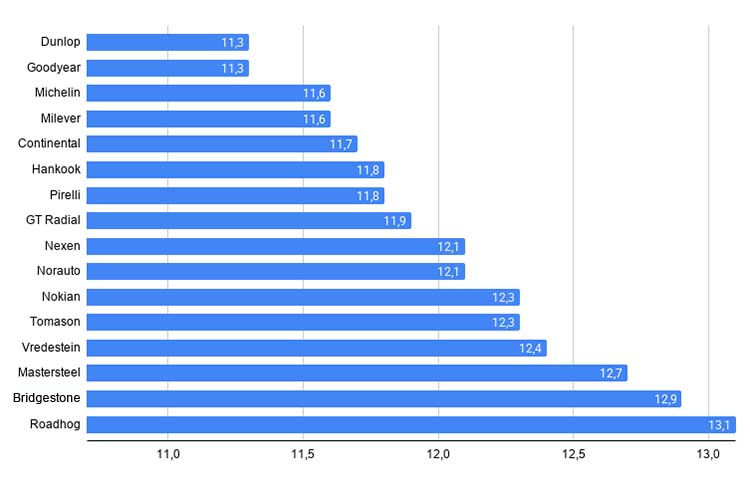
All-season tires should work effectively on snow, and in such conditions, the car stops fastest with Goodyear tires, as well as Dunlop tires, which were released by the same company even before the sale of the rights to the Japanese brand Sumitomo. The weakest results were shown by Bridgestone and budget Roadhog.
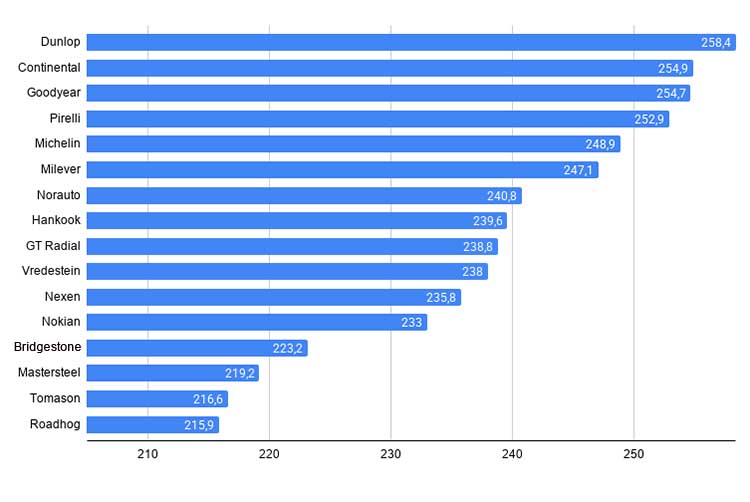
Dunlop and Goodyear also provide the highest traction on snow among the tested tires, and this time they were joined by Continental, while Roadhog is clearly not suitable for winter conditions.
Although all-season tires are usually not tested on ice, ADAC tests are an exception, and the shortest braking distance on an icy surface was recorded by Goodyear, Nexen, and Dunlop.
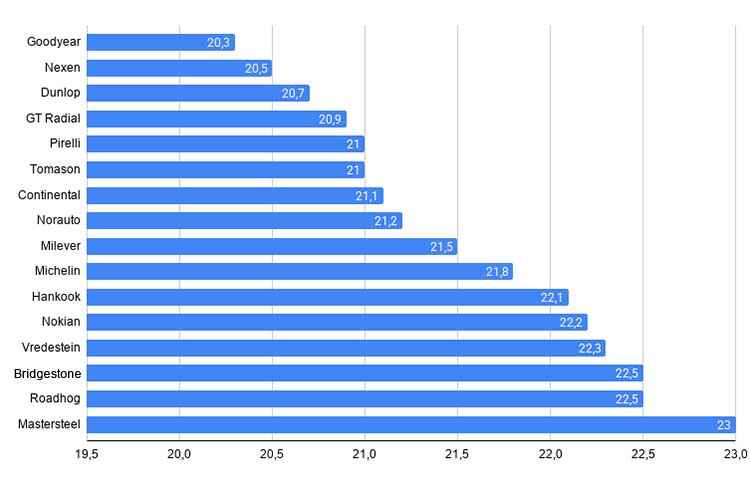
On wet pavement, braking properties were evaluated on asphalt and concrete, and in the first case, the leader was Nokian, and in the second - Bridgestone. Dunlop tires fell to the bottom of the rating, which means these tires were created with an emphasis on improving "winter" characteristics, but at the same time, more premium Goodyear demonstrate that balance is still possible.
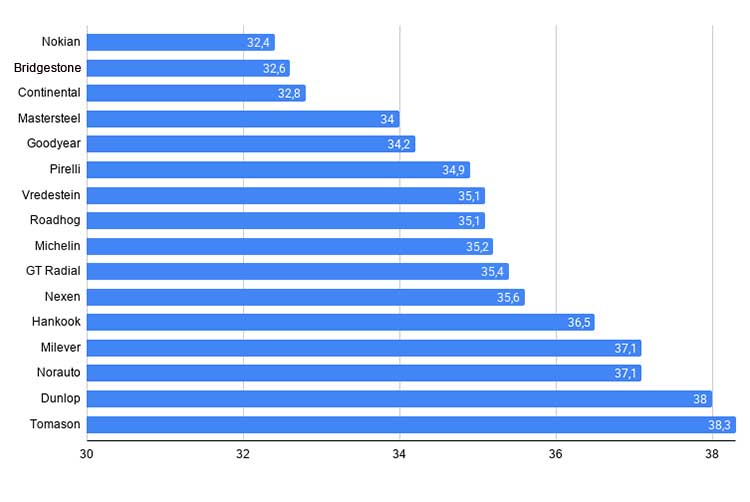
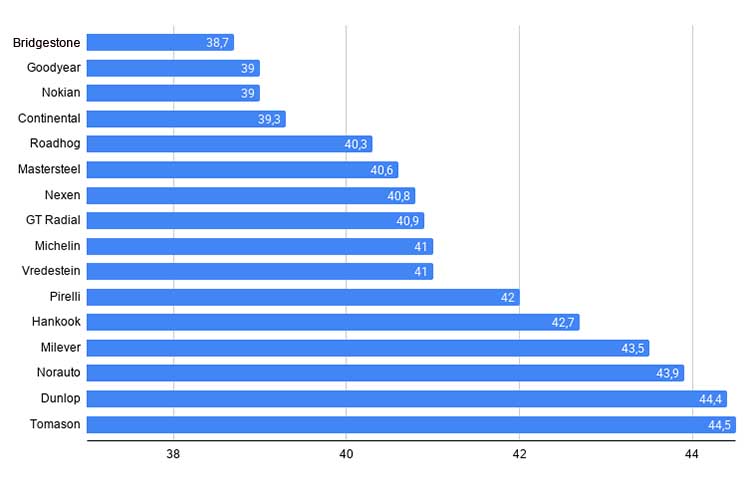
The best in terms of resistance to aquaplaning were Nokian, and Hankook also coped well with water drainage, which cannot be said about cheap Milever, Mastersteel, and Roadhog.
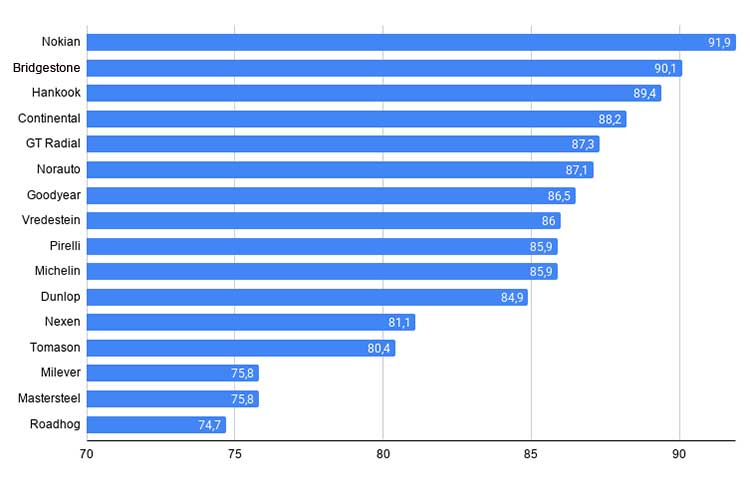
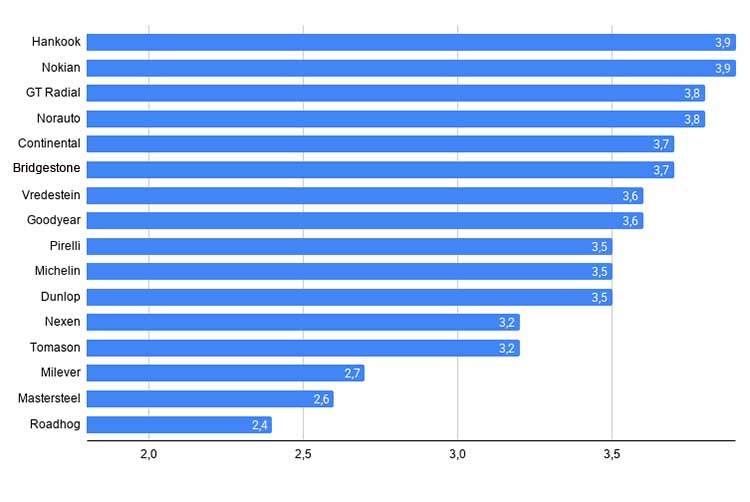
On dry pavement, the balance of power changes, and the most effective in terms of braking were Mastersteel, which was able to overtake Michelin, and Roadhog also had excellent performance. The last place, with a noticeable gap from competitors, is occupied by Dunlop, which has a weak result, as well as Goodyear.
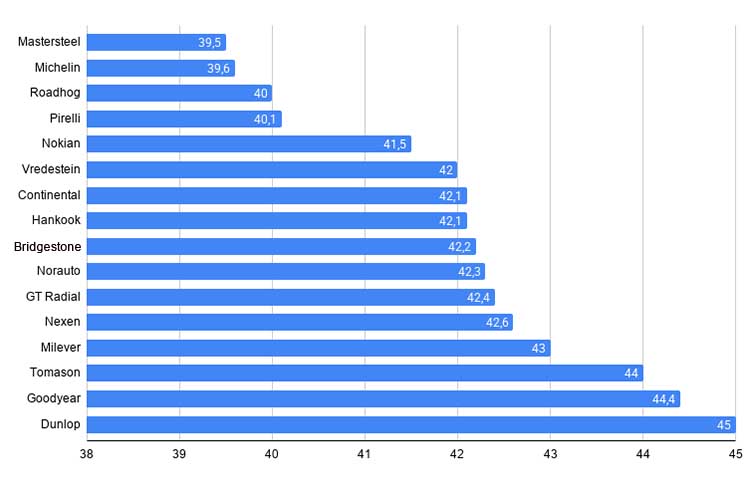
In resource tests, as noted in ADAC, not a single tire achieved record values, and, for example, Milever will need to be replaced after 32,400 km, which means that with average operating conditions, they will last less than three years. The most kilometers to replacement can be driven on Norauto tires (the brand belongs to the large European automotive service network Mobivia).
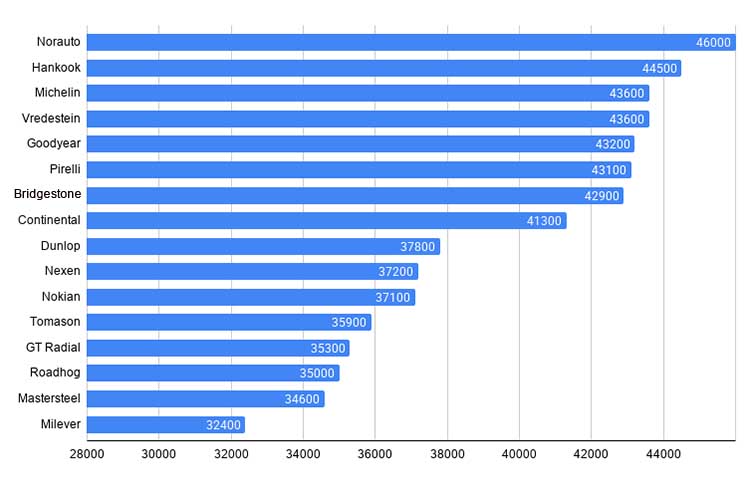
The most economical tires in the test were Continental, and Goodyear, Mastersteel, and Milever will increase fuel consumption.
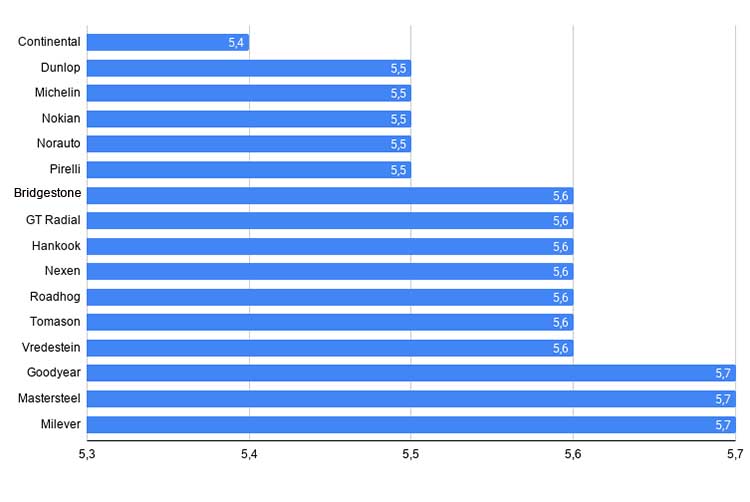
Since fuel consumption is also affected by the weight of the tires, this factor also affects the final rating, and the lightest tires were Michelin, and the heaviest were GT Radial.
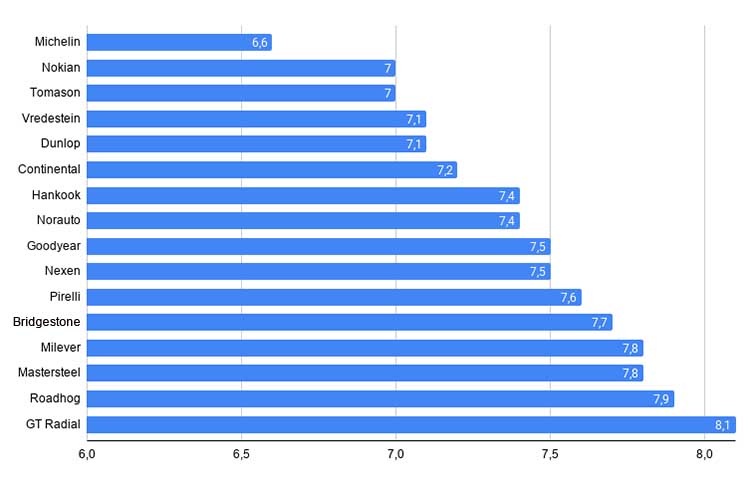
One of the recent innovations was the tests for micro-particle emissions that occur during tire wear, and in this discipline, the first place was also taken by Michelin, followed by Norauto and Pirelli.
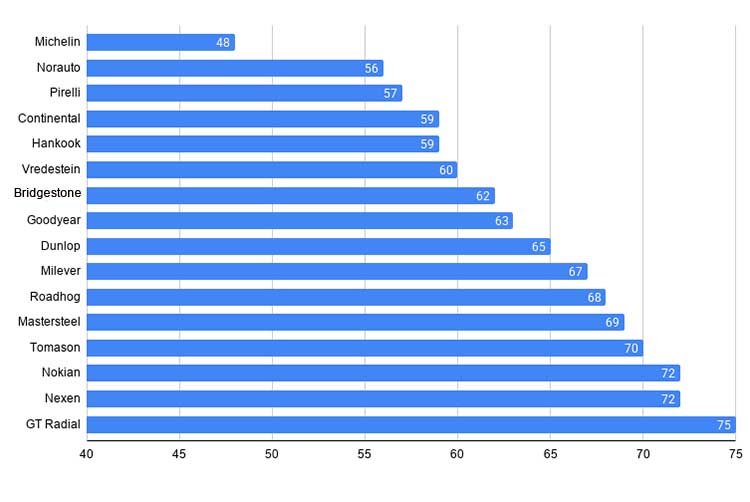
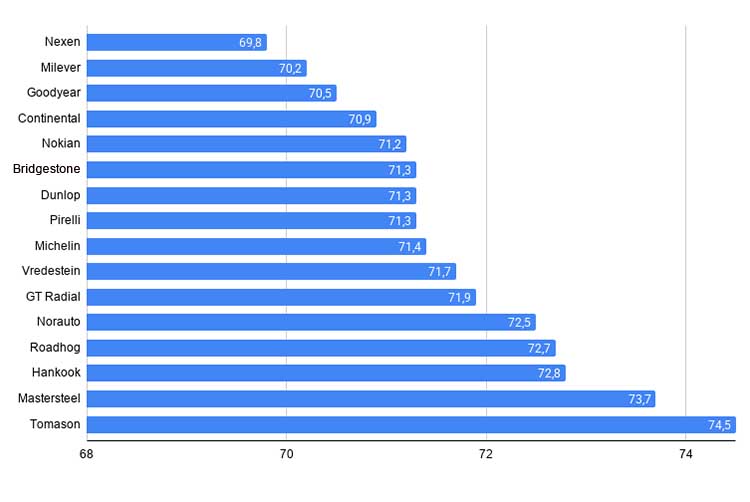
In the test for external noise level, the first lines were taken by Nexen, Milever, and Goodyear, and the noisiest were Tomason.
Verdict
According to the test results, only one tire was able to receive a "Good" rating, and this is the Continental AllSeasonContact 2, which confirmed that it can provide a high level of safety in any weather. The only thing that prevented the tires from getting a higher rating was not the highest resource (41,300 km), which increases the load on the environment, but in ADAC, they said that Continental "is definitely worth recommending".
Pirelli Cinturato All Season SF 3 and Michelin CrossClimate 2 slightly lagged behind the leader, which showed relatively weak results, respectively, in winter conditions and on wet pavement. At the same time, both tires have a good environmental rating (such factors as potential mileage and micro-particle emissions are taken into account), and Michelin has the best among the participants in the tests.
The next five tires - Vredestein Quatrac, Hankook Kinergy 4S 2, Goodyear Vector 4Seasons Gen-3, Nokian Seasonproof 2, and GT Radial ClimateActive - all showed weaknesses at least on one type of surface, while Nokian and GT Radial's final rating was reduced primarily due to reduced wear resistance.
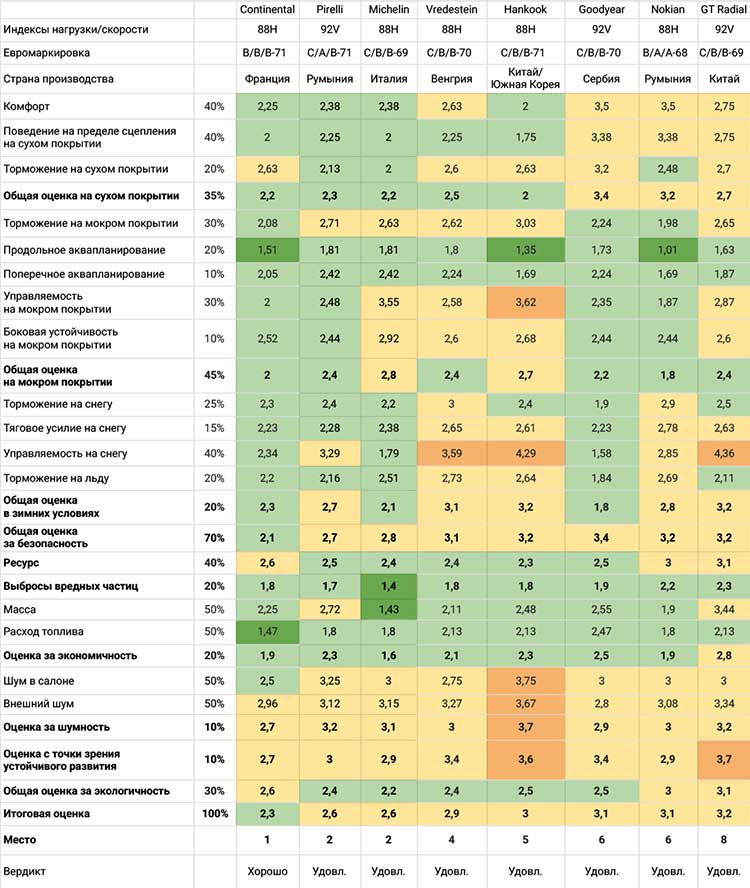
The lower lines were occupied by Nexen N'Blue 4Season 2, Dunlop All Season 2, and Milever All Season Versat MC545, which all have significant drawbacks in terms of performance on dry pavement and were unable to show good results on wet surfaces. Dunlop, in turn, showed excellent performance on snow, and in ADAC, they said that, in general, All Season 2 could be good winter tires, but since they are positioned as "all-season", a certain balance of characteristics is necessary, which is precisely what these tires lack.
The bottom lines of the rating were occupied by five tires - Norauto 4 Seasons 2, Bridgestone Weather Control A005 Evo, Mastersteel All Weather 2, Roadhog RGAS02, and Tomason Allseason - which received a "Not Recommended" rating primarily because they simply lack traction on snow, even despite the snowflake symbol (3PMSF) on the sidewalls. What is interesting is that Mastersteel and Roadhog tires (both private brands belong to the company Inter-Sprint, which is based in the Netherlands) have an identical tread pattern and were released from the same factory, but at the same time, they clearly differ in their properties, which is likely due to differences in materials used. In any case, none of them are worthy of recommendation.