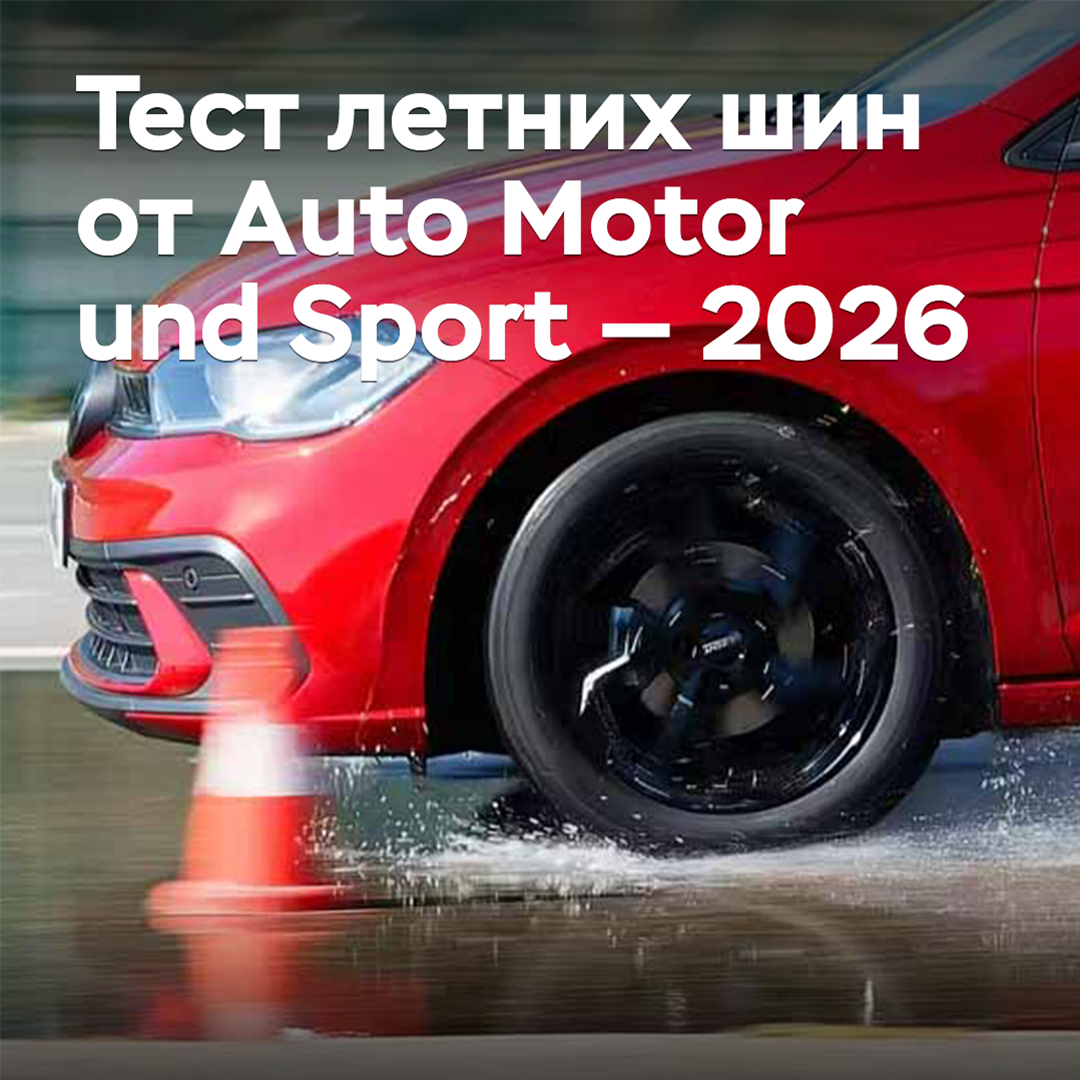
Summer tire test from Auto Motor und Sport — 2026
In the summer season of 2026, Sumitomo, after purchasing the rights to use the Dunlop brand in Europe from Goodyear, released a tire under this brand on the local market for the first time, which became the summer Dunlop Blue Response TG (TG stands for Touring), and the first to test it were experts from the German magazine Auto Motor und Sport.
In the AMS test, tires with a size of 195/55 R16 for small cars were compared, and another debutant was the Cooper Summer from Goodyear, and the Giti GitiSynergy H2 from the company from Singapore caused particular interest among the testers. The price of the tires is comparable to Dunlop - and Sumitomo positions the acquired brand as belonging to the premium segment - was produced in China, and according to the Euro marking system, it received the highest rating of A/A/A, which means that theoretically, it could be expected that the Asian product would combine high grip on wet roads with low rolling resistance.
List of participants:
Cooper Summer
Dunlop Blue Response TG
Falken e.Ziex (developed specifically for electric vehicles)
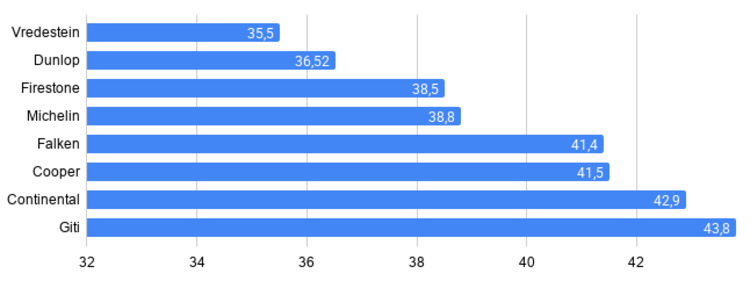
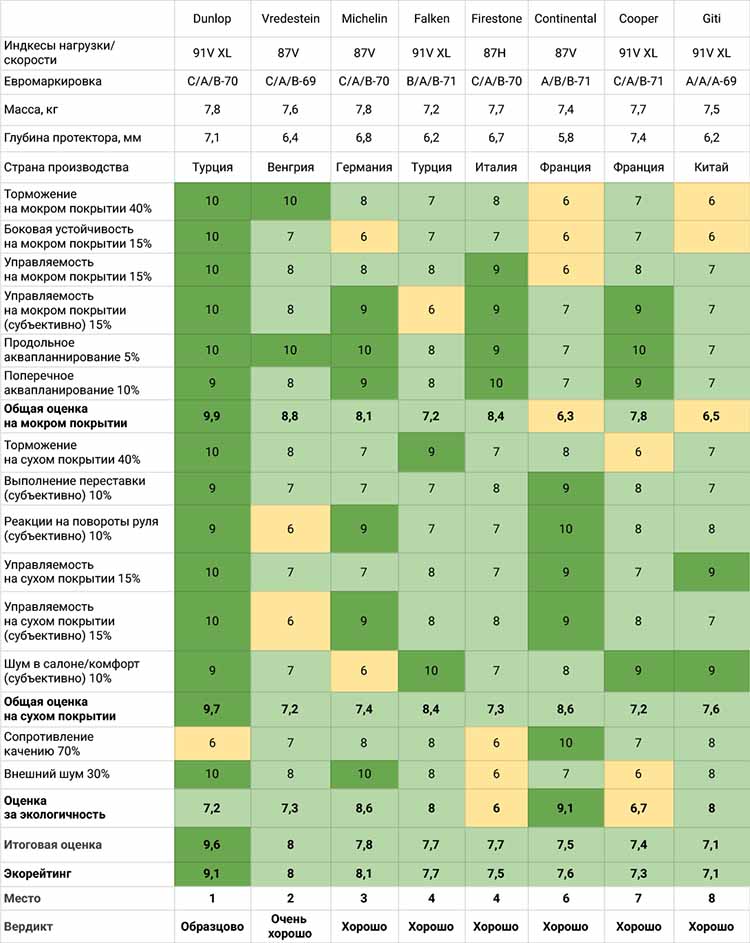
In the test for braking efficiency on a wet track, Giti became the last and conceded to Continental, although the EcoContact 6 has a rating of B for grip on wet coating on the Euro label, and the first place was taken by Vredestein, while the new product from Dunlop shows a high second result.
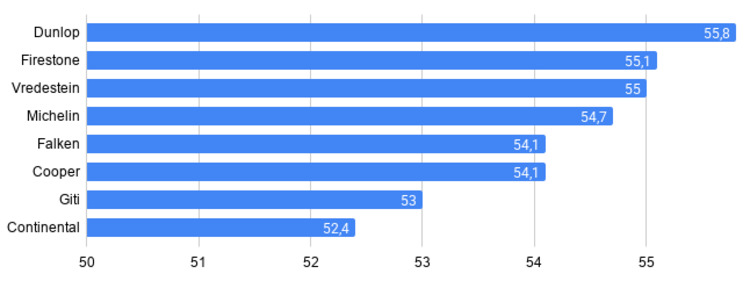
In the tests for handling on a wet surface, Dunlop came out on top, and Continental fell to the last line, and this, according to the experts, is most likely due to the fact that the developers of eco-friendly tires sacrificed grip in the rain for improved energy efficiency.
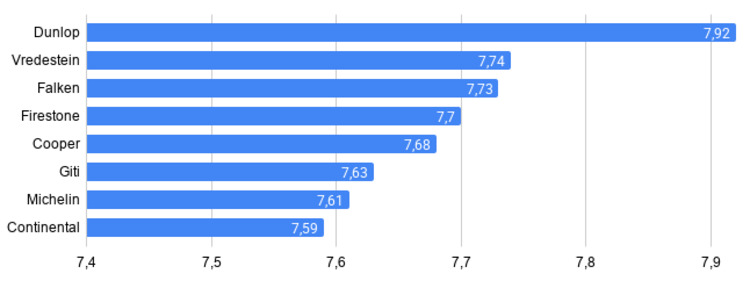
Dunlop also have very high lateral stability on wet surfaces, and in this discipline, they are significantly ahead of their nearest competitor, which is Vredestein. The worst result in this discipline was shown by the "green" Continental.
Aquaplaning is most effectively resisted by Michelin tires in the test, while Continental has the worst results (they also had the smallest tread depth, which needs to be reduced to improve economy).
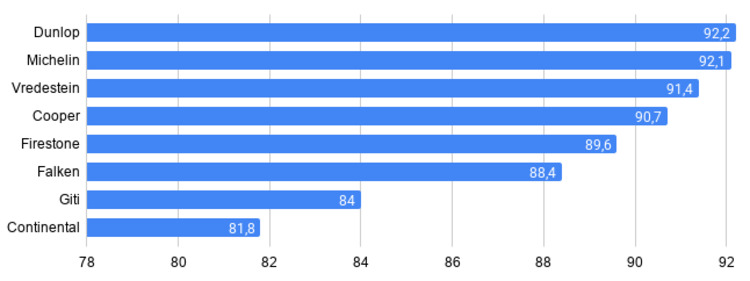
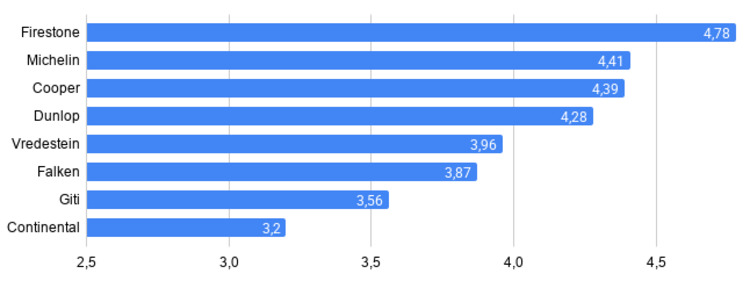
On dry surfaces, the car was stopped faster by two tires from Sumitomo - Dunlop and Falken, while the worst result was shown by Cooper, and Michelin unexpectedly showed a weak result.
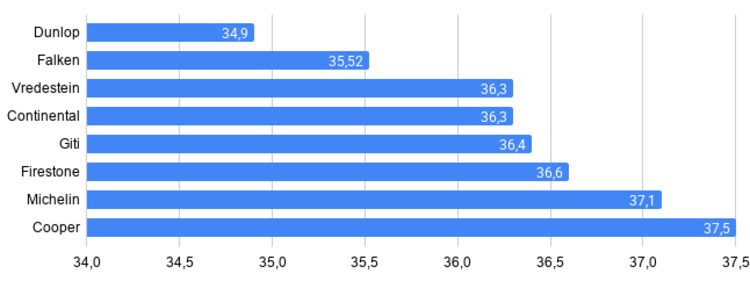
Dunlop also showed the best average speed on a dry track, and the second place was shared by Continental and Giti. The tires were also given subjective handling assessments, and the best were Dunlop, Continental, and Michelin.

While Dunlop proved to be effective on both wet and dry surfaces, the novelty also took first place in terms of external noise level.
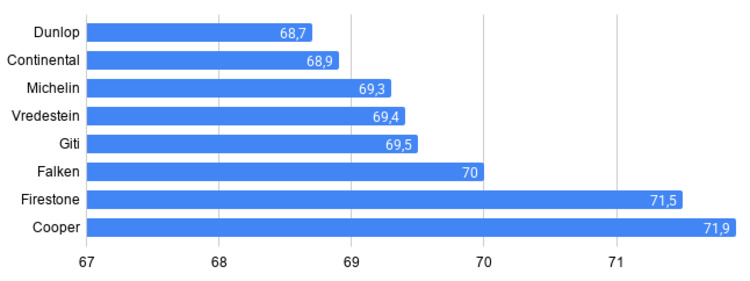
Just a little more, and Dunlop would have almost an ideal rating in the overall standings, but without a fly in the ointment, it did not work out, and the Blue Response GT had the highest rolling resistance among the test participants, while the first line is expectedly occupied by Continental.
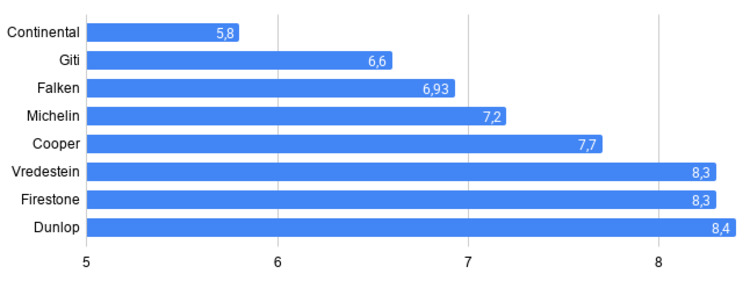
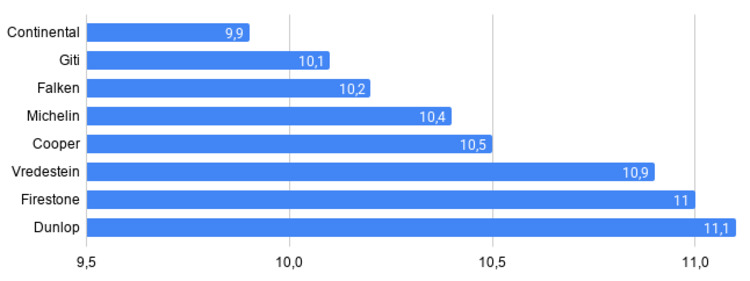
Verdict
The Dunlop Blue Response GT debuted in the test and won with an "Exemplary" rating, showing excellent results on all types of surfaces and having a very low noise level, while sacrificing economy for improved safety, which, despite all the trends in the industry, still remains the main priority.
Vredestein Ultrac+ was able to earn a "Very Good" rating, and perhaps such a high result is due to the fact that AMS does not evaluate the resource of tires, while other testers said that the tires from the Dutch brand have far from the highest wear resistance. Vredestein performed very well on wet surfaces, while on dry surfaces, they were noted for slow and unclear reactions to steering wheel turns.
Michelin Primacy 5 took third place, as they behave very balanced in any conditions, however, on dry surfaces, the braking distance is relatively long, and it would also be possible to improve the stability when performing sharp maneuvers, as well as the shock-absorbing qualities of the tires.
The Falken e.Ziex tires performed very well on dry surfaces, and they also provide excellent acoustic comfort - since the tires were developed specifically for electric vehicles, this factor was given special attention. At the same time, Falken lost their rating due to a relatively long braking distance and unstable handling on wet surfaces.
Firestone Roadhawk 2 and Continental EcoContact 6 shared the fourth place, and the first tires have good driving qualities, especially on wet surfaces, but at the same time, they have high rolling resistance, and the second tires have, on the contrary, excellent energy efficiency combined with relatively weak grip in rainy weather. As for Giti, they also showed their main drawbacks on the wet track, but the tires do not pose a threat to safety, so they were also able to get a "Good" rating.
The weight of the assessments is determined as follows: wet surface - 50%, dry surface - 40%, environmental friendliness - 10%. When compiling the eco-rating, the weight was changed to 50%/20%/30%.
Source: Auto Motor und Sport. Photo: Auto Motor und Sport / Ingolf Pompe