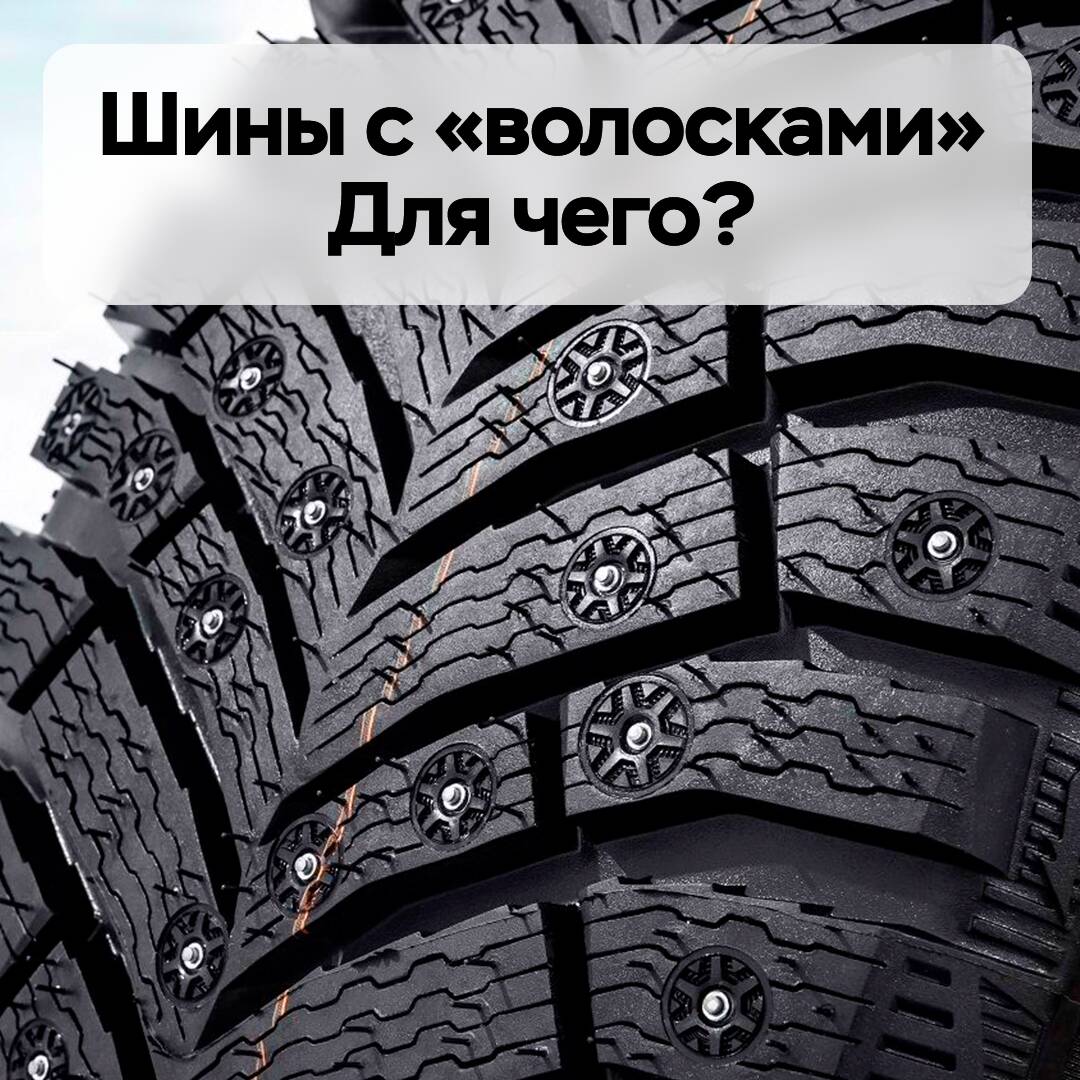
Tires with "hairs". What for?
Passing by the shelf with tires, you can notice that some models have a significant difference, some tires are covered with a dense layer of rubber hairs. As a rule, this is a feature of more budget tires, but among winter tires, you can also find premium models with this feature.
The question remains - why?
This is one of the legends that revolve around tires. Often, car enthusiasts try to determine the elasticity of the rubber by pulling the hairs and observing how they stretch. Some believe that it helps with traction, while others consider it a simple defect.
Of course, it's worth starting with the fact that this is not a defect, but rather a manufacturing feature related to the type of mold in which the tire is baked. During baking, air is squeezed out, and these hairs simply repeat the contour of the channels through which this process is carried out. The "hairiness" of the tire simply depends on the number of these channels and their length, at which the channel shutter works.
Oddly enough, one of the myths is not far from the truth. This feature really does affect traction. Although within 3-5%. In any case, this is not a reason to choose tires based on the presence of these hairs, as they wear off after a maximum of 1000 km.