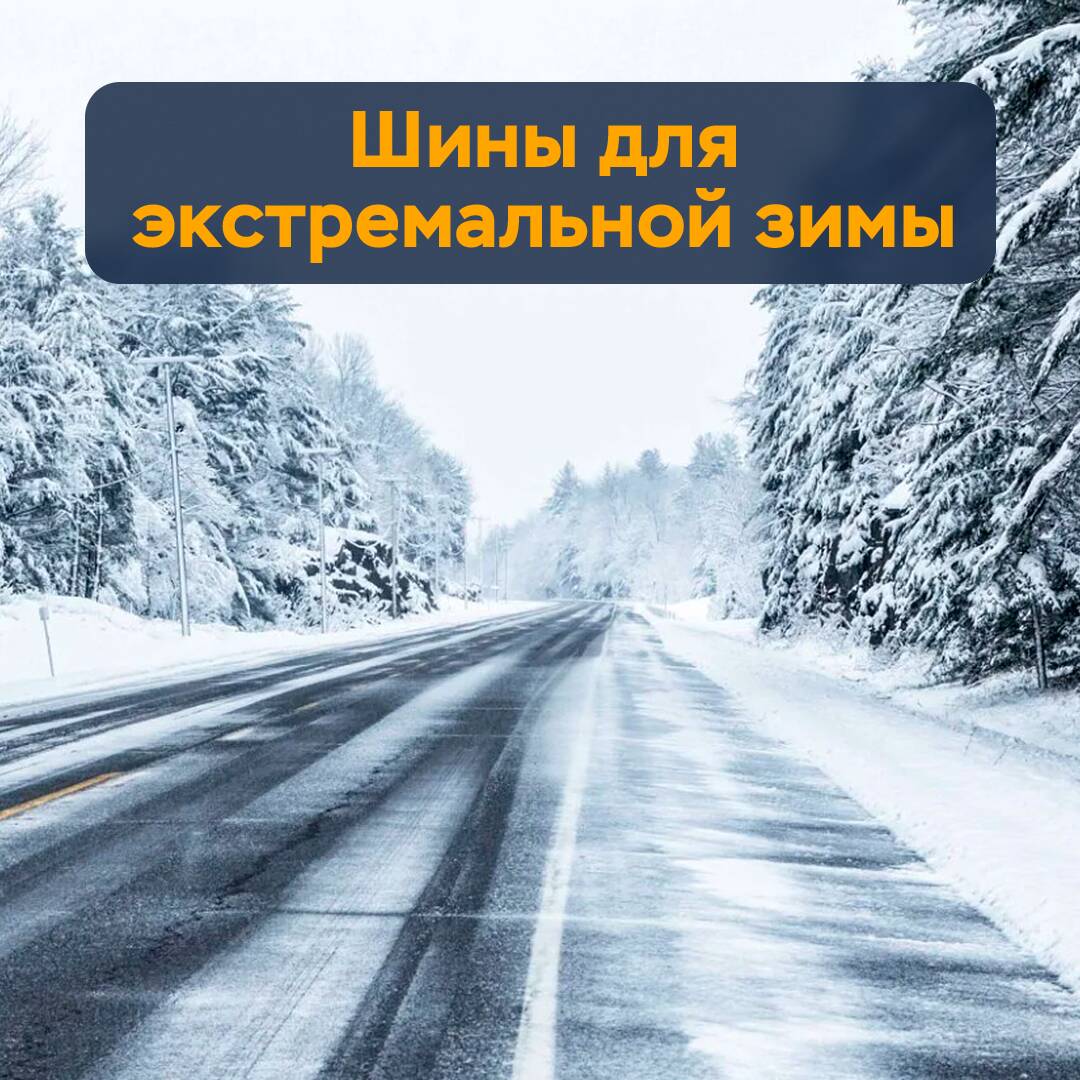
Extreme Winter Tires
Among car owners, there is a common misconception: during the times of global shortage in the USSR, they used one set of tires all year round and had no problems. Yes, indeed, the market realities were completely different back then, and there was a shortage. But the road conditions were also completely different, as was the number of cars. Today's reality dictates strict adherence to seasonality, and for most of Russia, including the central part, tires for extreme winter are preferred, even if the temperature does not drop below -15°C.
The calculation is as follows: how many times do you brake per day? Considering exiting the courtyard, moving at traffic lights, and in dense traffic, it turns out to be at least a hundred, and maybe even a thousand brake applications per day. Of course, it all depends on the route and its congestion. Now you can multiply this by the number of days during the winter period. Even if we count the days with temperatures that lead to ice formation on the roads, we get tens of thousands of brake applications, both short and long. It takes only one brake application for an accident of varying severity. Just one brake application out of tens of thousands can lead to serious trouble, despite any savings or incorrectly chosen tire segment. That's why you need to be confident in every brake application.
Contrary to the common opinion that studded tires are dangerous on dry asphalt, this is not the case. The braking distance of studded tires is often shorter than that of non-studded tires. That's why choosing studded tires can be optimal for both experienced drivers and beginners. Of course, studded tires are not without their drawbacks and can be noisier, but this is often a debatable point.
Be that as it may, it is necessary to clearly distinguish between winter tire segments and make the right choice for safe driving.