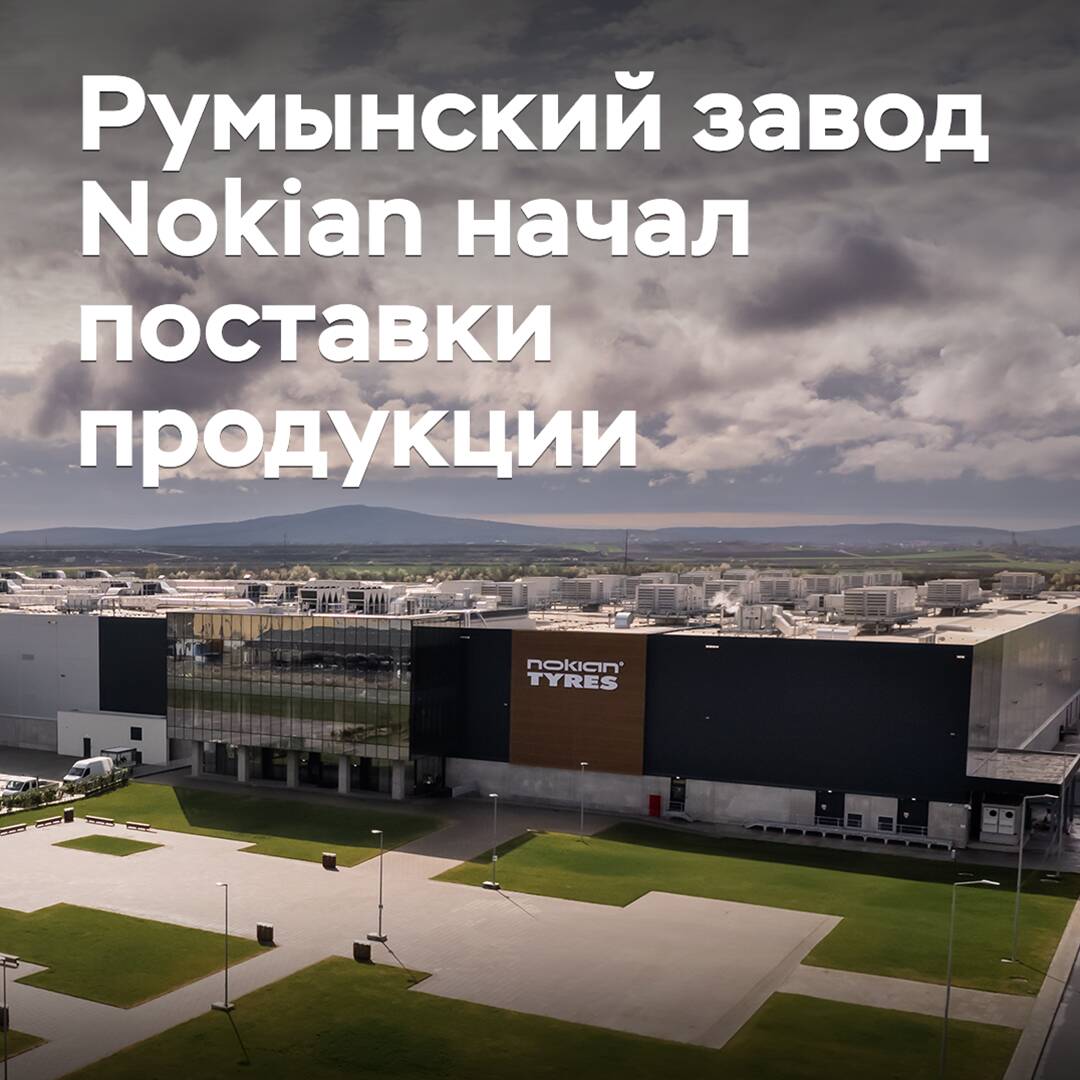
The Romanian Nokian plant has started supplying products
Nokian Tyres has begun shipping tires produced at its recently opened factory in Oradea, Romania. The first shipments, including winter and all-season tires, will be made through the company's distribution centers, the manufacturer's press service reported.
The Romanian factory produces passenger tires mainly for the Central and Southern European markets and is considered the world's first large-scale tire production with zero carbon dioxide emissions, with all energy consumed being generated without the use of fossil fuels.
"This week, we are starting to ship tires from our Oradea factory. The first truck with locally produced products has delivered tires to our distribution centers, from where they will be sent to our customers and consumers in Central and Southern Europe," noted Paolo Pompei, President and CEO of Nokian, adding that the new factory will help the company to better serve the market in the region and beyond.
Not long ago, Nokian presented its new all-season tire, Nokian Seasonproof 2, which will be the first model to be produced in Romania. The tires are designed for owners of passenger cars, crossovers, and SUVs and will be available starting from autumn 2025. Seasonproof 2 is designed to enhance traction in challenging conditions, including snow and slush, and consists of 38% renewable, recycled, and ISCC Plus certified materials, which is the highest rate for Nokian's serial tires. In the coming months, the company will introduce new tire models for the Central and Southern European market, which will be produced in Romania.
The construction of the Oradea factory began in May 2023, after Nokian's withdrawal from Russia, and the first tire was produced in July 2024. Since then, the plant has already received several awards, such as the Tire Technology International Awards. The company also owns production facilities in Finland and the USA.
Currently, around 300 people are employed at the Romanian factory, and it is expected that the staff will be increased to 500 employees when production reaches full capacity.