
Tire production. What has changed in 100 years?
Over the past 100 years, tire production has undergone significant changes, leading to significant improvements in the quality, safety, and efficiency of vehicles. The tire industry's evolution began in the early 20th century, and since then, it has come a long way from simple, monolithic, non-removable tires to complex structures using advanced technologies and materials.
The development of the tire industry for all major companies began with bicycle tires. This is why the first car tires had such unusual sizes for us today. Many technologies were just emerging, and therefore, tires were actually assembled entirely by hand. Hand assembly has both advantages and disadvantages. If we're talking about some individual things, such as exclusive clothing or an ultra-sporty class car, then hand assembly is important and differs in ideal fit. At the same time, when we talk about mass production, manual labor has only disadvantages. The human factor significantly increases the likelihood of error.
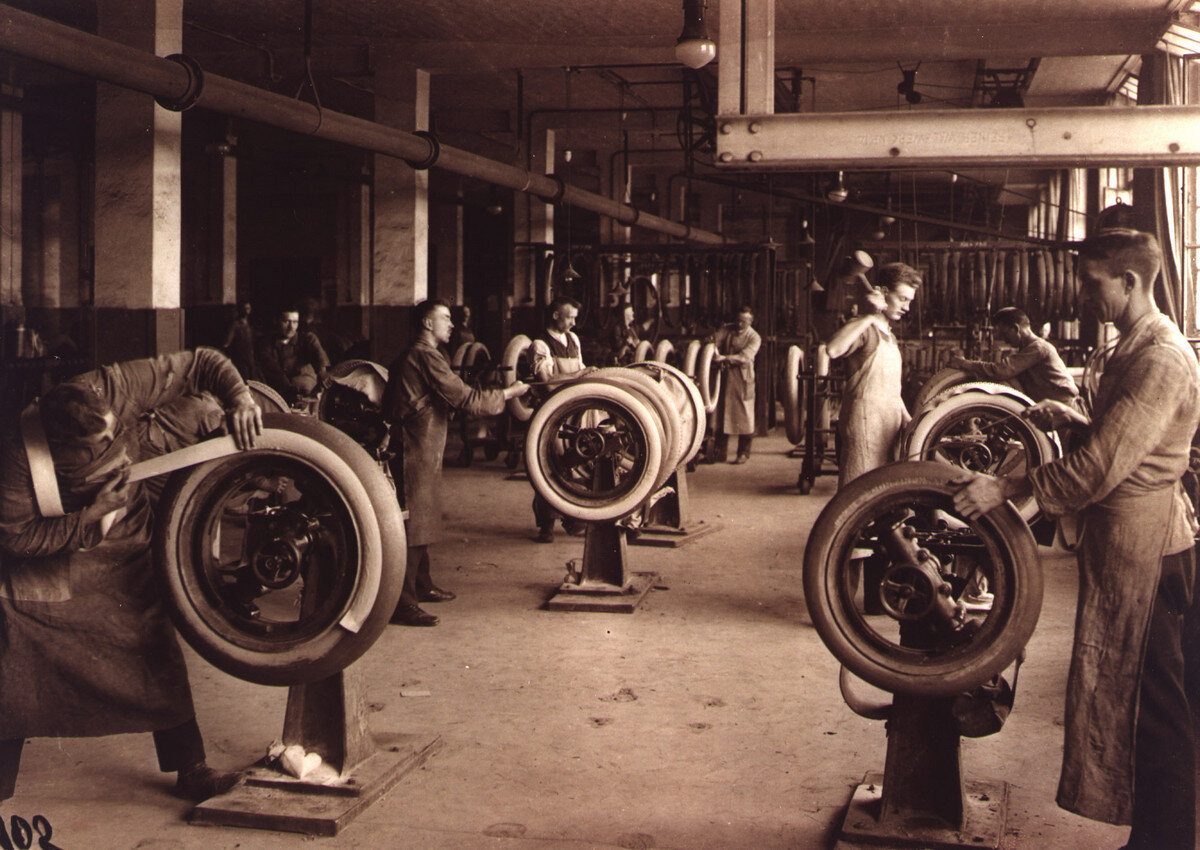
For example, one can cite the rim rings of a tire. Like many other components, they do not allow for bare-handed touching, as the thin layer of fat on the palms can lead to delamination over time, precisely at the point of contact. It is impossible to control that hundreds of workers follow all assembly rules, and the production of defective tires affects not only profits but also the image. That's why all manufacturers strive for automation. Excluding the human factor reduces potential production defects.
There is a direct pattern of the age of the enterprise and the modernity of the equipment on which the tire assembly is produced. The paradox lies in the fact that the youngest production sites are located in China. That's why they are the most advanced in terms of assembly quality. But it is the tires produced in China that our buyer still has little trust in. While European factories have the highest level of trust, the amount of manual labor on them remains high.
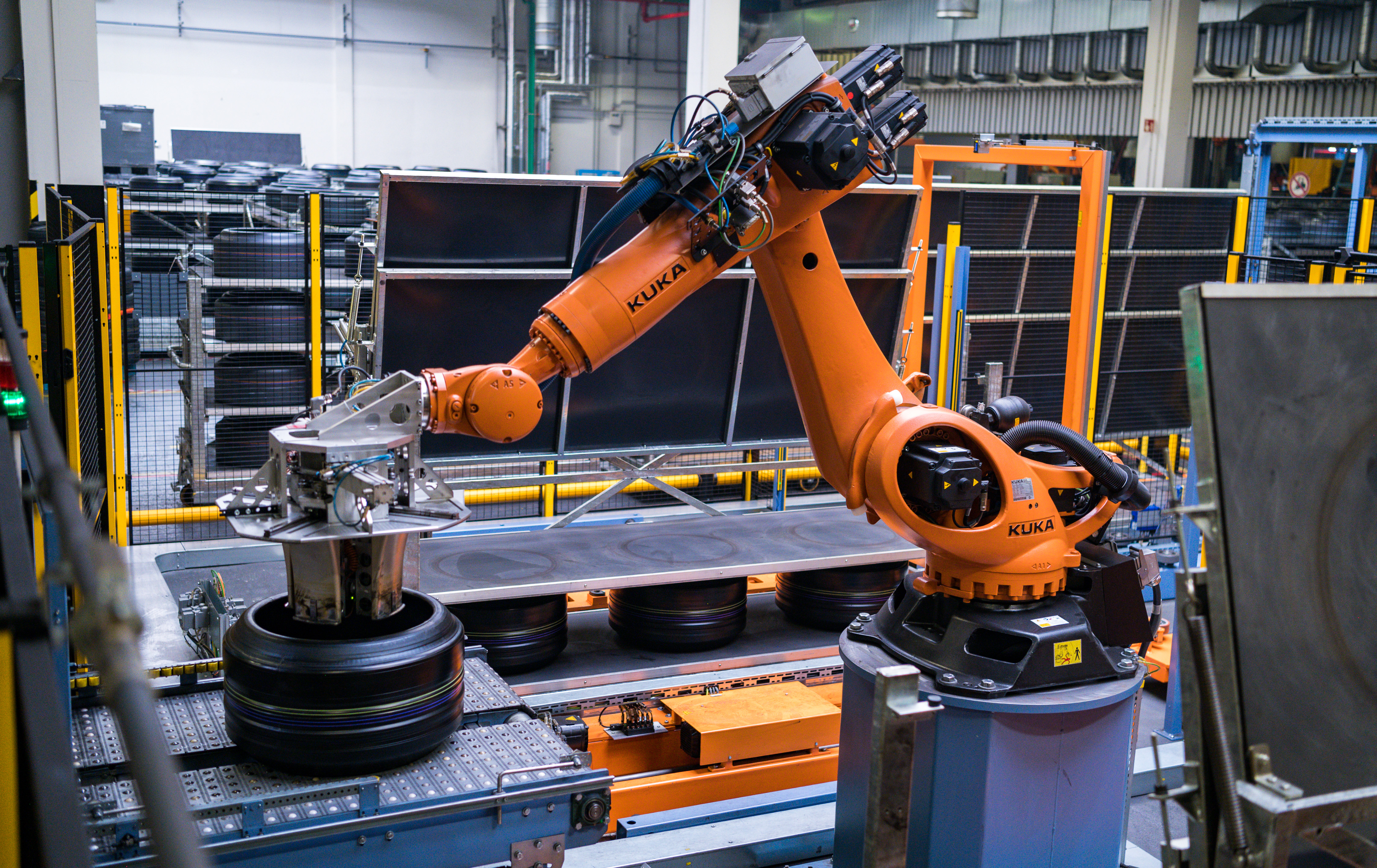
However, the tire industry is not standing still. Previously, it was necessary to have several hundred people on one production line, while now the number of people has decreased to operators and managers who only monitor the production of automatic lines.