Review of the Pirelli Ice Zero FR 3 Friction Winter Tire
Russian drivers in the winter period still most often prefer studded tires, but there is also a demand for so-called "studs", and for the 2025 season, Pirelli introduced its novelty in this segment, which continues to operate in the country and produce products at its plants in Kirov and Voronezh.
Friction tires have certain advantages, one of the most obvious of which is the absence of noise from the contact of studs with asphalt, and Pirelli notes that their share in the company's tire sales for the winter period over the past six years continues to grow, increasing from 32% in 2019 to 40% in 2024. This means that two out of five winter tires sold by Pirelli in Russia last year were non-studded, and the company explains this trend by the fact that modern friction models work well on snow and on dry and wet asphalt (in recent years, there have been cases in Scandinavian tests where premium "studs" performed on ice almost at the level of studded "rubber", so the characteristics are improving in this regard), and for this reason, tires of this type are becoming increasingly popular among consumers, especially in regions with variable weather in the cold season.
The new Pirelli tire on the Russian market is called Pirelli Ice Zero FR 3 (in other countries, the tire is offered as Pirelli Ice Friction), and in the company's range, it replaces the Ice Zero FR model. The first-generation tire, featuring a recognizable V-shaped tread pattern with two main zigzag grooves, was introduced in 2015, after which it showed good results in tests, and, for example, experts from "Za Rulem" and Teknikens Värld praised it for its high grip on snow and ice, although there were certain claims to its properties on asphalt.
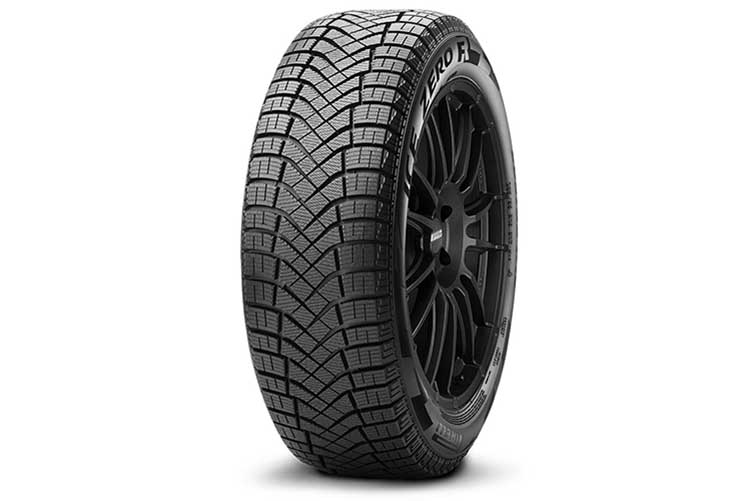
Pirelli Ice Zero FR 3 has retained the directional tread pattern, and a similar design with a network of drainage grooves is likely to be very effective in terms of water removal and aquaplaning prevention. The width of the longitudinal channels has been increased by approximately 30%, which, in combination with the optimized arrangement of transverse grooves, improved braking performance on wet asphalt by 5% compared to the previous generation of tires, the manufacturer reports.
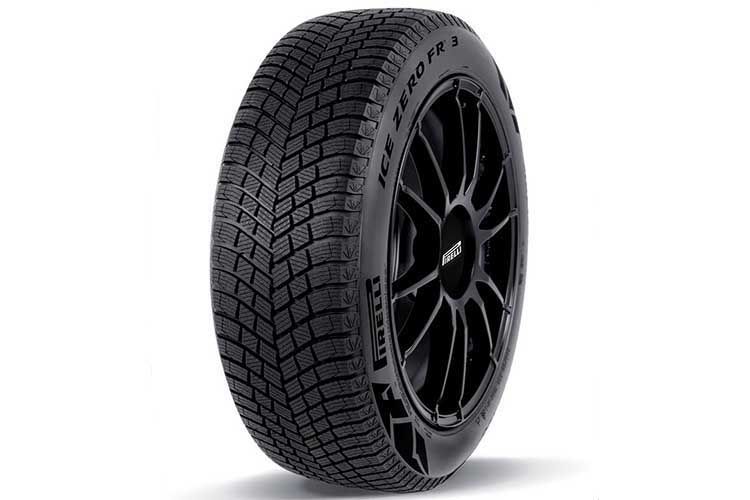
Compared to Ice Zero FR, a number of other parameters have also been improved, primarily relating to traction on icy roads, while snow handling has remained at the same level.
One of the main advantages of friction tires in fighting winter conditions is the numerous lamellas, and when creating Ice Zero FR 3, their design was given special attention, and the placement scheme was changed to improve performance on ice (which is also facilitated by a new rubber compound, which will be discussed later).
The distance between the lamellas was optimized to increase traction and braking efficiency on icy surfaces, and at the same time, as Pirelli claims, the durability of the tread and noise level were increased, and according to the EU labeling system, the tires received the highest rating "A" for external noise level.
Lamellas of a lightning-shaped and G-shaped form are used (the latter are located in the shoulder areas), which increase resistance to lateral drift and improve handling on snow. In addition, the lamellas in the central section are arranged parallel to the transverse grooves, thanks to which, according to the manufacturer, the traction on surfaces covered with soft snow has increased.
Another feature of the tread pattern is the saw-toothed edges of the blocks, which improve the efficiency of acceleration and braking when driving on compacted snow.
The composition of the rubber compound also plays a key role, and for Ice Zero FR 3, a new compound with plasticizers based on vegetable oil and modified polymers was developed, which provides the tires with an extended operating range and enhances grip on icy and wet roads, as well as reduces rolling resistance. At the same time, the tread is made from rubber compounds of different hardness, and the upper layer is made from a softer compound, and the meaning of this technical solution is to combine good stability on asphalt with the necessary grip on snow/ice.
When creating the rubber compound recipe, another factor was taken into account, which is currently attracting a lot of attention in the industry. The fact is that the Euro-7 standard norms will for the first time take into account micro-particle emissions that occur during tire wear, and the composition for Ice Zero FR 3 was refined to reduce these emissions in combination with an optimized contact patch, making the tires more environmentally friendly.
Now, many manufacturers are also emphasizing that their tires provide high grip not only in the new state but also in the worn state, and Pirelli is no exception, and the effectiveness of Ice Zero FR 3, as reported, remains at 83% even when the tread is worn down to the minimum allowed depth, which is indicated by wear indicators.
The new tires have not yet debuted in magazine tests, but they were compared with competitors by specialists from the Finnish UTAC Ivalo last winter. As rivals, Continental VikingContact 7, Goodyear UltraGrip Ice 3, Michelin X-Ice Snow SUV, and Nokian Hakkapeliitta R5 SUV were chosen, and all tires were tested in size 235/60 R18. The tests were conducted on ice, snow, and wet asphalt, and Pirelli was recognized as the best on the last two types of surfaces, but there is no sensational gap from other tires.
The new Pirelli tires are designed for a wide range of passenger cars, crossovers, and SUVs, and as the key cars for which the tires were created, the company - in full accordance with current trends in the Russian market - names Chinese crossovers Geely Monjaro, Voyah Free, Exeed RX, Haval Dargo, and Chery Tiggo 8 Pro Max.
The tires will be available in 32 sizes (six for passenger cars and 26 for SUVs) from 205/60 R16 to 265/40 R22 with a speed index of H (up to 210 km/h), and in sizes with a 45% profile, additional wheel protection is provided.