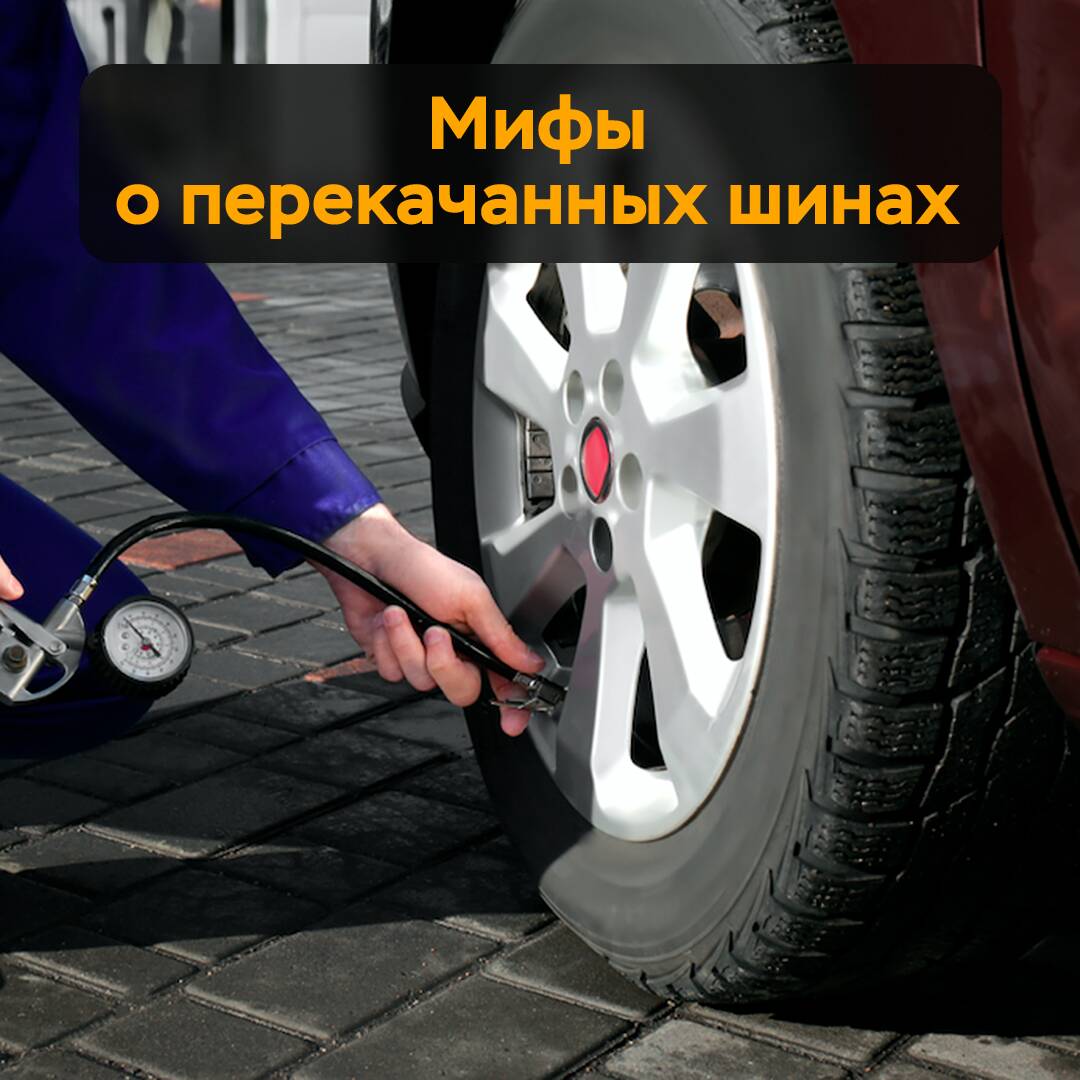
Myths about overinflated tires
Gas prices remain a constant concern for drivers. Every technique and proposal for improving fuel efficiency seems to work, leaving many to wonder: can over-inflated tires really save you money on gas?
Unfortunately, the answer is not straightforward. Let's explore the myth and reality behind this widely-held belief in the benefits of "over-inflated tires".
Myth: The logic behind over-inflating tires beyond the recommended level for better fuel efficiency seems intuitively sound. With less tire surface area in contact with the road, rolling resistance should be lower, requiring less engine effort to move the vehicle and, therefore, better fuel efficiency. Many drivers notice a slight improvement in fuel efficiency with over-inflated tires.
Reality: While over-inflated tires may offer some tangible fuel savings, the reality is far more nuanced. Although over-inflating tires does reduce rolling resistance to some extent, it also has significant drawbacks.
Safety Considerations: Reduced traction. Over-inflated tires do reduce the contact patch, leading to reduced traction, especially on wet and slippery roads. This can significantly impair braking effectiveness and increase the risk of accidents.
Increased Risk of Damage: Over-inflation makes tires more prone to punctures from potholes and road debris. These tires have less flexibility to absorb impacts, which can lead to sudden blowouts, posing a serious safety hazard.
Uneven Wear: Excessive pressure concentrates in the center of the tire tread, causing premature and uneven wear. This shortens the tire's lifespan and negates any potential fuel savings.
Performance Issues: Over-inflated tires are stiffer and less comfortable, leading to a bumpier ride and increased passenger discomfort.
Reduced Handling: The reduced contact area also affects handling, making the vehicle less maneuverable and predictable.
Over-inflating tires beyond the optimal level may seem like a good idea for improving fuel efficiency, but it can actually lead to increased wear and decreased fuel economy. While over-inflating tires may slightly reduce rolling resistance, the gain is minimal and often negligible. Research conducted by the National Highway Traffic Safety Administration (NHTSA) shows that even a minimal and noticeable increase in tire pressure (0.5 BAR above the recommended level) results in only a 1-2% increase in fuel efficiency, which can easily be offset by factors such as aggressive driving or carrying excessive weight.
The only correct approach is to maintain the recommended tire pressure. This ensures optimal performance, handling, safety, and tire longevity. The recommended pressure can be found on the sticker inside the driver's doorjamb or in your vehicle's owner's manual.
While over-inflation is not the solution, there are several real measures you can take to improve fuel efficiency. Keep your vehicle regularly serviced and change air filters on time. Avoid sudden accelerations and braking, and maintain a constant speed whenever possible. Avoid unnecessary weight in your vehicle. Almost everyone has unnecessary items in their trunk. This is just extra fuel consumption. For optimal performance, use the oil viscosity recommended by the manufacturer. And, of course, tires. Some types of tires are specifically designed to reduce rolling resistance and improve fuel efficiency.