Michelin introduces new energy-efficient tires
Michelin has released two new summer tires — Michelin Pilot Sport 5 energy in the UHP category and Michelin Primacy 5 energy with increased comfort — capable of reducing energy consumption and designed, among other things, for electric and hybrid vehicles. Both novelties are largely intended for the primary equipment sector, and the first model was previously installed on the Concept AMG GT XX liftback, which set 25 records for electric vehicles, and the second was homologated for the Lexus LS sedan.
Michelin Pilot Sport 5 energy tires are made using Dynamic Response Technology and have a hybrid breaker belt structure made from nylon and aramid fibers, which improves handling, and the tread has a two-component structure: the central part is made from the Grip Adaptive compound, which enhances grip on dry and wet roads, and the shoulder zones are made from the Energy Passive Compound rubber mixture, which reduces rolling resistance.
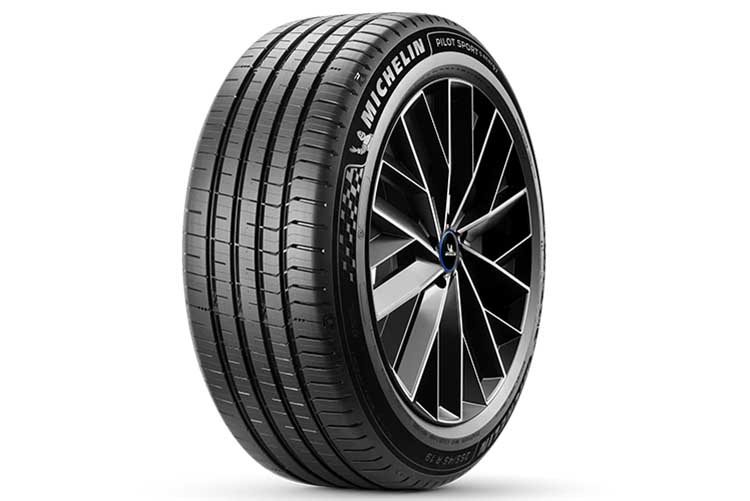
The tires received the highest rating "A" for wet grip in the EU labeling system, and the Max Touch technology ensures even distribution of loads in the contact area with the road, which improves characteristics such as traction, braking efficiency, controllability, and wear resistance. For economy, the novelty was assigned a rating of "A" in all sizes for the secondary market, and in the OE segment, the rating may vary.
11 size options from 255/45 R19 to 265/45 R21 have been put up for sale. The noise level was rated "B".
In turn, Michelin Primacy 5 energy tires became the first brand tires to earn "A" ratings in all three parameters (in over 80% of sizes for the secondary market) according to the European classification, and the company notes that compared to the e.Primacy model, wet grip has been significantly improved. TÜV SÜD experts tested the tires in new and worn conditions (the tread was "cut" to the level indicated by the wear indicators), and the tests showed that the braking efficiency on wet roads increased by 10.4% and 8.5%, respectively.
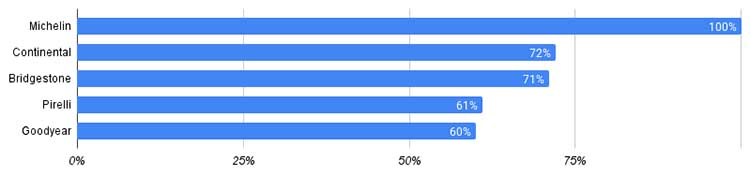
Particular attention was also paid to increasing the tire's resource, for which the Max Touch technology was used in combination with the Energy Passive 2.0 rubber mixture, which increases the tread's resistance to wear. The durability of the tires was assessed by DEKRA specialists, who compared them with direct competitors — Bridgestone Turanza 6, Continental PremiumContact 7, Goodyear EfficientGrip Performance 2, and Pirelli Cinturato P7C3 (likely referring to the Cinturato C3 model) — and confirmed that Michelin outperforms its competitors in terms of resource.
The Slim Belt technology was also applied, which means that the width of the top layers of the breaker was reduced to save resources and reduce energy consumption (without compromising the strength of the design, as emphasized by Michelin), and thanks to this, the tire was able to receive an "A" rating for economy in all sizes.
Acoustic comfort was improved using computer modeling (Piano Acoustic Technology) and the Silent Rib Gen3 technology (the bridges between the tread elements reduce vibrations and associated noise), and the company says that engineers aimed to reduce the noise level of both new and worn tires. According to the results of the TÜV SÜD test, the noise in the cabin was reduced by 4.7% compared to Michelin e.Primacy.
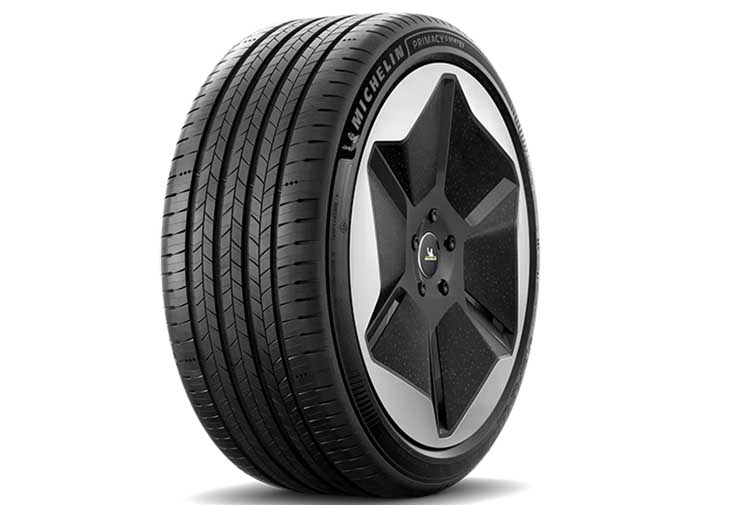
27 size options from 205/55 R16 to 255/40 R20 have been released to the secondary market.