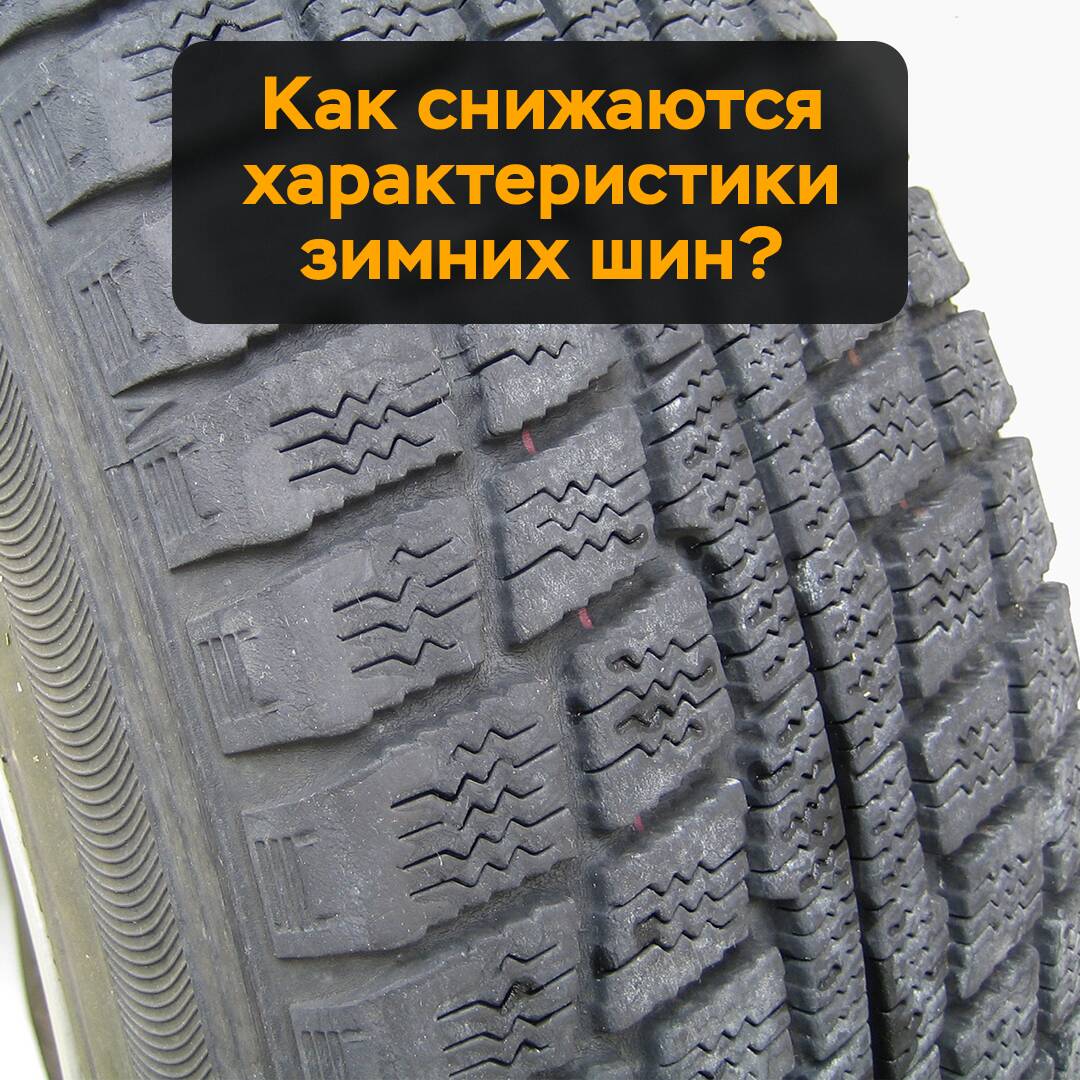
How do the characteristics of winter tires decrease?
We quite often write about the need to change winter tires in a timely manner. Moreover, one should not wait for the regulatory 1.6 mm on summer tires and 4 mm on winter tires. These are extreme values, at which the handling of the car can be unpredictable. To what extent exactly does the deterioration of characteristics occur. There is no accurate data and full-scale testing. There are only fragments of information from different manufacturers and test publications. Today, we decided to summarize the results that we were able to find and share them with you. After all, a tire is a compromise of characteristics, and along with the deteriorating characteristics, some may even improve. Let's see how this happens if we compare new winter tires and worn-out tires.
Wet asphalt.
On this surface, the level of flooding plays a crucial role. If the asphalt is wet, but there is no constant presence of a water film, the deterioration of braking characteristics may not exceed 30%. However, it is necessary to consider a mass of other factors, such as the mass of the car, speed, and the size of the water film on the road surface. When any of these parameters increase, the braking distance can significantly increase.
Dry asphalt
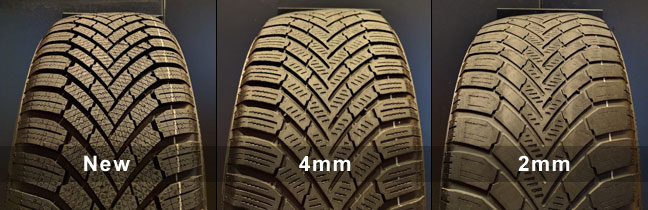
This type of surface, surprisingly, may not only not deteriorate but even improve. The fact is that the total negative profile of the tire tread (longitudinal and transverse channels of the tread and lamellas) decreases as it wears out. This inevitably leads to a deterioration of characteristics on wet surfaces, but in fact, the amount of rubber in the contact patch increases, and therefore, the level of grip on dry surfaces improves. This is why it is allowed to "wear out" worn-out winter tires in the summer period. But it remains to answer the question of how often can you see dry asphalt in winter? Such cases are extremely rare.
Ice
Given the average winter, there is always a thin water film on the ice. It is this film that the tire must completely dry before braking. Large longitudinal and transverse channels cannot fully cope with such a surface, so it is important to have deep lamellas. As you already know, as the tire wears out, the lamellas also wear out significantly and can completely disappear. In this case, the braking distance can increase by 30-40%. At the same time, it is essential to consider that when we talk about the deterioration of characteristics by a certain percentage, we take the test speeds that are common among tire manufacturers and journalists. For winter tires, this range is from 40 to 60 km/h. In real life, speeds are significantly higher, and therefore, the braking distance is much longer.
Snow
Here everything is simple - there is no tread, which means the tire has nothing to grip the snow surface. It's not difficult to "get stuck" on tires with a depth of less than 5 mm, especially if we're talking about non-studded tires, as this type of tire has transverse channels that are usually narrower than those of studded tires. When driving on a snow-covered surface, the danger lies not in the increase in braking distance but in the high risk of skidding and loss of control, which will inevitably occur if the tire with a small remaining tread loses its directional stability on a snow-covered surface.