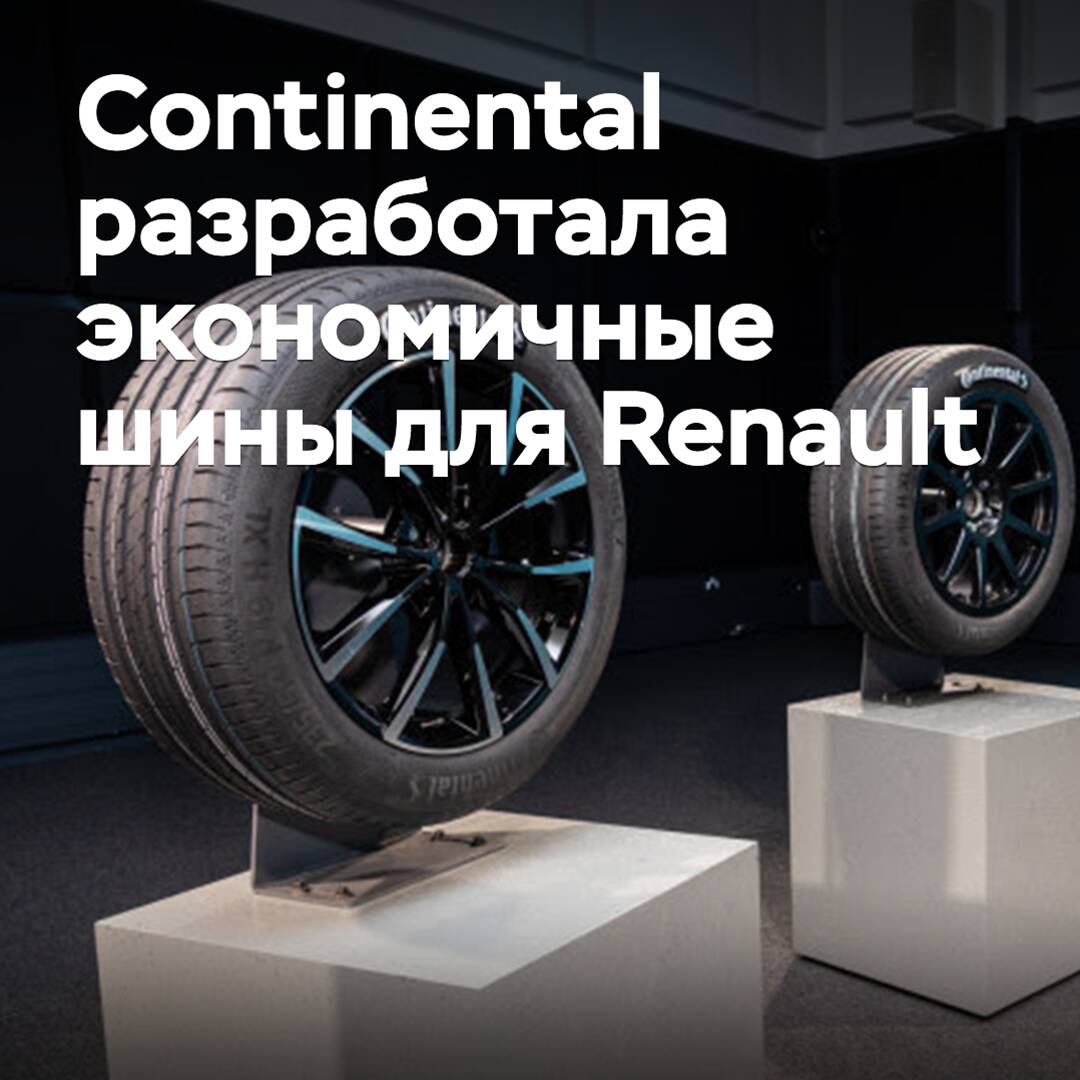
Continental has developed fuel-efficient tires for Renault
As part of a strategic partnership with Renault, the company Continental has developed energy-efficient tires for the French automaker, whose rolling resistance is 35% lower than required to earn the highest A rating for fuel efficiency under the European classification. Thanks to such characteristics, when installed on an electric car with a 500-kilometer range, the tires allow you to travel an additional approximately 30 km.
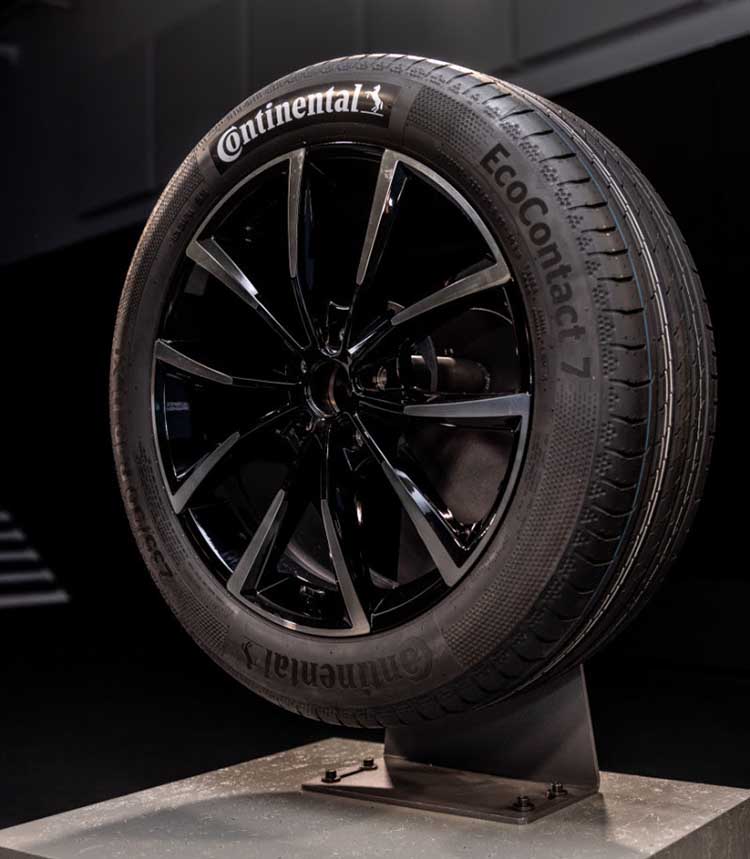
During development, the Continental EcoContact 7 tire was taken as the basis, which was adapted to Renault's requirements, and the composition of the rubber mixture of the tread, as well as the design of the carcass and sidewalls, was optimized. The tires were presented during the Renault Sustainability Tour environmental achievements exhibition in Guyancourt, near Paris.
"Low tire rolling resistance plays a key role in increasing the range of electric vehicles," said Nicolas Champtier, Renault's Vice President of Innovation. "With Continental, we have a strong partner, and thanks to our long-term cooperation, we can jointly develop solutions that can bring real benefits to our customers."
In Continental, they note that reducing rolling resistance has long been one of the company's main priorities when creating new products. Rolling resistance accounts for around 20-30% of a vehicle's energy consumption, and its reduction means that less energy is lost due to the natural deformation of tires and friction when contacting the road, which is especially important for electric vehicles, whose range is of great importance to consumers. At the same time, tires also have a direct impact on safety, as the friction between the tread and the asphalt provides the necessary traction for effective braking and stable handling, and this factor is also taken into account.
In their joint work, Continental and Renault applied the latest digital technologies, and driving simulators were used to evaluate and optimize tire characteristics in realistic conditions at an early stage of development, as well as to conduct tests in a digital environment. Such equipment increases the efficiency and accelerates the tire development process, and in Continental, they say that thanks to virtual technologies, the number of physical prototypes has been reduced by 10,000 units per year.
Photo: Wlad Simitch