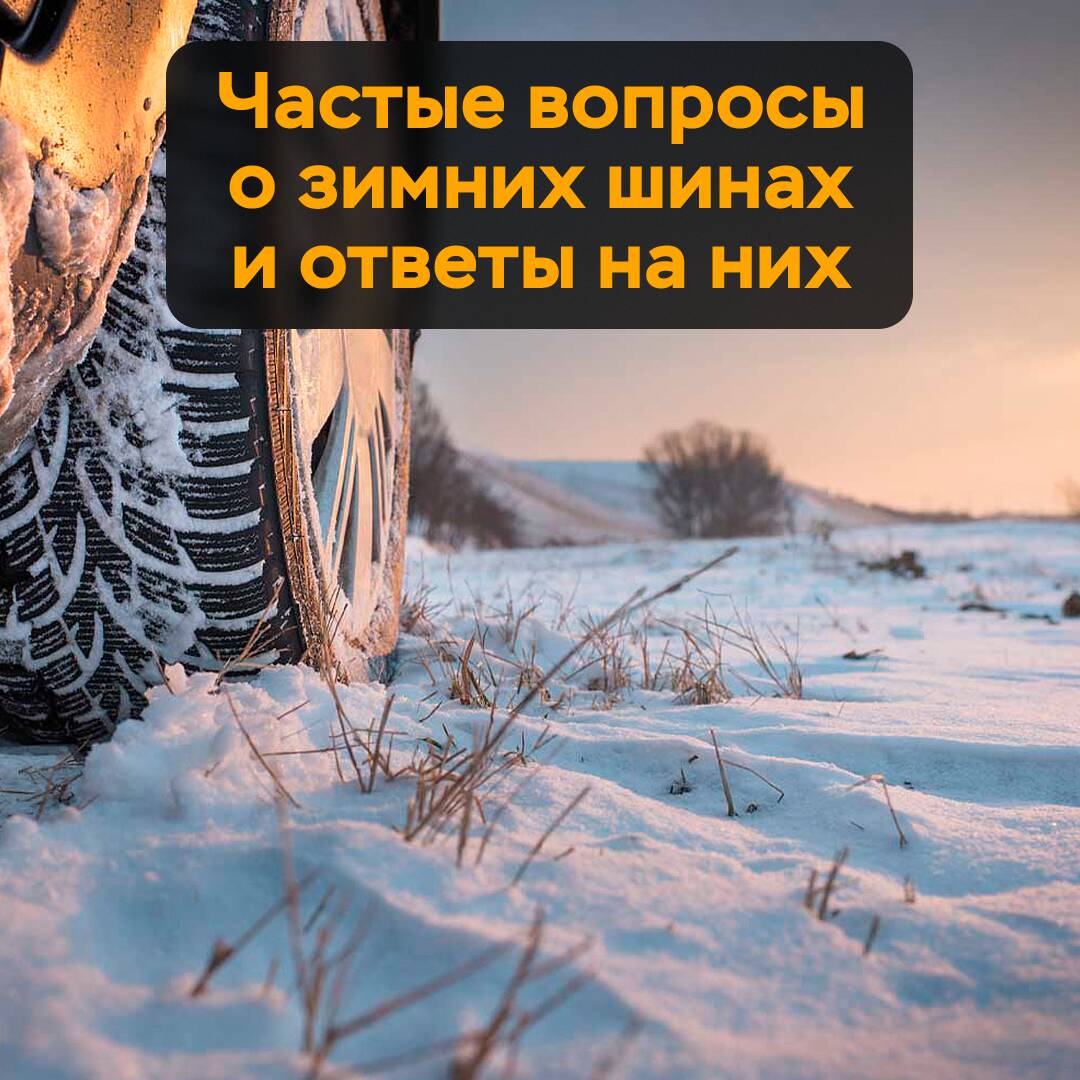
Frequently Asked Questions about Winter Tires and Answers to Them
Every year, the number of drivers increases. Some car owners have extensive experience, while others are just starting their journey. It's challenging to grasp all the subtleties and nuances at once, but it's essential to do so, as it affects the safety of all road users. One of the most critical issues, of course, is winter tires. If everyone understood the issues related to winter tires correctly, we wouldn't have terms like "tinman's day." We've gathered several questions about winter tires and outlined them in this article.
Question: Why should I use winter tires when I already have all-season tires?
Answer: All-season tires should work in a very wide temperature range to be used year-round. All-season tires can be used in light snowfall, but they are not designed exclusively for winter conditions. If you live in an area where winter temperatures are consistently below 10 degrees, winter tires may be the only right choice for increasing confidence on the road.
Question: What's better, studded or studless tires?
Answer: It's a matter of personal preference, but a driver with little winter driving experience should start with studded tires. Studded tires, contrary to popular opinion, remain the safest not only on ice but also on asphalt. The presence of studs does not worsen traction on asphalt. If acoustic comfort is a priority for you, then you should consider studless tires, as they have a less developed negative profile of the tire tread (the sum of all channels and lamellas). However, it's essential to consider the driver's experience and skills during the winter period.
Question: When is the best time to switch to winter tires?
Answer: The suitable time for switching to winter tires depends on your location. In most of Russia, it's usually around mid-to-late October. It's not worth waiting for the first snowfall. Many people do this, which leads to long queues at tire service stations. You should be prepared for the first significant snowfall. It's recommended to change tires when the average daily temperature is 5 degrees Celsius. Under this condition, there is a high probability of snowfall, which summer tires can no longer handle.
Question: Is ice and snow the only thing to consider when it comes to winter tires?
Answer: Ice and snow are not the only things that matter. When choosing winter tires, it's also essential to consider the tire's ability to drain water and slush. This is especially relevant in large cities, where due to the large amount of reagents, snow is in a borderline state between water and snow, forming a unique slush. It's crucial that the winter tire tread is more than 5 mm. In this case, driving on such tires can be considered safe.
Question: How many winter seasons will a winter tire last?
Answer: The service life of the tread is affected by many factors, including road conditions, internal pressure, driving style, and the regularity of tire rotation, and these are just a few of them. On average, in normal conditions, a special winter tire can maintain its operational characteristics for about 2-3 winter seasons. Of course, it's essential to understand that these are approximate figures with a mileage of 7-10 thousand km per season. If your mileage is higher than these values, the tire's service life will be significantly reduced.