
Alternative tire components
Most people consider dandelions to be a nuisance. But at Continental, we saw the potential of the flowering weed as a key component of future tires. That's why, in collaboration with the Fraunhofer Institute for Molecular Biology and Applied Ecology, we have manufactured and tested the first tires in which the natural rubber from the rubber tree has been fully replaced by rubber from dandelions. In 5-10 years, we plan to start mass production of tires made from dandelion rubber.
From 10 to 30 percent of a car tire consists of natural rubber, while truck tires may contain a proportionally larger amount. Today, natural rubber is still obtained almost exclusively from the rubber tree (Hevea brasiliensis), which can only be grown in the so-called "rubber belt" around the equator. Global demand for natural rubber will increase in the next few years, and at the same time, a changing world is making it harder to meet this demand.
The growth cycle of the rubber tree is about seven years before it can start producing latex that can be used to make rubber. This rubber made from latex is crucial as it has unique properties that cannot be replicated in synthetic rubber, making natural rubber essential for tire production. As a result, market demand exceeds production capacity, and this situation has led to unpredictable price volatility in the past.
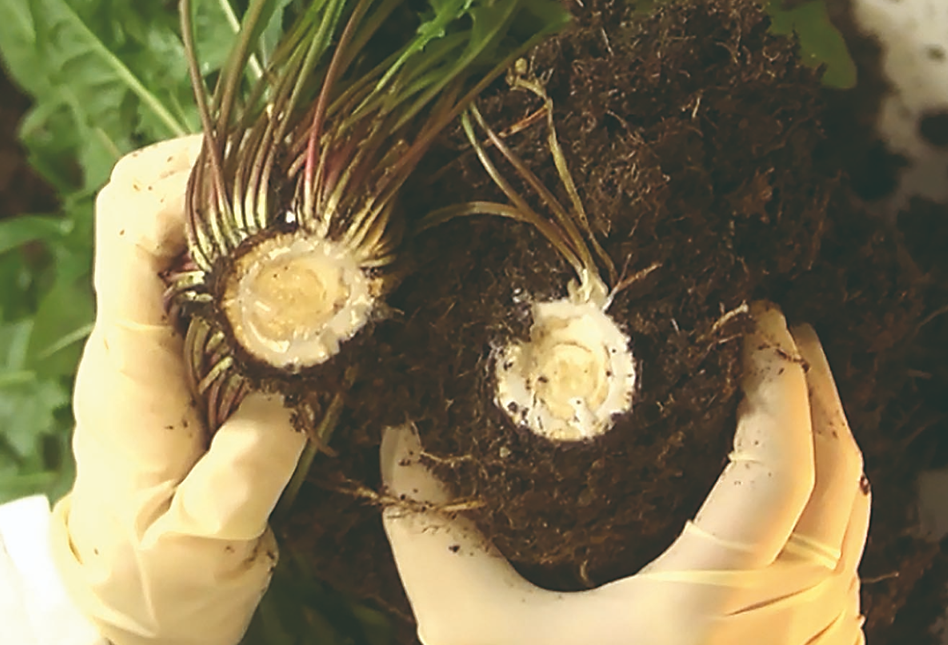
Continental is considering the dandelion as an alternative source of natural rubber. Continental is not using just any ordinary dandelion, but a special "Russian variety". This is the only dandelion that can be used as an alternative source for producing natural rubber. The roots of this variety of dandelion contain natural latex (the source of natural rubber used in tires), which means that supplies will be more stable and easier to control, leading to greater price stability. This crop is also much less sensitive to weather conditions than the rubber tree.

From an agricultural point of view, dandelions are a low-maintenance plant that thrives in a temperate climate, even in the Northern Hemisphere, and can be grown on land that is not suitable for food production. This means that rubber production is possible, for example, near our tire plants, resulting in significantly shorter transportation routes.
Transporting rubber from South America or West Africa to North America and Europe for production is a lengthy and expensive process that also contributes significantly to CO2 emissions. If this part of the process can be spread to agricultural areas in America and Europe, the economic benefits and CO2 emissions will be a significant boon to the tire industry.
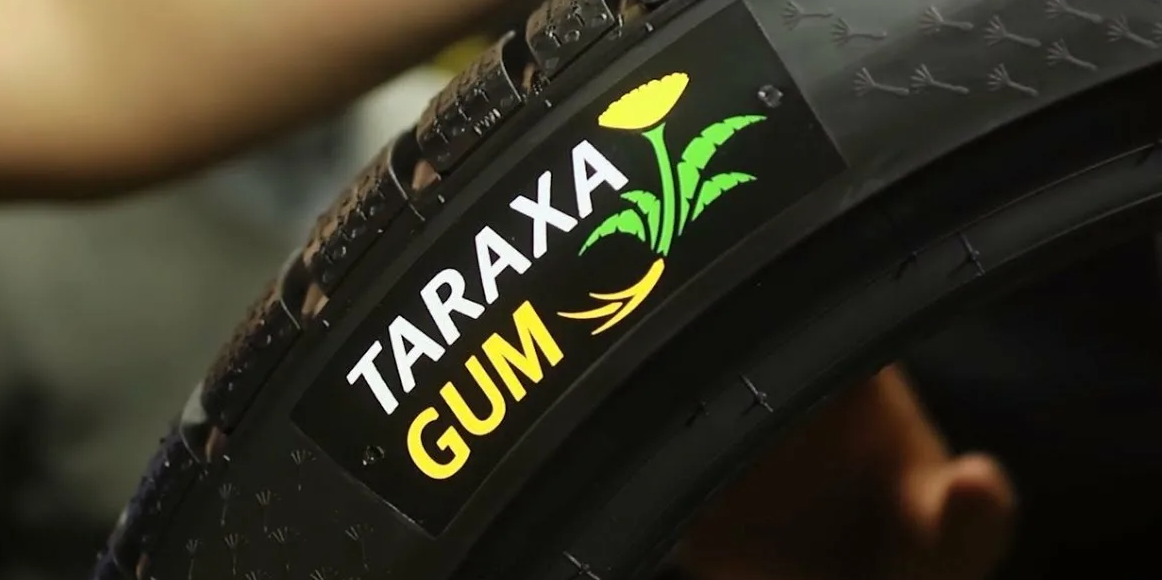
This dandelion can grow on a significant part of the globe. The growth cycle of the "Russian dandelion" is about one year. In contrast, the rubber tree has a long lifespan, with the first harvest possible seven years after planting.
The initial tests conducted so far show that tires made with dandelion rubber have equivalent properties compared to tires made from conventional natural rubber. While the potential is great, significant hurdles need to be overcome before this natural material can be fully utilized. First, synchronizing the agronomic process (planting, growing, and harvesting) with the constantly changing demand poses a significant challenge.