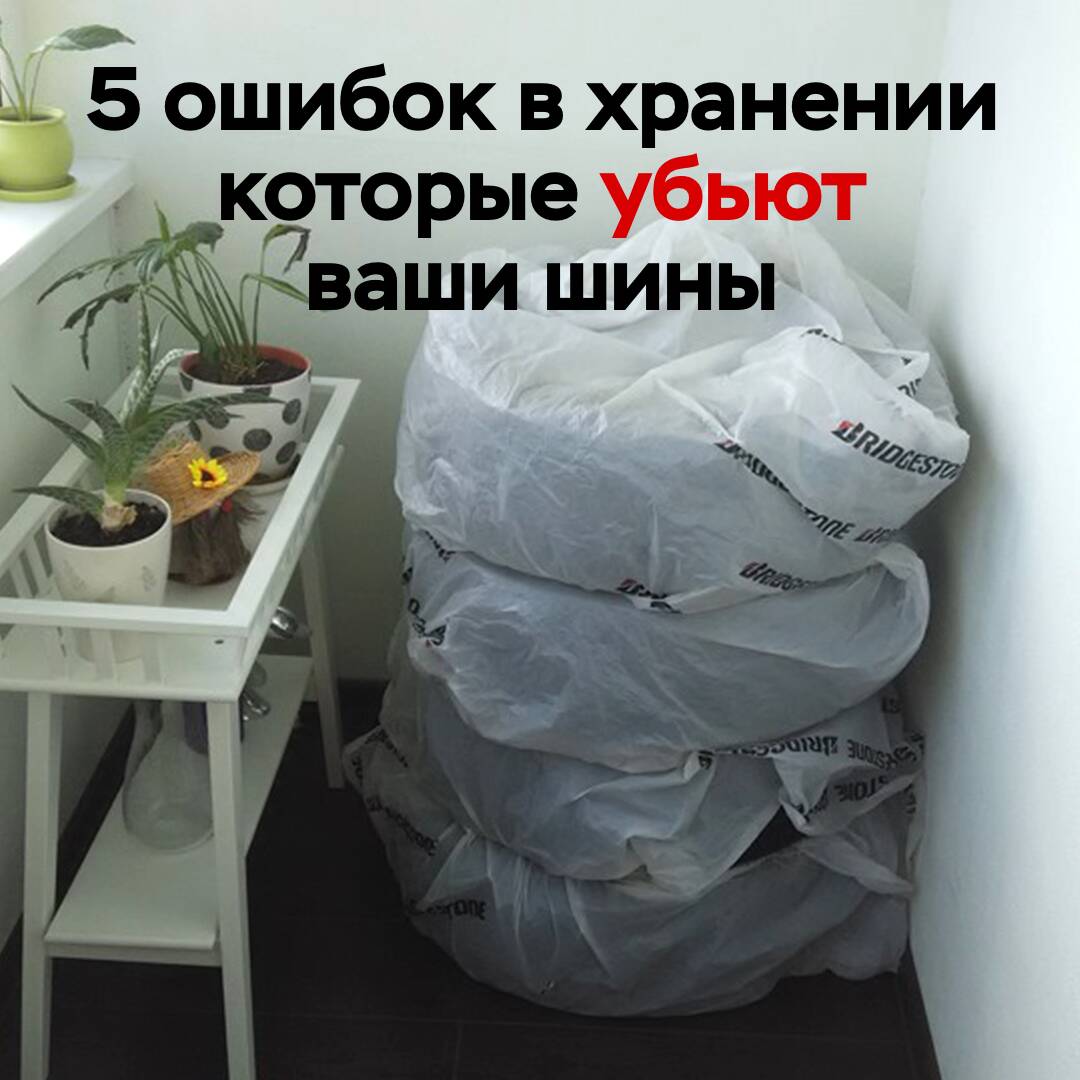
5 mistakes in storage that will kill your tires
You can spend a long time carefully selecting tires for safe driving, but still reduce their performance in the first year of operation. It's enough just to store them incorrectly. Today, we will tell you about the most common mistakes that can reduce the performance and lifespan of your tires.
Let's imagine a standard situation - after seasonal tire fitting, you carefully pack your tires that have served the season into bags and take them for storage. Since they don't take up much space, at least a cubic meter, this should be something that won't bother you. Where can you find such a place? A damp and cold garage? A balcony? And all this without removing the bags, which literally provides a "greenhouse effect". This has a devastating impact on the rubber in general and on individual elements, such as anti-skid studs, in particular.
Remember the main rules of storage
Exclude direct sunlight
This is the first rule, and unfortunately, it is often ignored. It's enough to pay attention to how many tires are stored by our compatriots on balconies. Long-term exposure to sunlight can lead to changes in the properties of the tire, which will ultimately result in a decrease in performance and lifespan.
Ensure ventilation
The main thing is to exclude bags. They are only needed for transportation. Once you've brought them, be sure to remove them. A tire stored in a bag, and even with a knot, will simply spoil. Cracks in the rubber with subsequent chipping during operation are the most common reason why it can fail prematurely.
Do not use chemicals
There's no need to dye the tires before storage. Even harmless treatment with silicone can result in an unexpected outcome in combination with other environmental factors. After operation, it's enough to simply wash and dry the tire without using any special means.
Avoid proximity to heating appliances
Do not store tires in close proximity to heating appliances. Ensure a storage location at a distance of at least one meter from the heating radiator. Closer contact will lead to local changes in the physical properties of the tire, which can subsequently affect uneven wear.
Exclude contact with fuel and lubricants
If the tires have come into contact with any fuel and lubricant means, thoroughly rinse this area. Such contact can undoubtedly lead to physicochemical changes in the rubber, followed by destruction during operation.
Don't save on storage. If you don't have a proper place, entrust this matter to professionals, and prices for seasonal storage may pleasantly surprise you.