-
 Enlarge
 Rauffan Snowmaster S1
Description Rauffan Snowmaster S1
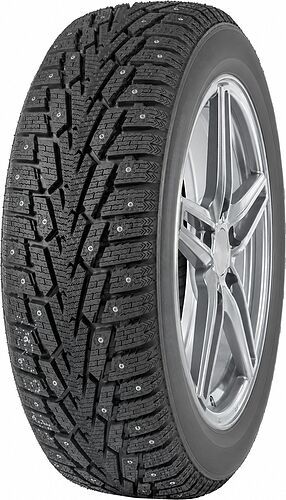
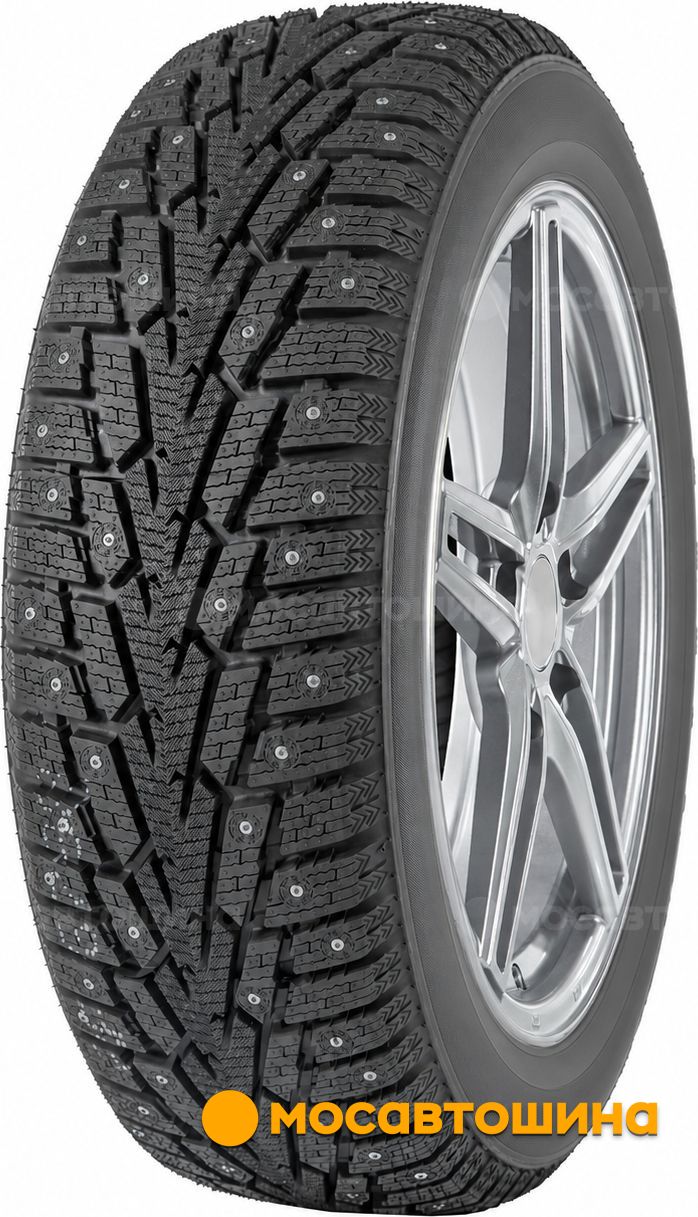
Rauffan Snowmaster S1 — winter tyre for passenger cars and crossovers. The model features a symmetrical directional tread pattern with an pronounced V-shaped geometry and a dense network of lamellas. The design is intended for operation in snowy conditions: the 3PMSF marking confirms compliance with the requirements for tyres for complex winter conditions.
Diagonal grooves radiate from the central zone to the shoulders, forming continuous paths for removing water and snow slush from the contact patch. Between them are located arrow-shaped blocks with extended transverse edges. This arrangement helps the tread create traction force on loose and rolled snow. The open areas in the shoulder zones continue the drainage system and facilitate self-cleaning of the tread pattern.
The central elements are arranged in a linked sequence and mutually support each other during straight-line driving. This allows maintaining the necessary stiffness in the area responsible for transmitting traction and braking forces. The shoulder blocks have a wide support base and transverse edges oriented across the direction of movement, which are engaged when accelerating, decelerating, and maneuvering on winter surfaces.
The surface of the blocks is divided by numerous straight and wavy cuts. The lamellas create additional working edges on a snowy road, and their three-dimensional shape limits excessive mobility of the tread elements under load. The combination of lamellization, directional channels, and a stable central zone forms a single tread pattern designed for predictable behavior in changing winter conditions.
Key features of Rauffan Snowmaster S1
- winter model for passenger cars and crossovers;
- 3PMSF certification confirms its intended use for complex snow conditions;
- symmetrical directional tread pattern built on a V-shaped scheme;
- diagonal channels divert water and snow slush to the shoulder zones;
- arrow-shaped blocks form transverse traction edges;
- straight and wavy lamellas increase the density of working edges;
- linked central zone supports tread stiffness.