
-
 Enlarge
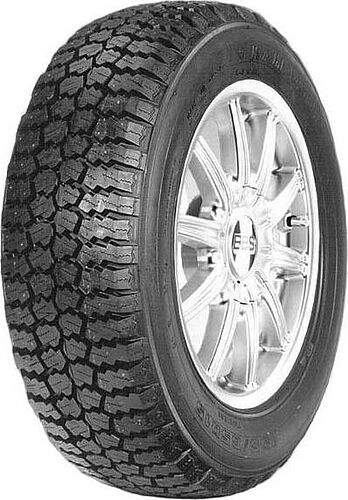
 Кама 501
Description Кама 501
The Kama 501 winter tire is perfectly adapted for operation on roads of poor quality. At the same time, the tread with an increased number of gripping edges provides good traction even on icy roads. To this, it remains to add the extremely attractive cost of this tire, which has one of the best price-quality ratios due to this.
Good traction on snow
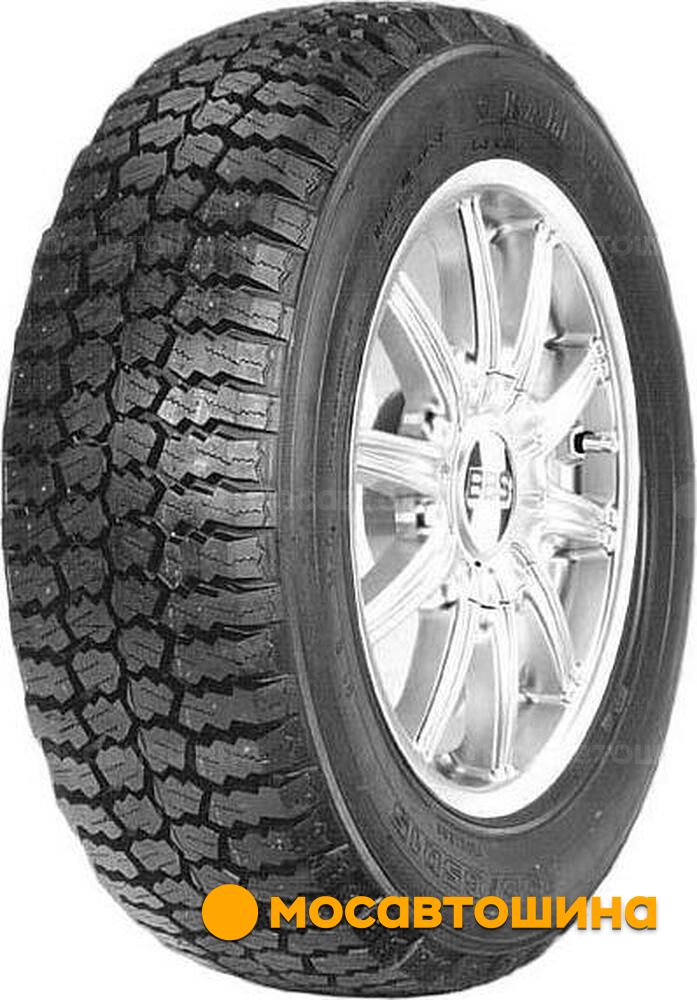
This model is equipped with a tread featuring a symmetrical arrangement of elements. The key feature of its design is the presence of a large number of blocks, the number of which has been increased due to their reduced size. This allowed the developers to ensure that the tire's contact patch with the road has many more gripping edges, which in turn led to an improvement in traction properties on snowy roads. At the same time, it is impossible not to note the wavy shape of the transverse edges of the tread blocks. This solution allowed for additional improvement of traction on snow.
Confidence on ice
Even without studs, this tire demonstrates confident behavior on icy surfaces. This became possible due to the numerous lamellas cut into each of the tread blocks. During movement, they form many hundreds of additional gripping edges, which is more than enough to compensate for the lack of studs.
Stable behavior when maneuvering and cornering
Like the blocks in the central part of the tread, individual elements in the shoulder zones have a complex polygonal shape, differing in greater width and transverse arrangement. Such differences in design are due to the operational properties that are improved by this functional zone. First and foremost, this is stability when cornering and traction with the road when braking.
Key features of the Kama 501 tire
- an increased number of tread blocks due to their reduced size improves traction on snowy surfaces;
- polygonal transverse edges of tread blocks increase longitudinal traction properties;
- the significant width of the shoulder blocks improves stability when cornering, reduces the braking distance.