
-
 Enlarge
 Farroad FRD868
Description Farroad FRD868
In the segment of summer passenger tyres, competition is determined not only by price, but also by the ability of the rubber to maintain predictability in borderline modes. Farroad FRD868 — a model in which the brand's engineers focused on three key parameters: contact stability at high speeds, rapid water drainage, and reduced noise.
Asymmetry as the foundation of balance
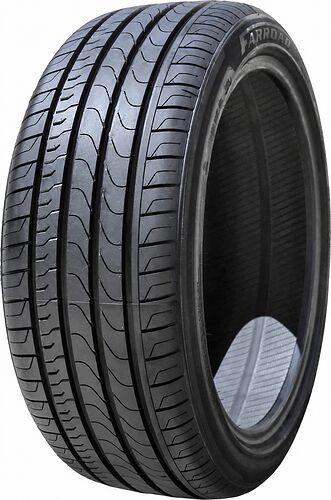
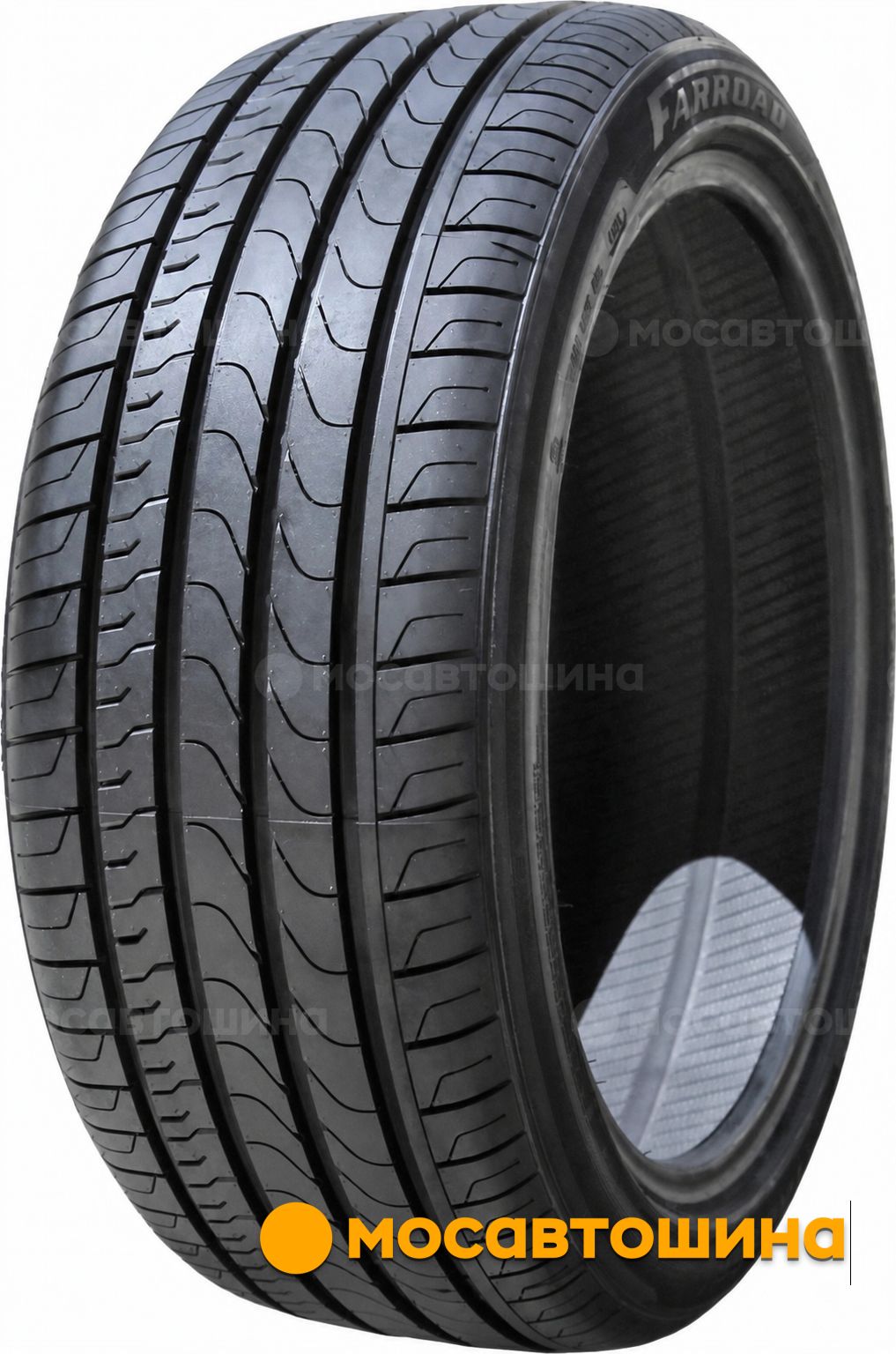
The tread pattern is built according to an asymmetric scheme. The outer side has reinforced shoulder blocks, responsible for stability in turns, and the inner side has a more elastic configuration for effective water drainage and smooth entry into a turn. Such zonal differentiation allows the tyre to adapt to changes in lateral loads, maintaining the contact patch almost unchanged even during sharp manoeuvres.
Stability
In the centre of the tread, there are continuous ribs. They perform the role of a guiding rail. The presence of curved grooves in them creates additional traction when driving in a straight line, reducing skidding on asphalt. This is especially noticeable at speeds over 100 km/h, where ordinary tyres start to "float".
Drainage complex
The water drainage system here is not just four longitudinal grooves. Engineers have applied multi-radius transverse channels connected to the central grooves. When entering a water film, such a network creates a "pump" effect. The liquid is captured and thrown out through the side zones. As a result, hydrodynamic resistance decreases faster than the speed of skidding increases, which shifts the threshold of aquaplaning.
Thermal stability
For the model, a silica matrix with high thermal stability is used. Summer asphalt can heat up to +60°C, and in such conditions, the compound maintains its elasticity, not becoming too viscous. The achieved balance allows the tyre to work confidently in any weather conditions.
Key features of Farroad FRD868:
- separate adjustment of the outer and inner shoulder ensures stability in turns and effective water evacuation;
- the geometry of the shoulder blocks reduces the braking distance during emergency deceleration due to directed deformation and increased friction coefficient;
- the variable arrangement of blocks dampens tonal noises, providing a comfortable noise level at highway speeds;
- the special compound maintains elasticity and traction properties over a wide range of summer temperatures, extending the life of the model.