When developing the Continental ContiWinterContact TS 750, the focus was not on harsh winters, but on the specifics of European countries: mild frosts, frequent thaws, wet snow, icy porridge on highways, and prolonged periods of slush. In such conditions, the tire is required to combine: reliable traction and coupling properties, confident handling on wet asphalt, and at the same time remain smooth and comfortable.
Ribbed structure for high-speed stability
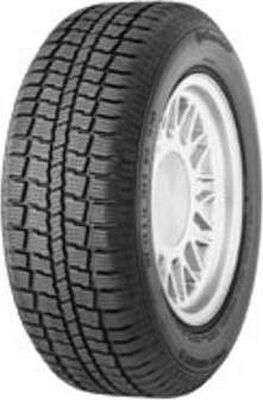
The tread features a non-directional symmetry. In the central part, three massive longitudinal ribs are formed from separately arranged blocks. This is a kind of "backbone" of the model. At high speeds, it provides stability of the contact patch - the tire does not "wander" when maneuvering, reducing rolling resistance, which means saving fuel. Additionally, the rigid central zone minimizes uneven tread wear.
Stiffness instead of compromises
The key difference is the shoulder blocks, which have a tapered profile. This geometry makes them even stiffer. When entering a turn, lateral forces try to "fold" the tread. The presented profile distributes the load at the base of the block, preventing it from crumbling. As a result - precise handling, stable coupling when maneuvering, and, importantly, slowing down the wear of the shoulder areas.
Grip mechanics on ice and snow
Here, "three-dimensional" lamellas are applied - their inner surfaces have saw-toothed notches in the vertical plane.
When the block is loaded, the edges close, forming a multitude of micro-teeth that literally bite into the ice and compacted snow. This gives a sharp increase in traction and braking.
Additionally, the block walls are made elongated. When moving on fresh snow, each wall captures and compacts the snow in the gaps between the elements, forming an artificial "snow grip".
Key features of the Continental ContiWinterContact TS 750:
- reliable grip on winter roads due to a multi-block tread with a huge number of three-dimensional lamellas;
- stable handling thanks to the developed structure of the central ribs;
- increased stiffness and enlarged shoulder areas improve grip and handling in turns, while preventing rapid tread wear.
 Enlarge
 РОССИЯ