Snow handling traction after occurrence of insufficient turning ability
price
Points: 144/150
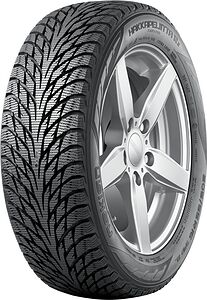
These Nokian tires surprised us the most with their handling on snow and how they regain traction after showing insufficient maneuverability. As the steering wheel angle increases, Nokian continues to steer the car where other tires simply couldn't. You slow down, turn the wheel back a bit, and traction returns. Nokian feels more like summer tires on wet asphalt than winter tires on snow.
In one parameter, Nokian did not become the best, and that is the price. Nokian costs $48 more than Michelin, which became the second. And that's a lot, given that many Americans consider buying winter tires a luxury. However, if you need the best traction in winter conditions, and you have the opportunity to spend money on a "premium", you can stop looking.
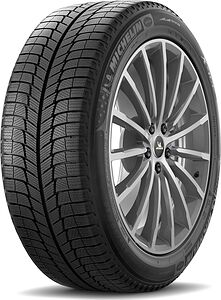
In the subjective rating, the XI3 came in second, only behind Nokian. A slight weakening of control - compared to Nokian - in sharp turns suggests that Michelin's square shoulder design, which was also present on all other tires in the test, does not work as effectively as Hakkapeliitta's. The speeds were high, but the car felt slightly unstable, and the driver had to exert more effort to maintain control.
Additionally, insufficient steering response when pressing the gas - most noticeable when trying to accelerate out of a turn - was also slightly more pronounced than Nokian's. However, despite these minor drawbacks, which are mostly noticeable in controlled test conditions like these, Michelin remains a very balanced winter tire.
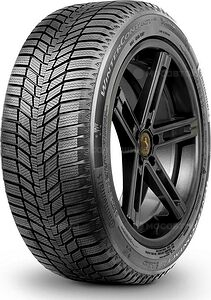
Excellent acceleration control when exiting a turn helped Continental show the second-best lap time on snow, and in this regard, they are better than Michelin but still worse than Nokian. Continental also behaves very stably and consistently, predictably losing and regaining traction with the help of steering wheel and gas pedal manipulations.
However, on the high-speed part of the track, it was necessary to slow down a little earlier, which reduced the overall driver confidence. This is especially surprising, given how well Continental exits turns and, therefore, withstands high speeds. As a result, the pilots gave Continental the lowest subjective rating for snow braking.
arrogance on snow and unpredictability of handling
Points: 130/150
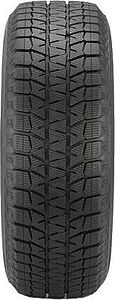
The hydrophilic coating - or tiny depressions in the tread - eliminates a microscopic layer of water on the ice, and thanks to this, Bridgestone took one place with Continental in the braking distance tests on an icy surface.
However, on snow, the WS80 showed the second worst time, and their behavior at the limit of adhesion can be considered one of the worst options - the tires sharply and unpredictably go into a skid, after which they require a large amount of time to restore traction.
acceleration on ice long recovery of controllability after losing traction
Points: 127/150
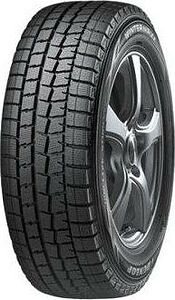
We're not sure what exactly the asymmetry was the reason for Dunlop's low ranking, but objective tests can't lie, and the worst result in three out of four disciplines can't be ignored. The worst performance was in ice acceleration, where Dunlop lagged behind the leader by 1.29 seconds. At the same time, Dunlop brakes very efficiently on snow, where their result was only 0.15 meters worse than Bridgestone and Nokian's.
Somehow, having taken last place in all objective tests except one, Dunlop still managed to show a fairly good lap time on snow - 29.74 seconds - almost catching up to the second-place tires. It's worth noting that when losing traction in a turn, Dunlop makes you wait a long time for it to recover, and there is a noticeable delay between turning the wheel or pressing one of the pedals and the tire's response.
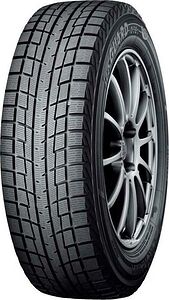
Yokohama lost the most points in the snow handling test, where they nevertheless demonstrated pleasant predictability when braking and cornering. These are very stable tires that won't throw up unpleasant surprises. The downside is the very weak traction, due to which Yokohama lagged behind the leader by two seconds, which is a huge gap on a track that is passed in 30 seconds.
Yokohama also do not accelerate very efficiently on ice, where they were only able to overtake Dunlop. The differences between the tires in this discipline were small due to the low speeds, and as the speed increases, they will also grow.