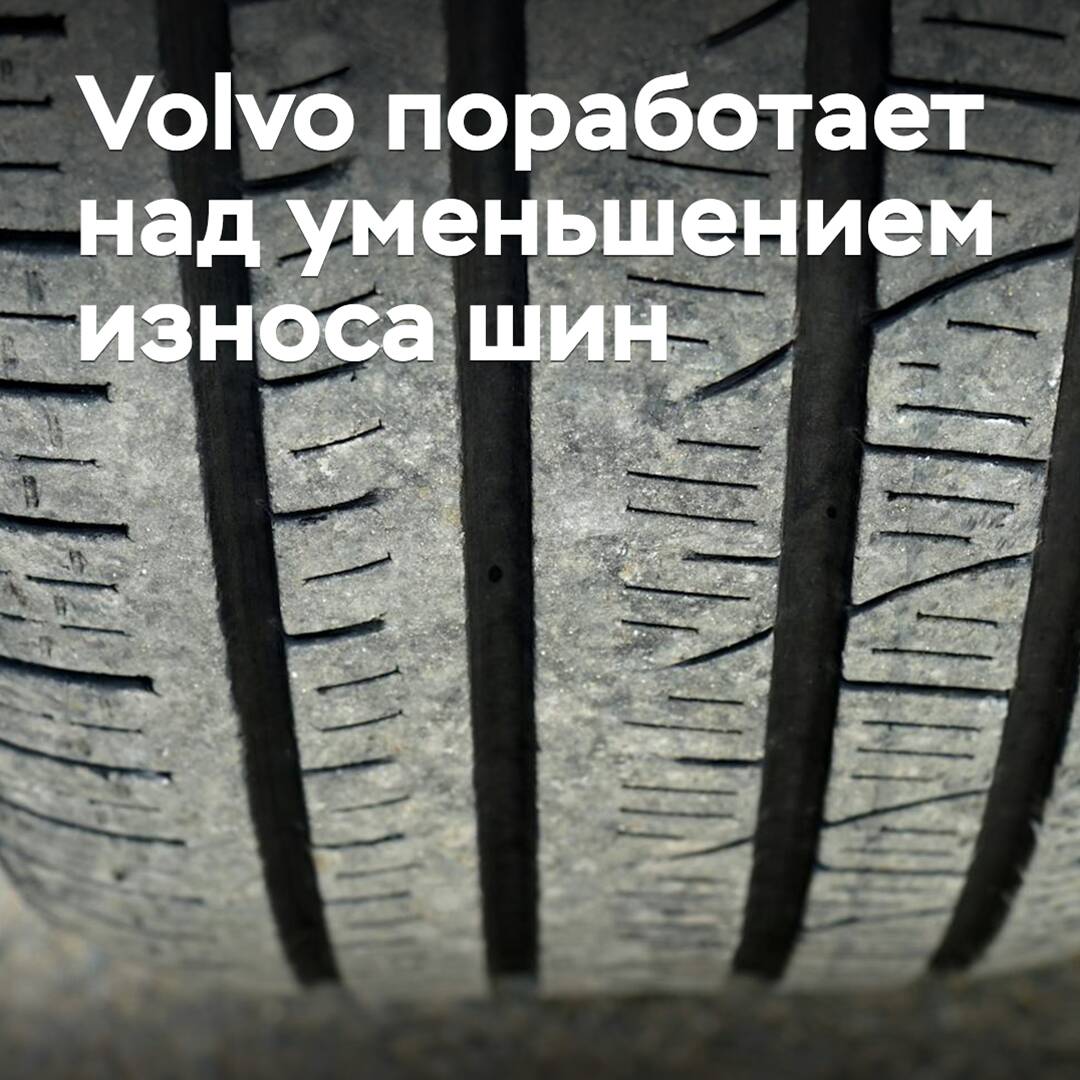
Volvo will work on reducing tire wear
The Swedish National Road and Transport Research Institute (VTI) and Volvo have launched a joint project to develop solutions to reduce tire wear on electric cars and the associated microplastic emissions. The project, funded by the Swedish Electromobility Centre (SEC), aims to "address the issues related to the increased tire wear on electric cars, which is gaining increasing public attention."
Electric vehicles, equipped with heavy batteries and powerful engines, can increase tire wear and road damage, resulting in increased emissions of microplastics and other particles, which, according to VTI, is a problem from both an environmental and human health perspective, and is not yet fully understood.
As the number of electric vehicles on the roads increases, air pollution from tire wear particles is also increasing, and it is expected that in the future, new requirements will be imposed on tires, setting limits on harmful particle emissions.
The new project will run for two years, and the partners plan to develop new methodologies to analyze how vehicle characteristics affect tire wear. Parameters such as vehicle mass, powertrain type (electric or hybrid), and driving modes (e.g., eco or sport) will be considered, and the results are expected to help create vehicles that reduce tire wear and, consequently, harmful particle emissions in the future.
According to Mats Gustafsson, senior researcher at VTI and project leader, various options for reducing tire wear will be explored. "Who knows, maybe in the future, electric vehicles will have a 'reduce tire wear' button," he says. "Maybe it will be a driving mode that matches the 'eco' mode, but that remains to be seen."
Tests will be conducted at VTI's test facility in Linköping and at Volvo's "Hällered" proving ground, located 80 km from Gothenburg, with the main goal of "creating a reliable model for calculating and optimizing tire wear."
Photo: Pexels.