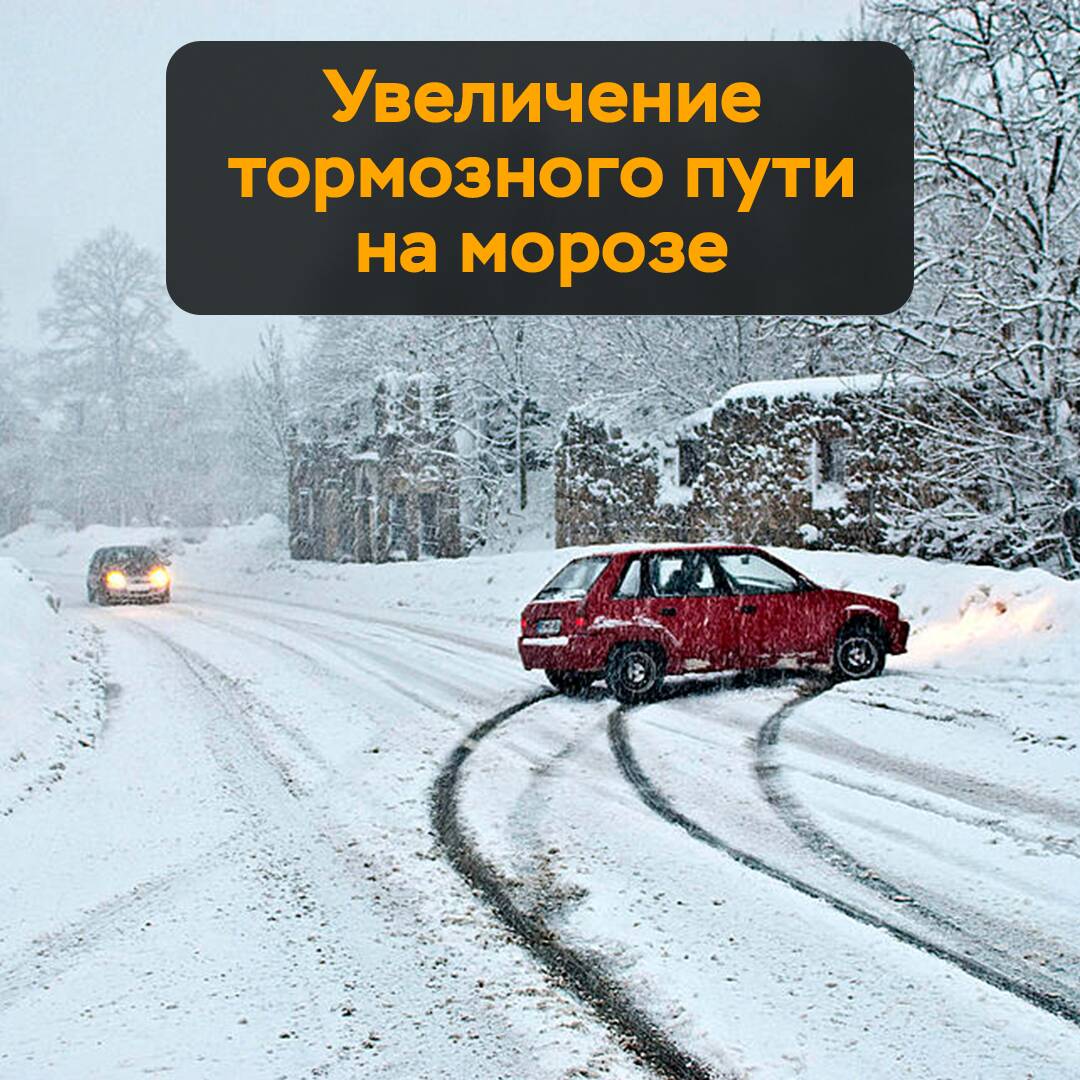
Increase of braking distance on frost
Changeable weather affects not only our mood and well-being, but also the behavior of the car. We are used to analyzing tests under sufficiently simplified criteria: ice, snow, asphalt. But at the same time, few people indicate what the weather was like and at what speed the wind was blowing. Not to mention what the air temperature was at the test site. These are extremely important parameters, as they directly affect the characteristics. In frost, you should be especially vigilant, because the braking distance can increase significantly for the following reasons.
Ice and its density. The fact that ice will form is undeniable. But if you are driving a car where the ice cover can be more than just a simple icing of a city road, then you should consider that its density also significantly affects the braking distance. The dependence is simple and straightforward: the colder it is, the longer the braking distance will be. There is even a temperature threshold where the stud completely stops working and non-studded tires become more effective.
In addition, it's worth noting that the braking system also needs to warm up. Movement should start smoothly, and the braking system should be warmed up by braking at a low speed on a straight section of road.