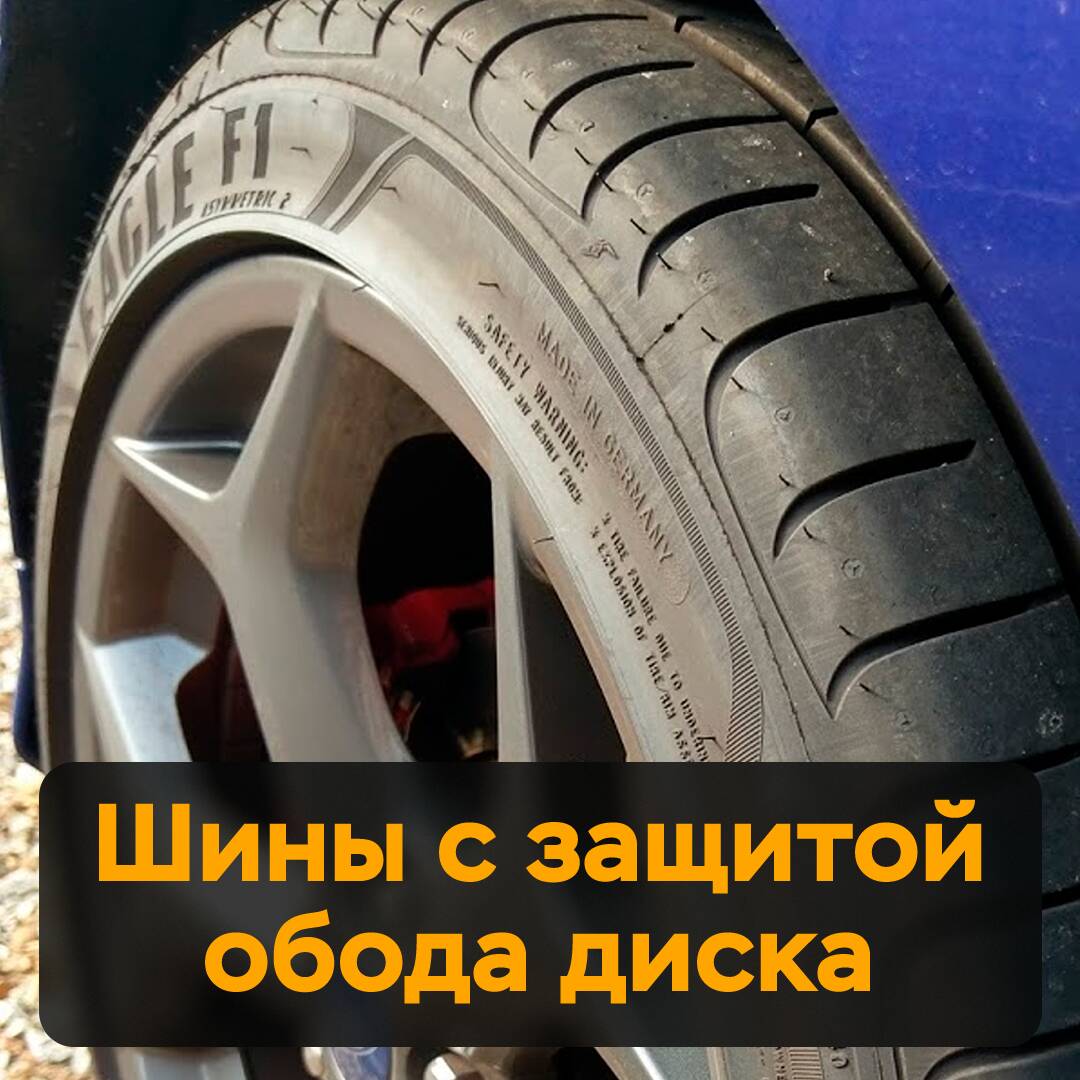
Wheels with rim protection
Tires that protect your wheels from damage.
Henry Ford once said: 80% of the beauty of a car is in its wheels. And many car enthusiasts agree with him. Nowadays, the market offers a wide range of wheel types and designs to suit every color, taste, and budget.
If we talk about the main types, there are three. The first, the cheapest and simplest, is stamped wheels. There's no point in arguing about beauty and taste here. The wheels are made of steel using a stamping method, then various parts are welded together and painted with enamel. The design is simple and uniform for all wheels, except for the color, which can be gray or black. Such wheels are usually equipped with a set of hubcaps with various designs to make the appearance more attractive. The most common type of wheel is cast wheels. Using casting in a pre-made mold, it's possible to achieve various designs here. Both thick and thin spokes, as well as various patterns to suit every taste, are available. These wheels are mainly made of aluminum alloys, making them lighter than stamped ones. After manufacturing, they are painted, polished, and coated with lacquer. Here, you can find completely different colors, and sometimes even combinations of two colors. The most expensive type of wheel is forged wheels. They are manufactured by volume stamping of blanks made from special alloys. Then, the design of the wheel's face is machined using a special milling machine. In addition to various patterns to choose from, there's also the possibility of creating an individual design.
In the past, almost all cars came off the assembly line with stamped wheels, and all cars looked the same. Nowadays, stamped wheels can be found on the most basic versions of budget cars. Most cars come with original cast wheels. Moreover, expensive serial cars can even be equipped with 22-inch wheels, so to speak, "in the base." And, of course, such wheels are usually equipped with low-profile tires. But when we leave the car salon, our beautiful, shiny wheels encounter the harsh reality of our roads, curbs, and various obstacles. When maneuvering in a courtyard or parking near a curb, it's easy to scratch the wheel. What to do if you still hear a scraping or crunching sound from the wheel coming into contact with the curb stone? Nowadays, there are many ways to restore the appearance of your wheels. It's better to contact a specialized center that deals with painting and restoring wheels. Specialists will assess the condition of your wheel, and if necessary, grind it and restore the paint and lacquer. If the coating on your wheels is completely worn out, or you want to refresh the appearance of your car, you can even repaint the wheels in a different color. The procedure for restoring a wheel is not cheap and can cost from 2000 to 3000 thousand rubles, depending on the damage. But this will help you avoid buying a new wheel.
However, there is a way to reduce the likelihood of the wheel rubbing against the curb. I'm talking about protecting the wheel with a tire. For some time now, tire manufacturers have started adding a special wheel rim protection to low-profile tires. What is it, and does it really protect the wheel or is it just a marketing gimmick?
Usually, this protection is present on low-profile tires. Low-profile tires are typically those with a profile height of 50% or less. On regular tires, the sidewall is usually curved, and its most protruding part is in the middle. And when you park near a curb, it's the sidewall of the tire that comes into contact with the stone. Low-profile tires, on the other hand, have a more square profile, and the sidewalls appear straight. In this case, the wheel rim can protrude beyond the rubber, especially if the tires are "domed." For such tires, manufacturers have started making a protrusion in the lower part of the sidewall. This protrusion, in the form of a rubber bulge, extends beyond the edge of the wheel and protects it from rubbing. This rubber bulge also strengthens the sidewall of the tire and reduces the risk of damaging the carcass in the event of an impact or pothole. In addition to its protective function, this rubber strip gives the tire a more sporty look. The tire seems to blend with the wheel, forming a single whole. This technology can be found not in all manufacturers and not in all models. Each manufacturer applies protection at their own discretion. There is also no single marking. The manufacturer may indicate this technology in the tire's name, or sometimes simply state that all sizes of this model have wheel rim protection without making any additional markings. In some sizes with homologations, wheel rim protection may be present at the request of the car manufacturer. In any case, this is the technology that's worth paying attention to when choosing tires.
A car's wheels are like a person's shoes. You can treat them carelessly, and then you'll have to constantly repair, restore, or replace them. But if you use them carefully, protect them, and a tire with wheel rim protection is one of these tools, then the tires and wheel can not only serve for a long time but also be a decoration for your car, as the great automotive enthusiast Henry Ford bequeathed.