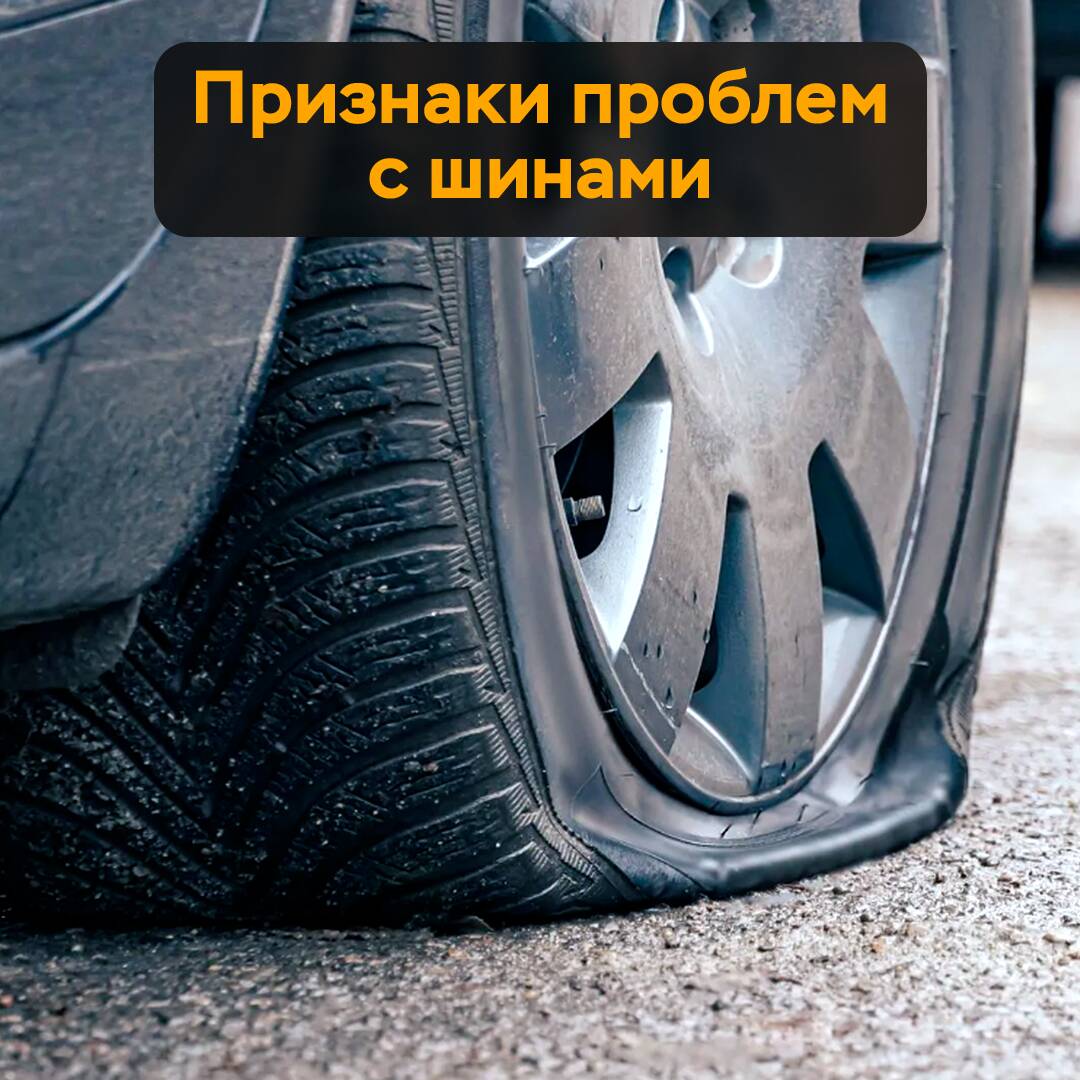
Signs of tire problems
There are cases when you have to leave your car for long-term parking. In such a case, the likelihood of forming a so-called "flat spot" is high. In this case, it is necessary to pre-increase the pressure relative to the norm by 0.2-0.3 BAR, and when starting to move after parking, drive smoothly, as if "warming up" the tires. But what to do if you simply left your car for overnight parking, and in the morning, the "low tire pressure" icon lights up on the dashboard "insufficient tire pressure"?
The reasons can be several. First of all, you should pay attention to the air temperature. If it got significantly colder at night, the drop in pressure is a normal phenomenon. Moreover, the lower the temperature drops, the lower the internal air pressure in the tire. During strong frosts, it is also recommended to increase the pressure by 0.2 BAR. The main thing to understand here is that when driving, the tires heat up and the internal pressure begins to rise. That's why it's recommended to adjust the pressure only in "cold" tires.
So, the main thing to remember is that there are cases when it is useful to increase the pressure, but you shouldn't do it constantly and react to the slightest deviations from the norm, which is displayed on the car's dashboard. If you don't have a TPMS sensor system, but the pressure is calculated mathematically, an error of 0.1 bar is generally normal.
It's a different story if the pressure in one tire is significantly lower than in the others. Most likely, the tire (less often the disk or valve) is damaged, and the pressure will continue to decrease. In this case, you shouldn't delay and immediately go to the tire shop. There are cases when drivers start their day by pumping up the "sick" wheel. This is extremely dangerous, as if the problem is systemic, the smooth loss of pressure can change to a sharp one at any moment, which is already dangerous due to an emergency stop or even an accident.
You should also pay attention to any vibrations and deviations of the car to the side, these are also reliable signs of problems that do not tolerate delays. Of course, it's a good idea to develop the habit of quickly inspecting the car when getting in, checking for deflated tires. Sooner or later, this useful habit can seriously help you out.