Rules for Tire Rotation
Tires on a car wear out unevenly. This is influenced by a multitude of factors. The main one, of course, is the difference in load between the front and rear axles. Of course, this is more noticeable on rear-wheel drive and front-wheel drive cars, but even all-wheel drive cars have different wear. That's why it's recommended to perform timely tire rotation. We'll break down how often this needs to be done and according to what scheme in today's article.
Tire rotation as a preventive measure will help make tire wear more even, allowing you to use a set of tires for a longer period without having to buy an additional pair during use. But, in addition to this, even wear of the tread allows for stable traction on wet surfaces. Due to the reduction in wear difference, there is no critical difference between the axles, and the risk of the car skidding is significantly reduced.
How often should tire rotation be performed?
This depends on your driving style. It should be remembered that the tires on the front and rear axles perform completely different tasks. Additionally, the type of drive has a huge influence. You should pay attention to the intensity of wear, but if you have high mileage, you shouldn't wait for the seasonal tire change, but rather perform the replacement after 15,000 km. First and foremost, this will help maintain safe traction with the road.
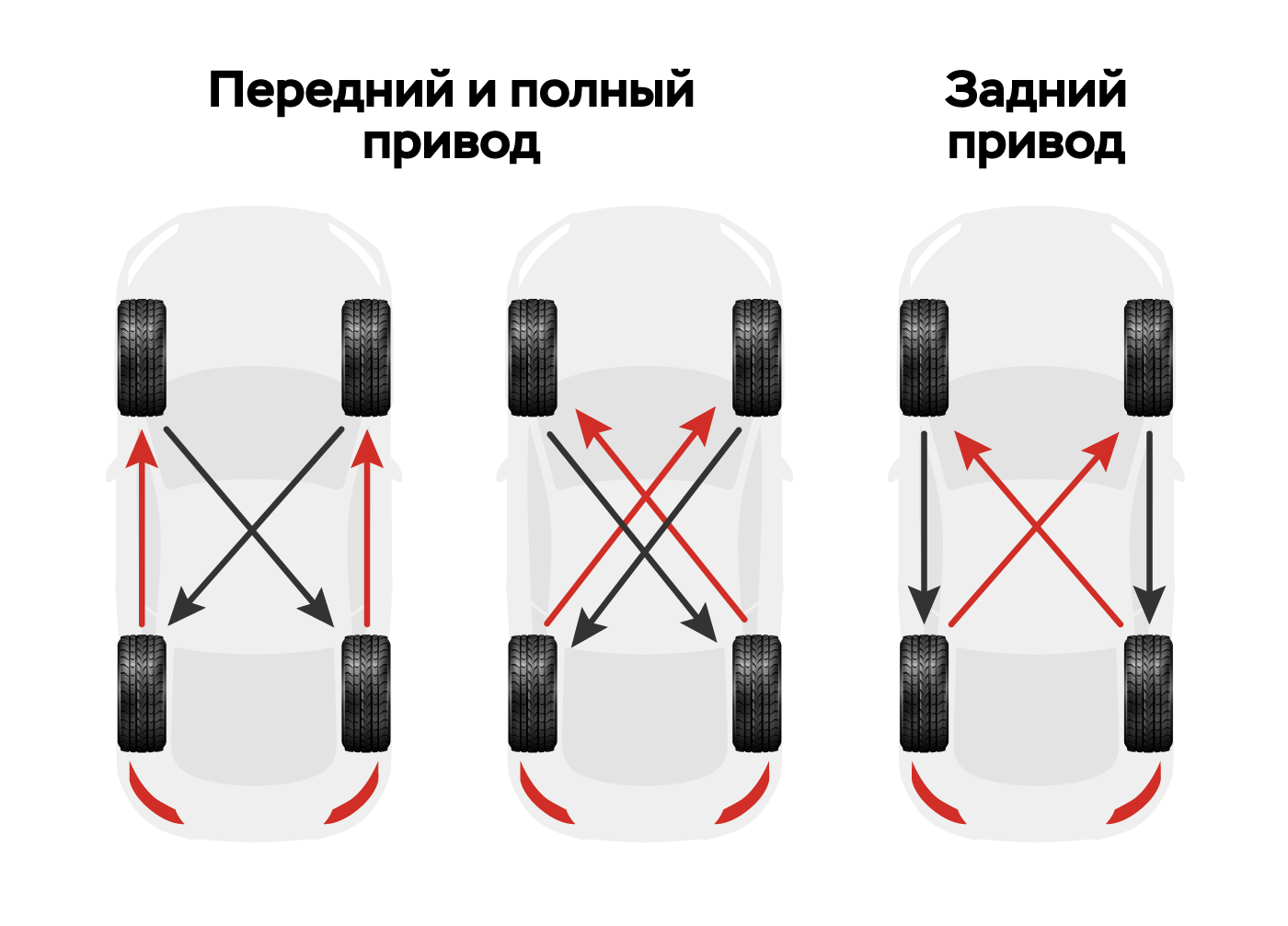
Tire rotation should be performed according to the following scheme: