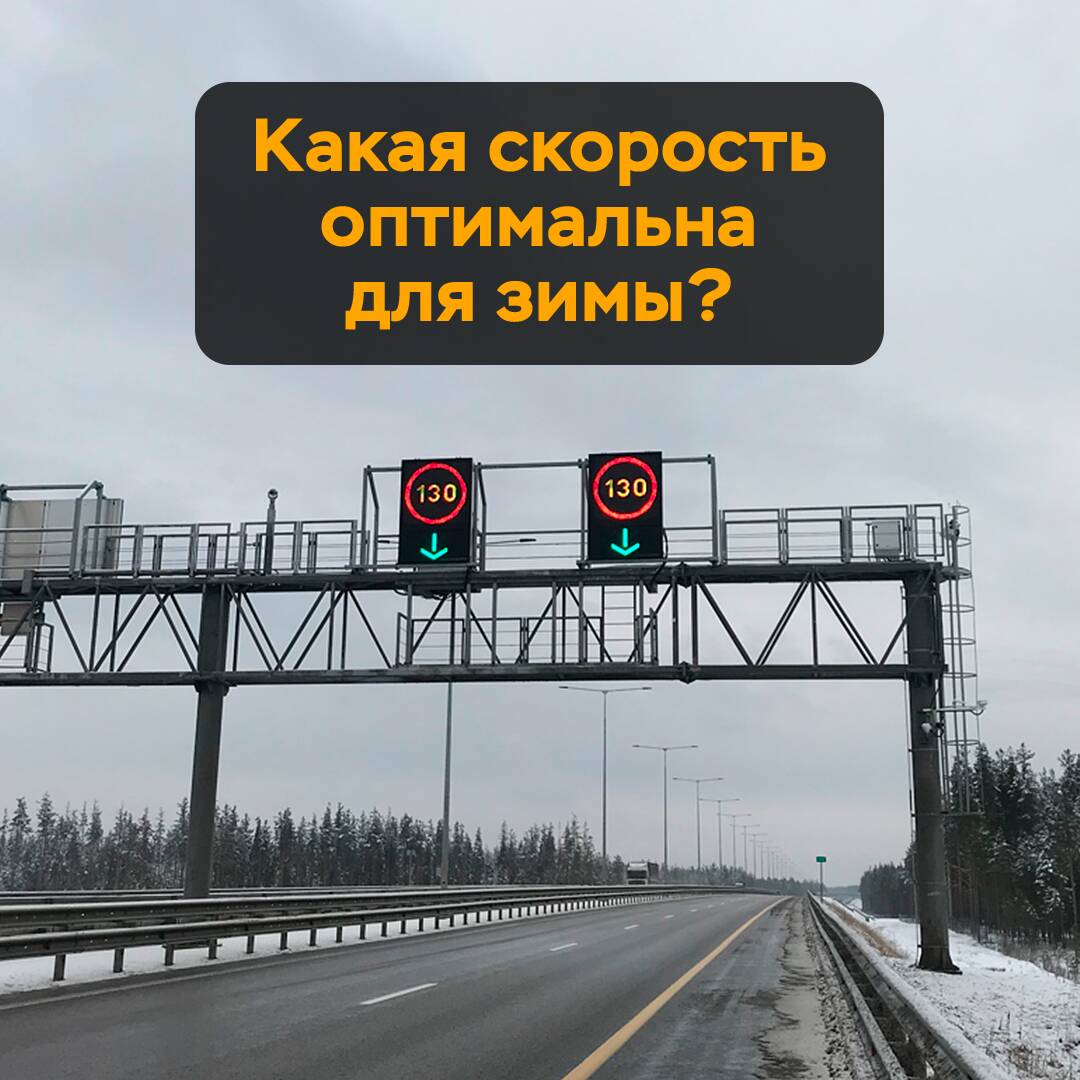
What speed is optimal for winter?
What speed is permissible in winter? This question should be asked a bit differently - "what speed is safe in winter?". Today, we will try to answer this question.
The quality of roads is gradually increasing, and sometimes you can come across restrictions of 100 or even 130 km/h. Considering a margin of 20 km/h, many drivers mentally add it to the restriction and adhere to such a speed. But is such a speed safe? The answer is extremely simple - of course, not. In the winter period, road conditions are particularly complicated, and tires simply cannot provide a stable contact with the road due to snow, a large amount of water, and, of course, ice.
Moreover, many people forget about the braking distance of winter tires, even on dry asphalt.
Let's remind you that the most powerful tires in the winter segment, at a speed of 80 km/h, brake at a distance of over 30 meters. Usually, the distance to the vehicle in front is no more than 20 meters. Not to mention a sudden obstacle. At the same time, it is essential to note that we are talking about braking on dry asphalt. Braking on ice and snow is unpredictable, as the condition of ice and snow can be different, but in fact, the braking distance can increase by 2-4 times.
The speed mode should meet all the criteria for sudden stopping. The permitted maximum speed is not recommended and is sometimes simply dangerous. It is also worth noting that the braking distance depends on the condition of the tires and the internal pressure.