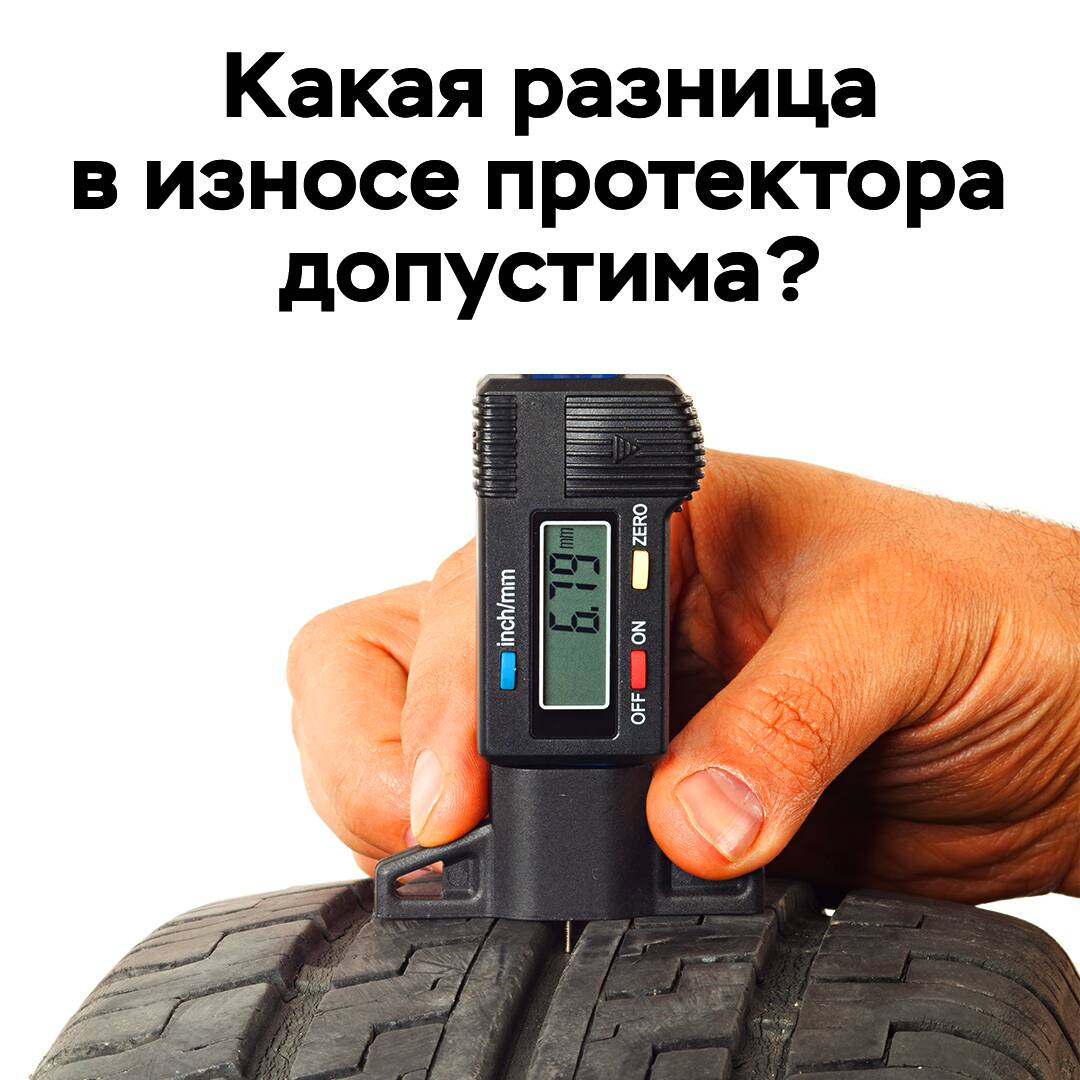
What difference in tread wear is allowed?
Not so long ago, we touched on the topic of spare tires in the winter period. Today, we would like to continue the topic and tell you about what fluctuations in the residual tread depth are acceptable.
First of all, it should be noted that tires wear out unevenly. On front-wheel drive cars, the front tires wear out more intensively, and on rear-wheel drive cars, the rear tires do. This is a natural process, and even the most gentle driving style won't change the situation. The solution may be timely tire rotation, but often it happens that tires with an obvious difference in residual tread depth are installed on one axis.
A difference of less than 1.5 mm is considered safe and acceptable. At least, if you're not setting speed records on flooded roads. Values above 1.5 mm, we recommend avoiding, because the difference between the abilities of tires to evacuate water from the contact patch increases significantly. Of course, we're talking about aquaplaning. In this case, the risk of loss of control on flooded pavement or even a spin simply increases.
Monitor the difference in tread depth of your tires. For more even wear, refer to the rotation rules.