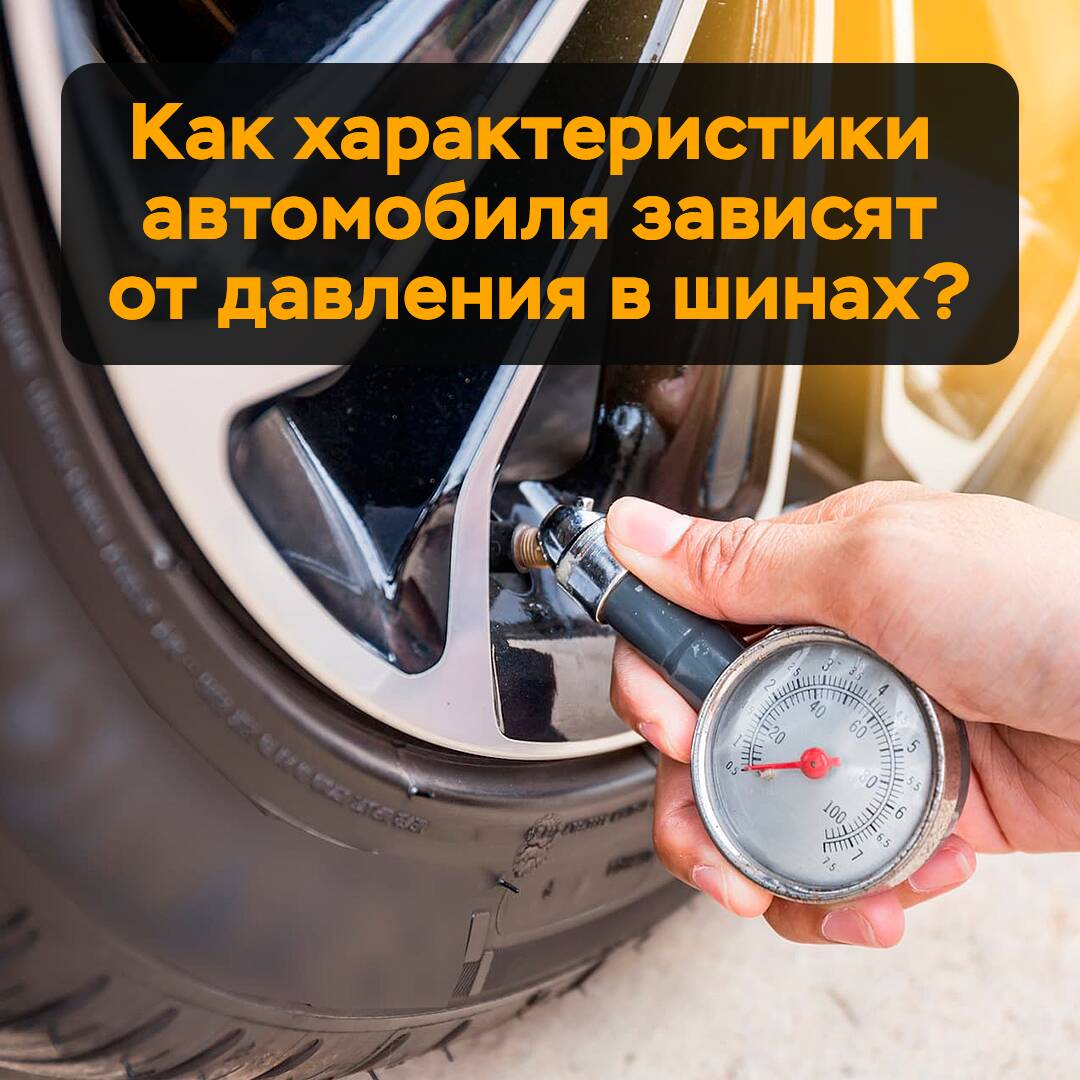
How vehicle characteristics depend on tire pressure
Tire pressure is one of the important parameters that can affect the characteristics of a vehicle. Here are some of the main ways in which tire pressure can impact a vehicle:
Proper tire pressure helps to ensure efficient vehicle handling. Too low pressure can lead to instability when cornering and a worsening of steering response. Too high pressure can worsen tire grip on the road and lead to a worsening of handling on wet or uneven roads due to a reduction in the contact patch.
With proper tire pressure, the vehicle's passability increases. Insufficient pressure can lead to a worsening of the tires' ability to overcome obstacles and reduce ride comfort. On the other hand, too high pressure can worsen the vehicle's damping and comfort.
Incorrect tire pressure can lead to uneven tire wear. Too low pressure can cause wear on the shoulder areas of the tire, while too high pressure can cause wear on the central part.
Tire pressure can also affect a vehicle's fuel consumption. Too low pressure leads to increased rolling resistance, which requires more energy to move the vehicle and, therefore, increases fuel consumption. On the other hand, too high pressure will inevitably lead to increased wear on suspension components due to less shock absorption by the tires.
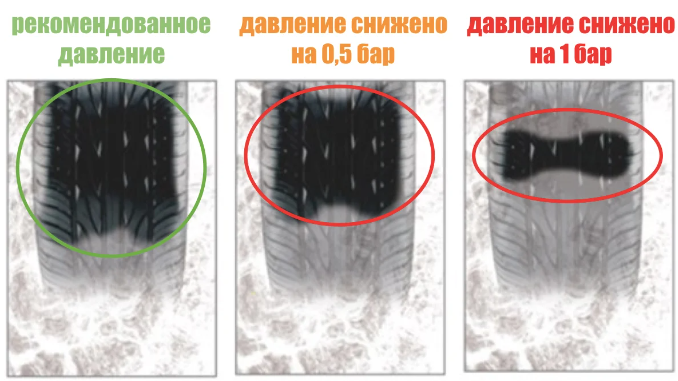
Separately, it is worth mentioning the resistance to hydroplaning. A tire with insufficient pressure simply cannot effectively break through the water wedge and will float at a speed significantly lower than it could with the recommended pressure.