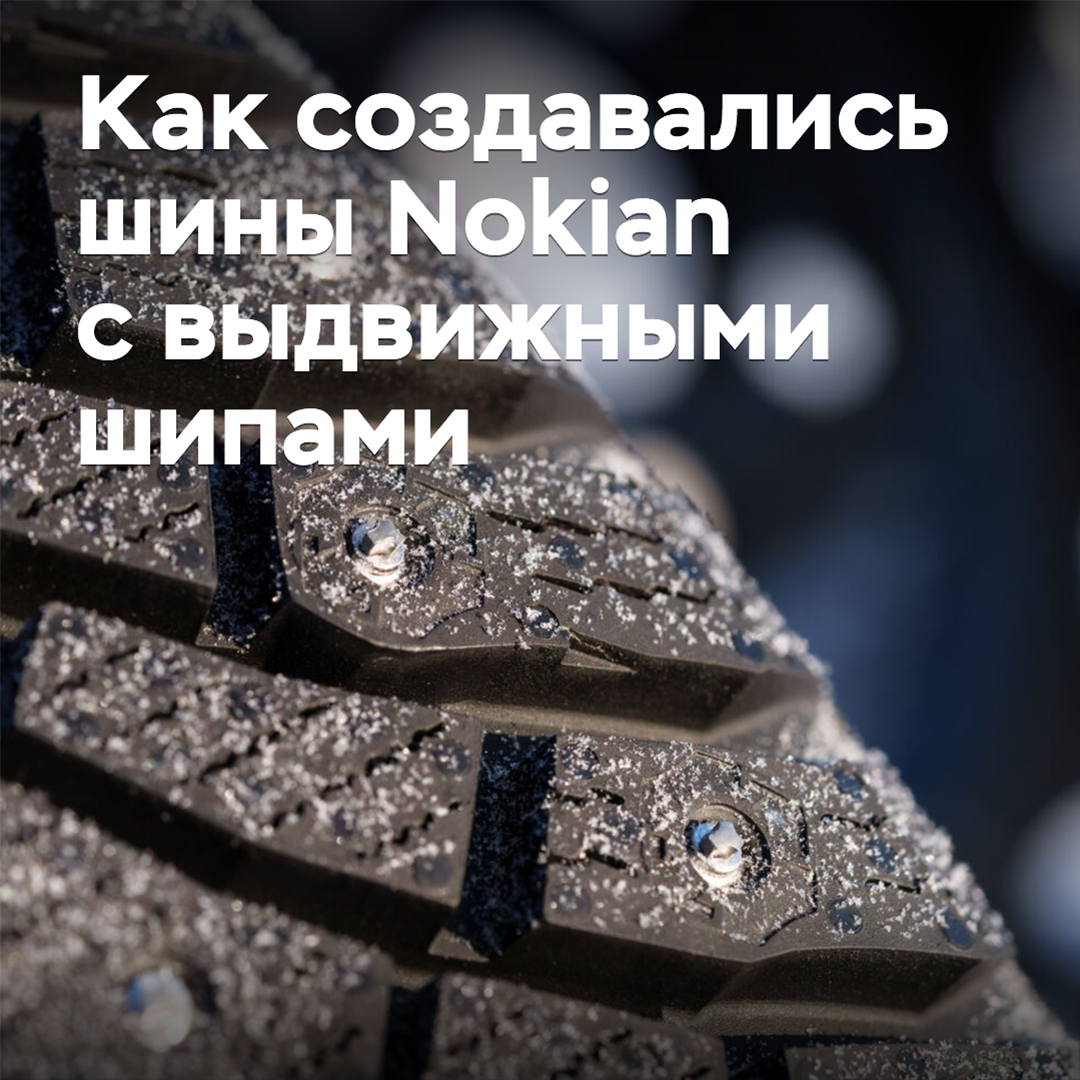
"The idea was incredibly simple": How Nokian tires with retractable studs were created
In the already distant 2013, the company Michelin presented the studded winter tires Michelin X-Ice North 3, one of the features of which was the use of a thermally active rubber compound in the tread layer under the studs, which hardened when cooled and became softer when warmed, due to which the protrusion of the stud increased or decreased depending on the temperature.
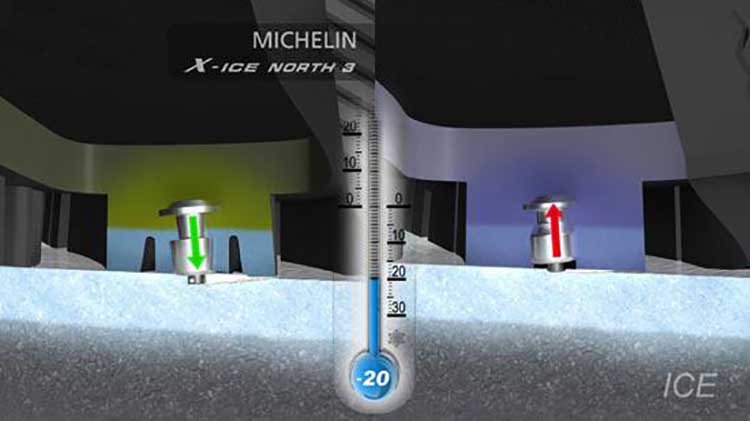
The point was that in frost, the studs had a harder base, which increased their piercing force into the icy surface, and in warm weather, the studs receded into the tread, enhancing grip on asphalt by reducing the "ice skating" effect. At the same time, when the next-generation tires were released - Michelin X-Ice North 4 - there was no longer any talk of temperature-sensitive compounds, which means the idea may not have been justified (the fourth X-Ice North's main feature was a radical increase in the number of studs while reducing their size, which proved effective and launched a new trend in the industry), and now it has been picked up by the Finnish Nokian Tyres, which is no less significant a "trendsetter" in the winter tire market.
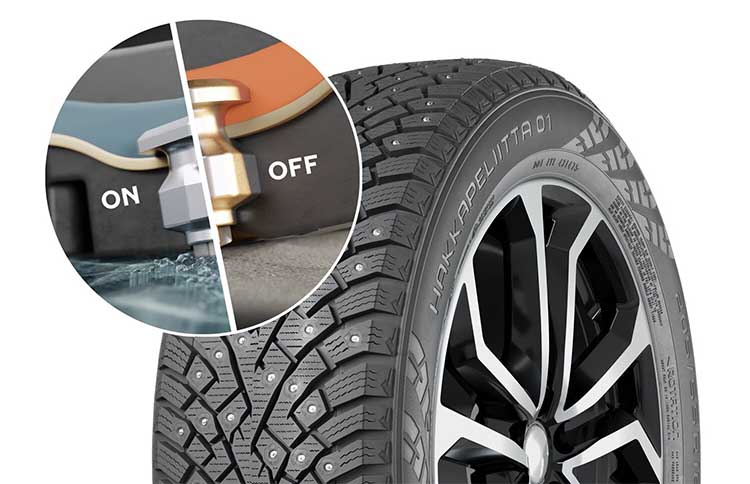
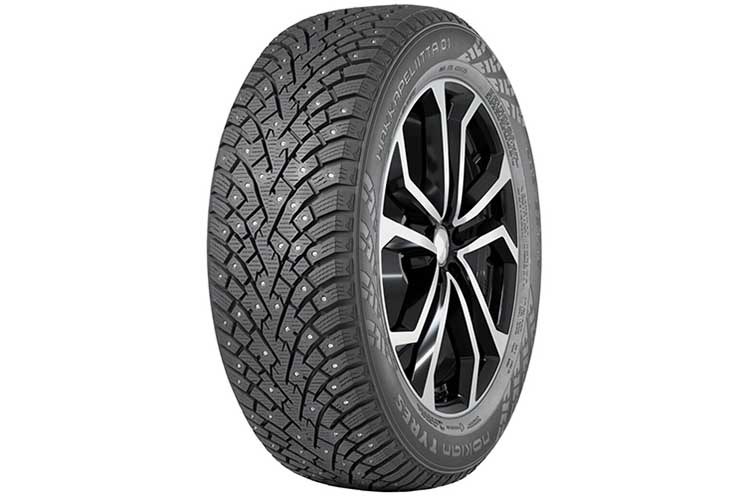
The Nokian Hakkapeliitta 01, which will be released next season, will be equipped with retractable studs, and the concept is the same, and, as stated by Jouko Ilomäki, one of the technology's developers, "in warm weather, the stud can sink deeper into the adaptive rubber layer. When it's necessary to increase grip in cold weather, the material hardens, and the stud cannot sink into it."
At the presentation of the Hakkapeliitta 01 in Ivalo, Finland, guests were shown the properties of the new tires. "At room temperature, a rubber sheet made of the new adaptive material can be bent with your fingers, and if you hit it with a hammer, the rubber bends noticeably," Petja Partanen from the editorial office of Tekniikan Maailma said. "At the same time, at freezing temperatures, this material becomes almost like stone, and a hammer blow is accompanied by a metallic sound."
The project leader, Mikko Liukkula, notes that the development of an adaptive studded tire has been underway since 2014, when Nokian presented a conceptual tire with studs that the driver could extend from the driver's seat by pressing a button. At that time, attempts to implement something similar in mass production reached a dead end, he admits, but about five years ago, a material was discovered that reacted to temperature exactly as needed.
"Ultimately, the idea is incredibly simple - like all the best inventions," he says.
A year later, the first prototypes were made, which allowed the idea to be tested in practice, and, according to Liukkula, it quickly became clear that there was an opportunity to create a mass-produced product. "This feeling arose as soon as we saw how good the tires were during acceleration on ice," he said.
The importance of the development is also that it allows reducing the load on the road surface. In Finland, the road wear test involves driving a tire over a sample of road surface 200 times at 100 km/h. After that, the sample is weighed, and the weight loss due to the studs is determined.
"Four studded tires that rotate under a car hit the asphalt with about a thousand small metal hammers," Partanen explains. "The studs in the tires on one car hit the asphalt about 500,000 times per kilometer or five million times per 10,000 kilometers of travel. In large cities, studded tires increase the concentration of street dust above acceptable levels."
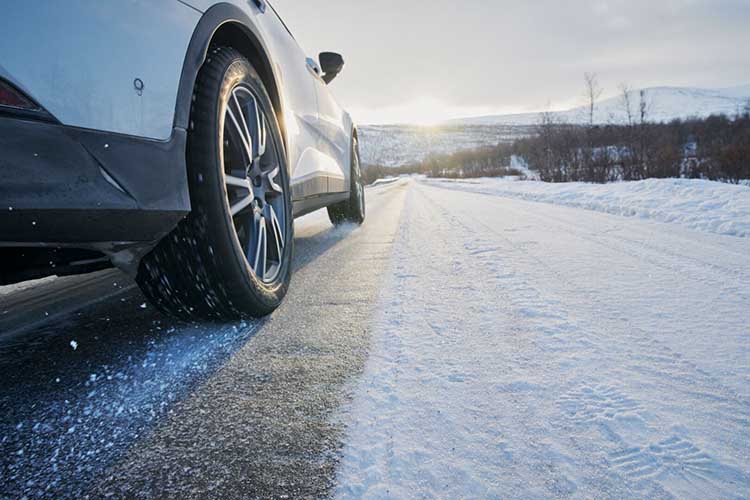
Currently, in Northern European countries, the share of friction tires on the market is slowly growing - including due to the sale of electric vehicles with quiet powertrains - and this is most noticeable in the southern regions of Finland, Sweden, and Norway, but whether the Nokian concept will lead to an increase in the popularity of studded tires and receive further development in the industry, only time will tell.
The presentation of the Hakkapeliitta 01 was also attended by the famous racing driver Kimi Räikkönen, who is now an ambassador for the Nokian brand. According to the former F1 driver, he was particularly impressed by the muffled noise on the asphalt, despite the temperature being almost 10 degrees below zero.
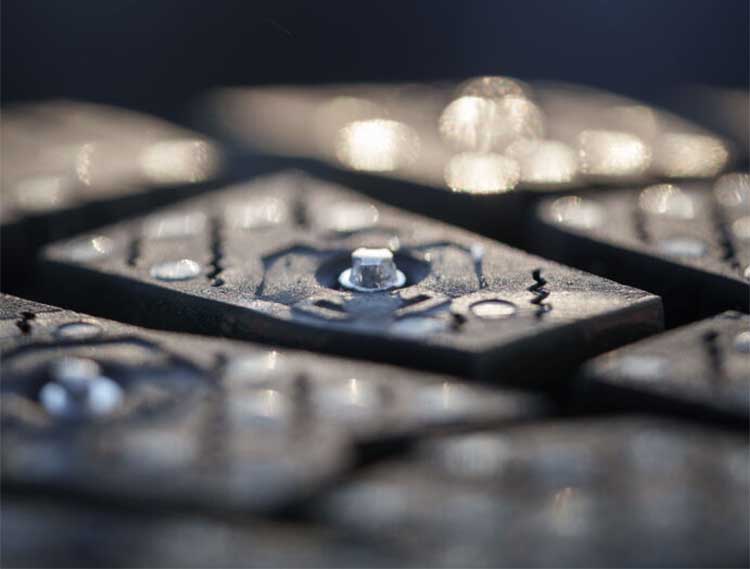
"At a speed of 100 km/h, each stud hits the road about 14 times per second. Due to this, they shift slightly, which heats up the adaptive rubber layer," Liukkula says. As a result of the heating, the layer under the studs begins to deform, and the studs sink deeper into the tread, reducing both noise and road wear.
Nokian claims that the novelty can reduce the impact on the road surface by 30% compared to the Hakkapeliitta 10, and one of the factors that accelerated the development of the technology was that the Finnish Transport and Communications Agency (Traficom) will tighten the requirements for studded tires by the end of 2026. The standards for road wear will become 15% higher, and all manufacturers will have to adapt their products to them.
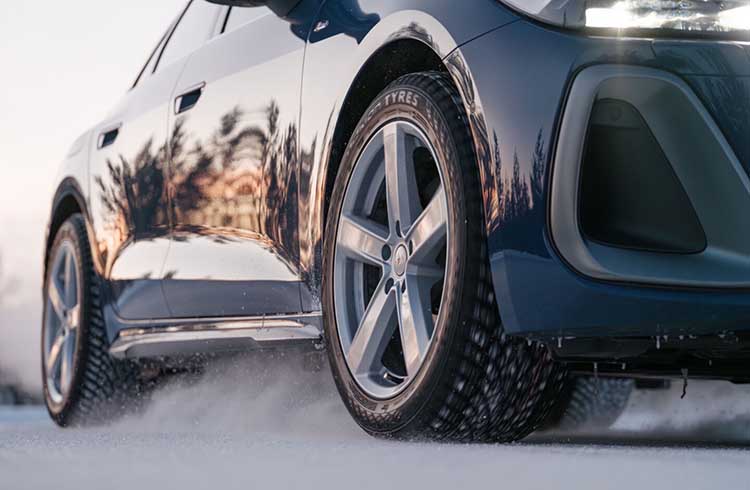
According to Liukkula, the traditional problem of road wear is solved by reducing either the number of studs or their protrusion, but Nokian was able to not only reduce it but also increase grip - by 10% on ice and by 5% on wet asphalt compared to the tenth Hakkapeliitta.
The prices for the Hakkapeliitta 01 have not been announced yet, but Nokian's CEO, Paolo Pompei, hinted that the cost will be at least 5% higher than that of the Hakkapeliitta 10. The new product will go on sale next autumn in 124 sizes.
"We constantly review our pricing in accordance with market trends. This is a premium product that won't suit every driver," he said.