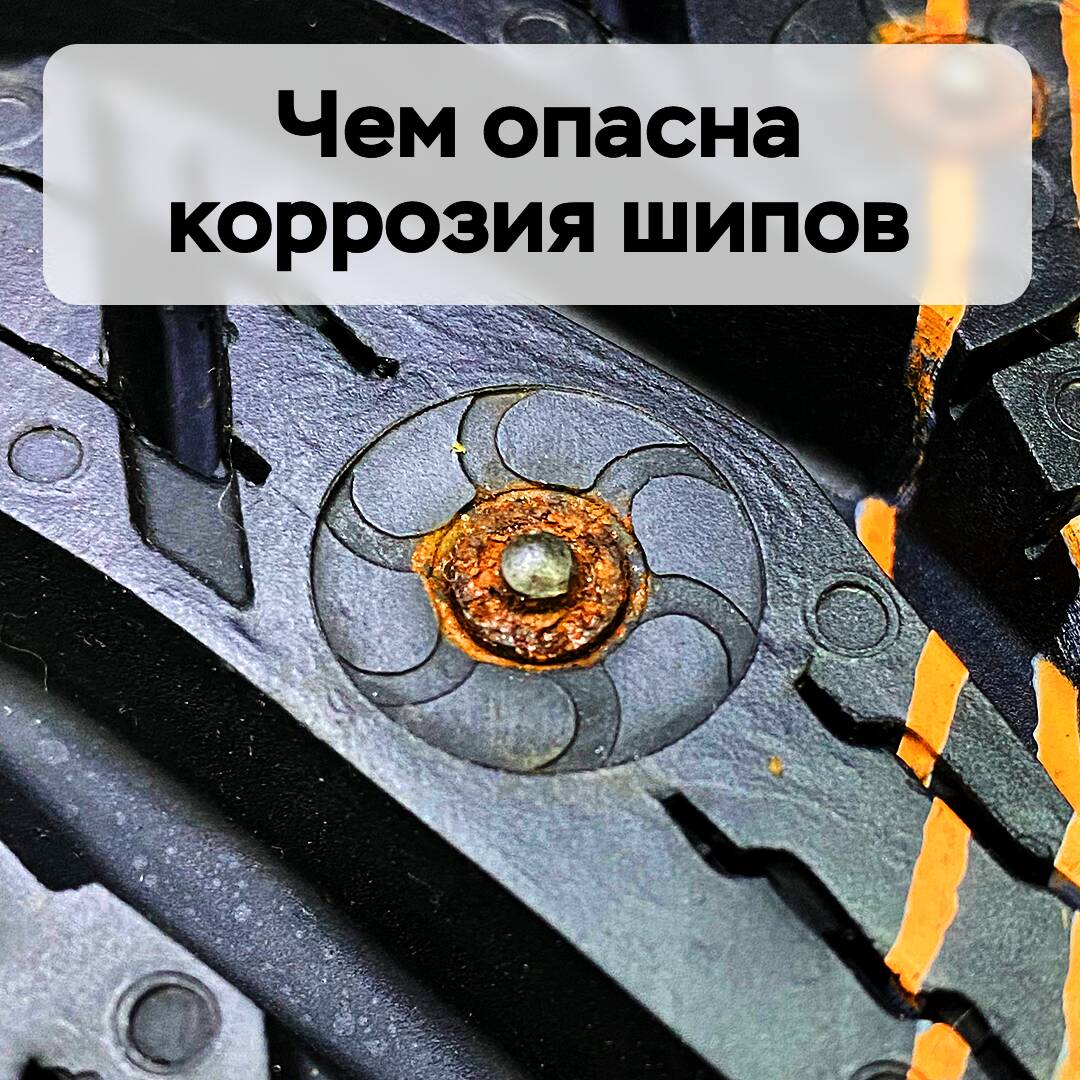
What is the danger of stud corrosion
Many car owners often notice that the studs on their winter tires have a layer of corrosion. This is especially noticeable after seasonal storage or long-term parking. Let's break down how detrimental this is to the studs and how it affects the tire's performance today.
First and foremost, it's worth noting that an anti-skid stud consists of two different elements - the body and the hard alloy insert. The insert is the same for all manufacturers - tungsten carbide, known to motorists as "pobedit", which is used in industry, drilling, and small tools like drills. The core is a wear-resistant but very durable material. The body of the stud has a completely different composition. Currently, two types of materials are the most common: steel and aluminum.
Both metals can deteriorate, but only steel is prone to corrosion. It's not worth assuming that corrosion is a harmless process that disappears after the first few hundred meters of driving on asphalt. Corrosion of the body significantly accelerates its wear, and consequently, reduces the resource for holding the hard alloy insert. Moreover, not only the top part of the stud corrodes, but the entire body, as moisture and air penetrate the stud's mounting area in the tread.
The body has only one function - to hold the insert for effective braking. If the body weakens and degrades due to corrosion and mechanical movements during its operation, it accelerates the risk of its breakage or loss. This already depends on how securely it is fixed in the tread.
How can this be avoided? You cannot influence long-term outdoor parking, but you can influence storage conditions. The most important thing is to exclude storage in plastic bags.