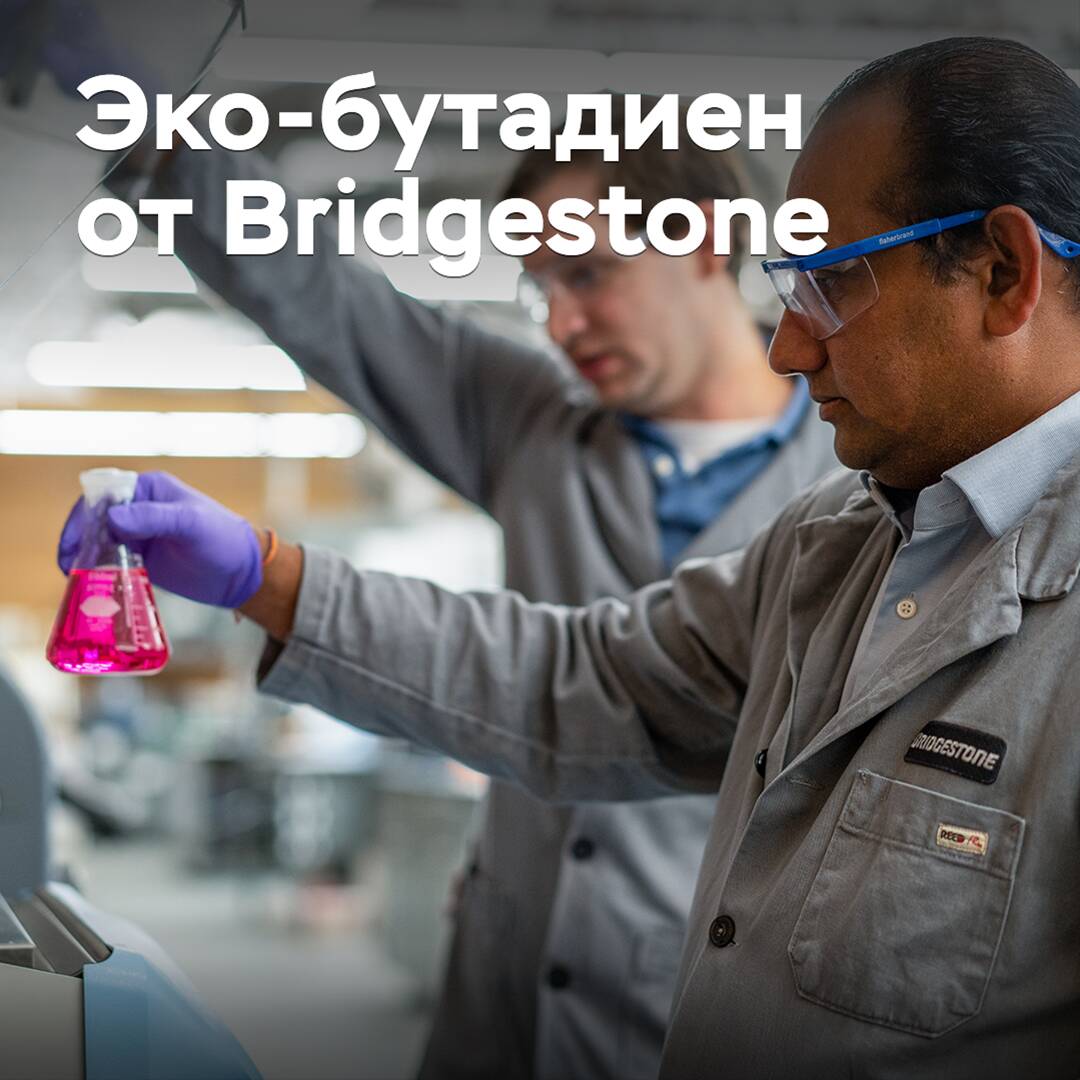
Bridgestone is developing a new technology to produce butadiene from ethanol
The American division of Bridgestone has received a grant from the US Department of Energy's (DOE) Office of Industrial Efficiency and Decarbonization, and as part of the new initiative, a pilot plant will be designed, built, and launched to produce butadiene from ethanol. The project is expected to evaluate the economic and commercial viability of the new technology, as well as the carbon footprint of converting ethanol to butadiene.
The resulting butadiene will be studied to confirm its suitability for use as a raw material for tire production, the tire company notes.
"Such projects help drive the science and technology needed to make the industry more environmentally friendly and allow our engineers and scientists to potentially revolutionize the production of butadiene in the most environmentally friendly way," said Mark Smeyers, Executive Director of Bridgestone's Key Polymers division. "We are excited to launch this project and grateful to the DOE for their support."
Bridgestone's partner will be the Pacific Northwest National Laboratory, and the process will utilize a catalytic system initially designed by PNNL and refined in collaboration with the tire manufacturer. "It is this unique system, combined with Bridgestone's innovative technologies, that may enable a commercially viable way to thermally convert ethanol to butadiene," the tire company says.
In the first year of the project, a test facility will be developed, in the second year a pilot plant will be built, and in the third year it will be launched with the hiring of personnel.