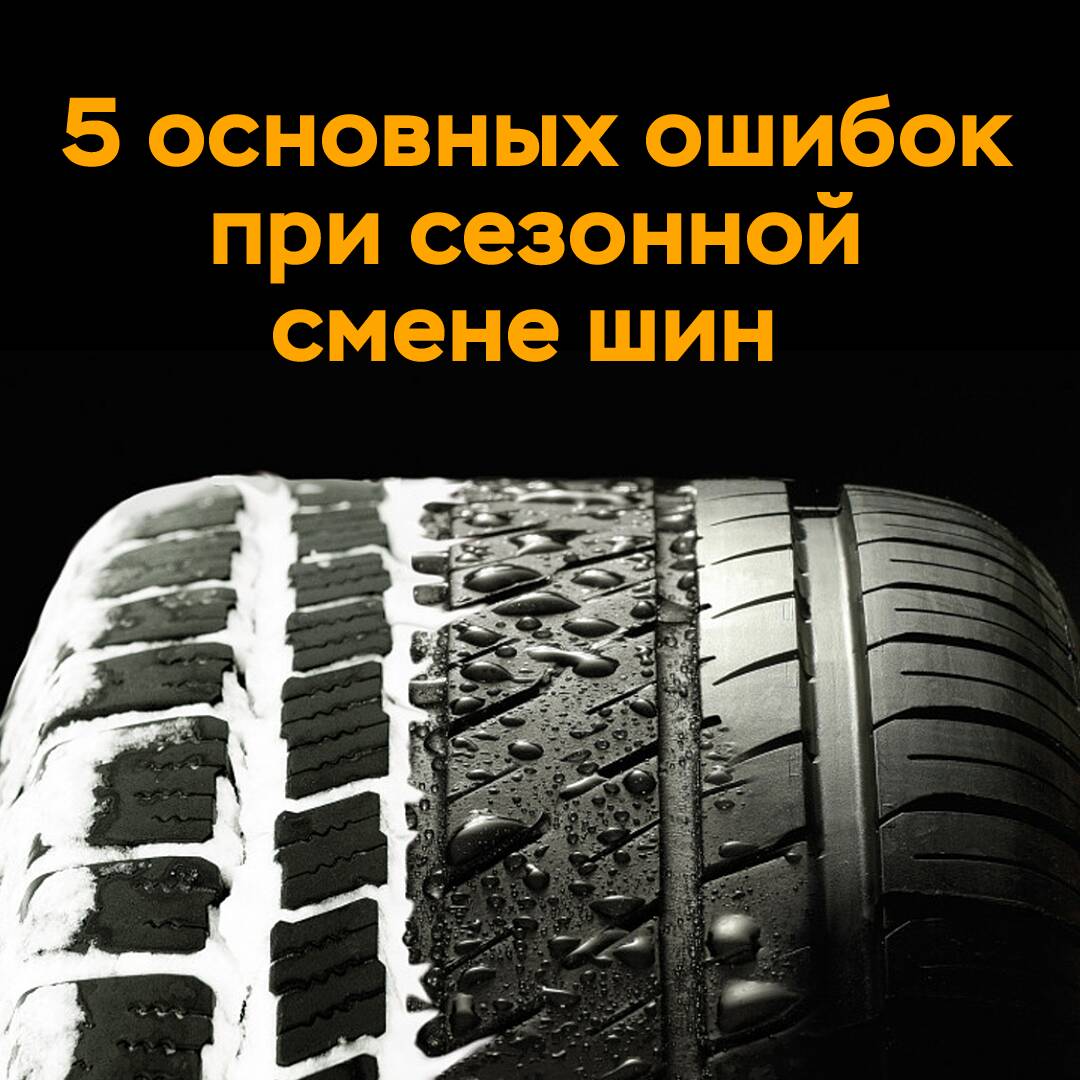
5 Main Mistakes When Seasonally Changing Tires
In few regions is it possible to get by with just one set of tires. So-called "all-season" tires, of course, are also not a solution to this issue. Nevertheless, even for all-season tires, there is an ideal period during the year, which coincides with autumn. During this period, summer tires may no longer be able to handle the large amount of water on the road, and you will definitely be caught off guard by the sudden snowfall. "All-season tires" have a more suitable tread pattern for this time of year, but at the same time, they are completely unsuitable for winter conditions.
Let's be realistic and note that having three sets of tires for one car is expensive and is rather an exception. Most car owners have two sets of tires, "summer" and "winter". Note that it's also not worth rushing to change tires, as winter tires also have their drawbacks in summer conditions. In this case, the question arises of when it is optimal to change tires so as not to lose manageability and safety.

Tire and car manufacturers agree that tire changes should be made when the average daily temperature is +5 to +7°C. According to the data from the Russian Hydrometeorological Center, for Moscow, this is the first half of October. Of course, the forecast is always inaccurate, and weather conditions can change, so it's necessary to consider current conditions. Nevertheless, changing tires in September is still too early. But even with timely replacement of summer tires with winter ones, it's necessary to remember that the car will behave completely differently.
The presence of lamellas on the tread blocks, as shown in the figure, will change the usual handling in the summer period, and the braking distance will increase significantly. Therefore, it's necessary to enter the new season smoothly, even if it's not the first season on winter tires. It's especially worth noting that your responsibility and timely tire change will not protect you from trouble on the road in a critical moment, known as "metal day". On such days, it's best to refrain from driving your car or drive with the understanding that everyone around you is on summer tires.