

Description Yokohama WY01
The Yokohama WY01 winter tire stands out for its exceptional versatility, as it can be successfully used on both minivans and commercial vehicles with small payloads, such as microbuses, light trucks, and passenger vans. Regardless of the application, thanks to the latest technological developments from the world-renowned Japanese manufacturer, this tire provides a high level of safety even in the most unfavorable road conditions.
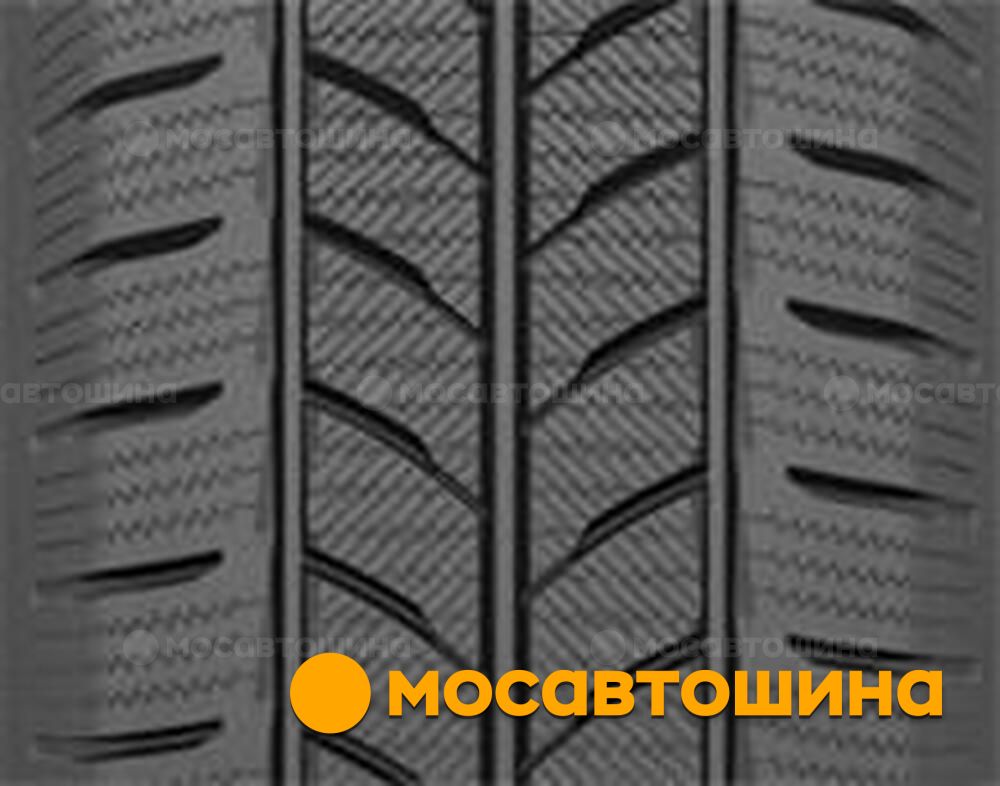
Unlike other tires in the W.drive line, this model is equipped with a V-shaped symmetrical directional tread pattern. This solution is due to the fact that tires with a V-shaped tread pattern, due to a more even distribution of load across the contact patch, can handle the heavy weight of a vehicle much better. In addition, the even distribution of external load ensures a maximum contact patch area and its stability, regardless of road conditions, which provides excellent traction on snowy surfaces. At the same time, it is possible to achieve high acceleration and braking efficiency due to the numerous sharp edges of the tread blocks.
The tread pattern consists of four main elements - two longitudinal ribs located in the central part, as well as two shoulder zones. At the same time, each tread element is characterized by its massiveness, which has a beneficial effect on the tire's ability to withstand heavy external loads. The two longitudinal ribs located in the central part of the tread consist of separate massive blocks. A distinctive feature of this part of the tread is the use of a proprietary development by Japanese tire makers - 3D-SIPES technology, which involves the use of special zigzag-shaped lamellas on the surface of the blocks located in the central part of the tread. These lamellas, when in contact with the road surface, not only form multiple additional edges, but also, by interlocking with each other, significantly improve the rigidity of the tread blocks, which significantly improves the tire's traction on snowy and icy surfaces.
Another characteristic feature of this model can be considered a highly efficient drainage system, consisting of three longitudinal and numerous transverse grooves.
A distinctive feature of the drainage system of the Yokohama WY01 is the large depth and width of the longitudinal grooves, as well as the special design of the transverse channels, the width of which increases towards the edges of the tread. As a result, the drainage system easily copes with the removal of a large amount of snow and water from the contact patch.
Another technological innovation used in this tire is the so-called "microsilica" technology, which represents a special composition of the rubber mixture, ensuring high resistance of the tread to the effects of high temperatures and excellent elasticity at low temperatures. This was achieved by including special polymers and microsilica granules in the composition of the rubber mixture.
The tire's carcass was designed with a large vehicle weight in mind and features a complex multi-layer structure. In particular, a two-layer metal cord with a brass coating was used. In addition, Japanese tire engineers applied two layers of polyester. It is also worth noting the reinforced protection of the sidewalls of the carcass, provided by an additional layer of nylon fibers wound using a seamless technology. Another element of protection against aggressive influences is the two-layer structure of the tread, the outer part of which consists of a wear-resistant rubber mixture with microsilica, and the inner part - of a special layer of rubber that is rigid and strong. As a result, the tire is characterized by phenomenal resistance not only to wear but also to punctures and cuts, while possessing excellent strength and elasticity.
Main features of the Yokohama WY01
- A symmetrical directional tread pattern with a V-shaped design, developed using computer modeling, provides excellent traction performance on various types of road surfaces;
- 3D-SIPES technology, which involves the use of special lamellas, provides excellent traction on snowy and icy surfaces due to the formation of multiple additional edges by numerous self-locking lamellas;
- A rubber mixture with microsilica and special polymeric components, thanks to which the tire's tread is resistant to high-temperature effects, ensuring excellent elasticity even at very low temperatures;
- A complex carcass structure, consisting of two layers of steel cord with a brass coating, two layers of polyester, a layer of nylon fibers, and a two-layer tread, provides the tire with exceptional resistance to cuts and punctures.