
-
 Enlarge
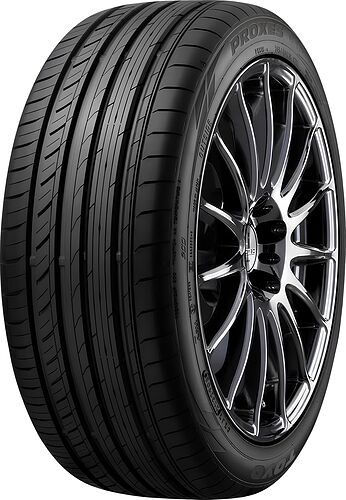
 Toyo Proxes C1S
Description Toyo Proxes C1S
The Toyo Proxes C1S summer tire, produced by the world-renowned and respected Japanese company, is designed for powerful sports cars of the representative class.
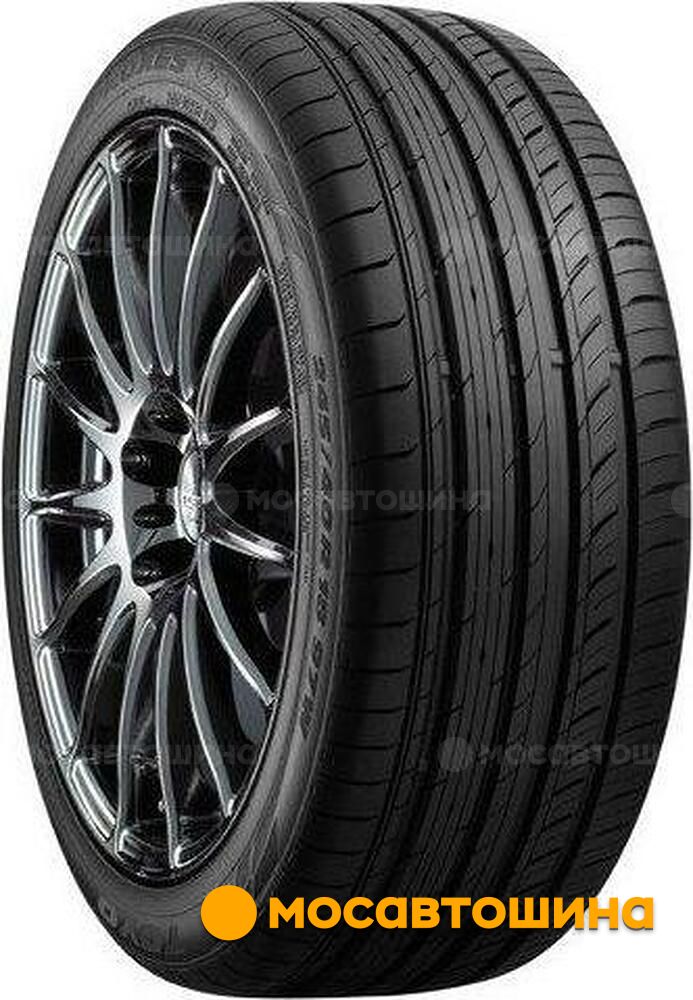
The design of the asymmetric tread pattern is largely unique. The tire is like two separate parts - the inner part of the tire provides low noise and comfort, and the outer part is responsible for excellent handling characteristics. The tire is distinguished by its amazing balance of characteristics, where softness and comfort are combined with stability and stability at high speeds.
When developing the tire, engineers paid much attention to reducing the noise level. In particular, the walls of all four drainage grooves have a serrated profile. The fact is that when the Toyo Proxes C1S tire comes into contact with the road surface and the drainage grooves become, in their own way, tubes with tightly compressed air inside. This dense air, passing at high speed through the grooves, creates strong resonant noises, very noticeable in the overall background. The serrated profile of the groove walls made it possible to minimize the effect of this sound effect. This made it possible, in combination with other measures, to reduce the noise level by 67% when driving at a speed of 100 km/h.
It is impossible not to notice the special design of the shoulder area, located on the outer side of the tread. The combination of a double longitudinal groove with a large width and an optimized profile made it possible to ensure excellent stability when driving at high speeds and a high level of comfort.
Another feature of the tread pattern of this tire is the original structure of the rib, located on the outer side. On the surface of this rib, there are longitudinal grooves with small depressions. This made it possible to more evenly distribute the load over the contact patch without compromising handling and directional stability.
The main features of the Toyo Proxes C1S tire
- Low noise due to the original structure of the drainage grooves and the placement of tread elements with a variable pitch;
- The depressions in the grooves made the movement softer and more comfortable;
- The asymmetric design of the tread pattern provided the highest comfort in combination with uncompromising performance.